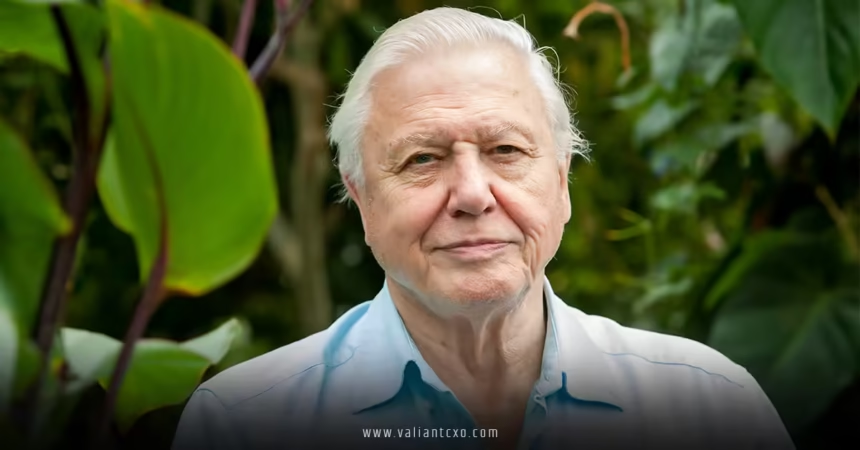
David Attenborough is a name that resonates with anyone who’s ever been captivated by the wonders of the natural world. For decades, this legendary broadcaster, naturalist, and conservationist has brought the beauty and fragility of our planet into living rooms across the globe. From whispering about gorillas in the misty mountains to narrating the intricate dance of a coral reef, David Attenborough’s voice is practically synonymous with nature itself. But who is the man behind the soothing narration, and why does his work continue to inspire millions? Let’s dive into the life, legacy, and impact of David Attenborough, a true icon whose passion for the planet has shaped how we see the world.
Who Is David Attenborough?
David Attenborough, born on May 8, 1926, in London, England, is more than just a familiar voice. He’s a storyteller, scientist, and advocate who’s spent over seven decades exploring the Earth’s wild places. Imagine a curious kid collecting fossils and bugs, growing up to become the world’s most beloved guide to nature—that’s David Attenborough in a nutshell. His career began in the 1950s at the BBC, where he initially worked as a producer before stepping in front of the camera. His love for biology, sparked during his studies at Cambridge University, fueled his mission to share the planet’s stories with the world.
What sets David Attenborough apart? It’s not just his knowledge but his ability to make you feel like you’re right there with him, whether he’s dodging a charging rhino or marveling at a tiny leafcutter ant. His enthusiasm is contagious, like a friend who can’t wait to tell you about their latest adventure. Through series like Planet Earth and Blue Planet, he’s shown us that nature isn’t just “out there”—it’s a living, breathing part of who we are.
The Early Years of David Attenborough
David Attenborough’s journey began in a time when television was still a newfangled invention. Growing up in Leicester, he was the middle child of three brothers, with a father who was a university principal and a mother who nurtured his curiosity. As a boy, David Attenborough was already knee-deep in nature, collecting fossils and bird eggs (don’t worry, he’s since advocated against that!). His passion led him to study natural sciences at Cambridge, where he honed his understanding of the natural world.
After serving in the Royal Navy, D-a-v-i-d A-t-t-e-n-b-o-r-o-u-g-h joined the BBC in 1952. Back then, TV was black-and-white, and nature documentaries were barely a thing. But he saw potential. His first big break came with Zoo Quest (1954–1963), a series where he traveled the world to capture animals for the London Zoo while filming their adventures. Picture a young David Attenborough, traipsing through jungles with a clunky camera, charming both animals and audiences. It was the start of something revolutionary.
David Attenborough’s Breakthrough with the BBC
By the 1960s, D-a-v-i-d A-t-t-e-n-b-o-r-o-u-g-h wasn’t just a presenter—he was shaping the future of broadcasting. He became controller of BBC Two, where he introduced color television to the UK and commissioned groundbreaking shows like Monty Python’s Flying Circus. But his heart stayed with nature. In 1979, he released Life on Earth, a 13-part series that changed the game. Using cutting-edge filming techniques (for the time), David Attenborough brought viewers face-to-face with creatures most had never seen, from microscopic plankton to majestic elephants.
Why was Life on Earth such a hit? It wasn’t just the visuals. David Attenborough has a knack for storytelling that makes you care. He doesn’t just describe a cheetah’s sprint; he makes you feel the pulse of the chase, the stakes of survival. The series was watched by over 500 million people worldwide, cementing his status as a global treasure. From there, he produced iconic series like The Living Planet (1984), The Blue Planet (2001), and Planet Earth (2006), each pushing the boundaries of what documentaries could do.
Why David Attenborough’s Voice Matters
If you’ve ever heard David Attenborough narrate, you know it’s like listening to a wise grandfather telling bedtime stories—except these stories are about penguins sliding down ice slopes or fungi that can zombify ants. His voice is calm yet urgent, warm yet authoritative. It’s no wonder he’s been called the “voice of the planet.” But what makes David Attenborough’s narration so special?
For one, he’s not just reading a script. He’s out there in the field, getting muddy, sweating, and sometimes risking his life to capture nature’s drama. His experiences give his words weight. When David Attenborough talks about climate change or deforestation, you listen because he’s seen the destruction firsthand. In A Life on Our Planet (2020), he reflects on his career and the planet’s decline, blending personal memoir with a call to action. It’s like a love letter to Earth, tinged with urgency.
The Art of Storytelling
D-a-v-i-d A-t-t-e-n-b-o-r-o-u-g-h’s storytelling isn’t just about facts—it’s about connection. He uses metaphors to make complex science relatable. A coral reef becomes a “bustling city” of marine life; a forest is a “symphony” of interconnected species. He asks questions that pull you in: “How does a tiny seed become a towering tree?” or “What drives a mother octopus to sacrifice everything?” By making nature feel personal, David Attenborough ensures you’re not just watching—you’re invested.
David Attenborough’s Impact on Conservation
David Attenborough isn’t just a filmmaker; he’s a conservation champion. Over the years, he’s seen pristine ecosystems vanish, from rainforests to coral reefs. Instead of despairing, he’s used his platform to fight back. In Blue Planet II (2017), David Attenborough highlighted the devastating impact of plastic pollution on oceans, sparking a global movement to reduce single-use plastics. Who hasn’t seen that heartbreaking image of a turtle tangled in plastic? His work doesn’t just inform—it inspires action.
He’s also partnered with organizations like the World Wide Fund for Nature (WWF) to advocate for biodiversity. David Attenborough’s message is clear: we’re not separate from nature; we’re part of it. In his 90s, he’s still pushing for change, speaking at global summits like COP26 and collaborating with platforms like Netflix on documentaries that urge us to act before it’s too late.
A Voice for the Voiceless
What makes David Attenborough a conservation hero? He gives a voice to creatures that can’t speak for themselves. Whether it’s a rare orchid or a polar bear, he makes you care about their survival. His documentaries don’t just show beauty—they expose threats like habitat loss and climate change. By framing these issues through stories, David Attenborough turns distant problems into personal ones, like a friend pleading for you to save their home.
Challenges David Attenborough Has Faced
Even a legend like D-a-v-i-d A-t-t-e-n-b-o-r-o-u-g-h isn’t immune to challenges. Early in his career, filming in remote locations meant dealing with primitive equipment, unpredictable weather, and sometimes hostile wildlife. Imagine trying to capture a lion’s roar with a microphone the size of a toaster! He’s also faced criticism. Some argue his early Zoo Quest series promoted capturing wild animals, though he’s since championed ethical conservation.
In recent years, David Attenborough has tackled the challenge of staying relevant in a digital age. How do you compete with TikTok and YouTube? By embracing new platforms. He joined Instagram in 2020, gaining a million followers in under five hours—a record! His ability to adapt, from black-and-white TV to 4K streaming, shows why David Attenborough remains a household name.
David Attenborough’s Legacy
At nearly a century old, David Attenborough’s legacy is monumental. He’s not just a broadcaster; he’s a cultural force. His work has inspired generations of scientists, filmmakers, and activists. Shows like Planet Earth have set the gold standard for nature documentaries, blending stunning visuals with deep insights. But his real legacy? Making us see the world differently.
D-a-v-i-d A-t-t-e-n-b-o-r-o-u-g-h has taught us to marvel at the small things—a beetle’s iridescent shell, a seed’s quiet journey—and to fight for the big things, like saving our planet. He’s shown that one person’s passion can ripple across the globe, like a stone skipped across a lake. His knighthood (Sir David Attenborough), countless awards, and even species named after him (like the Attenborosaurus) are just icing on the cake.
Inspiring Future Generations
How will David Attenborough’s work shape the future? His documentaries are a masterclass in curiosity and responsibility. Schools use his films to teach biology; activists cite him in climate debates. By making nature accessible, David Attenborough ensures that kids growing up today—whether in London or Lagos—feel connected to the planet. His legacy is a call to action: love the Earth, protect it, pass it on.
Fun Facts About David Attenborough
Let’s lighten things up with some tidbits about David Attenborough. Did you know he’s an avid collector of tribal art? Or that he’s been attacked by everything from birds to snakes during filming? Here are a few gems:
- He once held a giant millipede so long it wrapped around his arm like a bracelet.
- David Attenborough’s brother, Richard Attenborough, was the director of Gandhi and Jurassic Park.
- He’s had over 20 species named after him, including a tiny echidna called Zaglossus attenboroughi.
These quirks remind us that David Attenborough is human, not just a voice on TV. His curiosity and humor make him relatable, like that cool uncle who always has a wild story.
Conclusion
David Attenborough is more than a broadcaster—he’s a bridge between humanity and the natural world. Through his lens, we’ve explored jungles, oceans, and deserts, falling in love with the planet’s beauty and fragility. His career, spanning over 70 years, shows what’s possible when passion meets purpose. From Zoo Quest to A Life on Our Planet, David Attenborough has inspired us to wonder, learn, and act. So, next time you see a bird soar or a flower bloom, think of David Attenborough’s gentle voice reminding you: this world is worth fighting for. Let’s honor his legacy by protecting the planet he’s shown us to love.
FAQs About David Attenborough
What inspired David Attenborough to pursue a career in nature documentaries?
David Attenborough’s love for nature began in childhood, collecting fossils and exploring the outdoors. His studies in natural sciences and early work at the BBC fueled his passion for sharing nature’s stories with the world.
How has David Attenborough contributed to conservation efforts?
David Attenborough has raised awareness about issues like plastic pollution and climate change through documentaries like Blue Planet II. He’s worked with groups like WWF to advocate for biodiversity.
What is David Attenborough’s most famous documentary series?
While Life on Earth put him on the map, Planet Earth and Blue Planet are among David Attenborough’s most iconic series, known for their stunning visuals and compelling narration.
How does David Attenborough stay relevant in the digital age?
David Attenborough embraces new platforms like Instagram and partners with streaming services like Netflix to reach younger audiences, proving his timeless appeal.
Why is David Attenborough considered a global icon?
David Attenborough’s ability to make nature relatable, combined with his advocacy for conservation, has inspired millions to care about the planet, earning him a lasting legacy.
Read More:valiantcxo.com