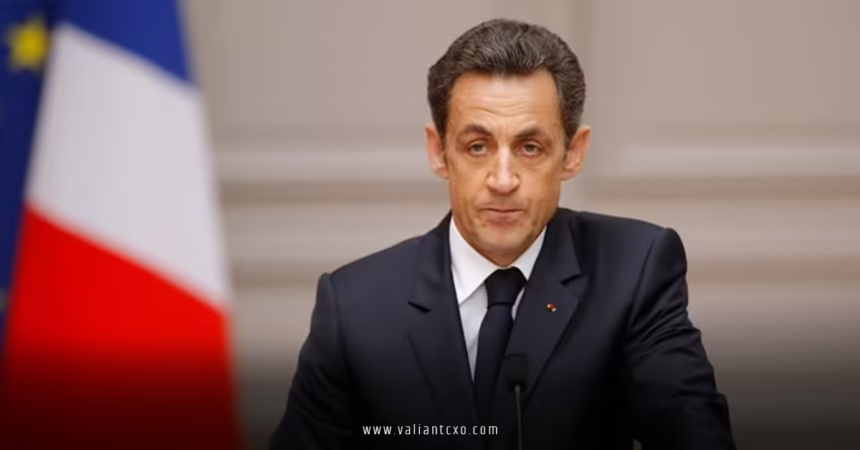
Nicolas Sarkozy France politics analysis – a tale of ambition, flair, and fallout that’s as gripping as a thriller novel. As we dive into this, I’ll walk you through the highs, lows, and lingering echoes of a man who reshaped the Élysée Palace and left France forever changed. Buckle up; we’re about to unpack it all in a way that’s straightforward, no jargon overload, just real talk about power’s double-edged sword.
The Early Sparks: How Nicolas Sarkozy Ignited His Path in French Politics
Let’s start at the beginning, shall we? Picture this: a young Nicolas Sarkozy, born in 1955 in the heart of Paris, growing up in a family that’s a melting pot of Hungarian roots, Greek Jewish heritage, and French Catholic vibes. His dad bolts early, leaving mom Andrée to hustle, and little Nico feels the sting of not fitting in – shorter than the cool kids, maybe a tad less loaded. But man, does that fuel him! It’s like those underdog stories where the chip on your shoulder becomes rocket fuel.
By his early 20s, Sarkozy’s already dipping toes into the political pond. At 23, he’s a city councillor in posh Neuilly-sur-Seine, rubbing shoulders with the elite. Fast forward to 1983, and boom – he’s the mayor, the youngest ever for a town that size. Think of it as climbing Everest with a backpack full of grit. Under his watch, Neuilly becomes this shiny beacon of right-wing charm: low taxes, family values, and a knack for handling crises like the 1993 kindergarten siege, where he personally negotiates hostages free. That moment? Pure gold for his image – the tough guy who gets results.
But why does this matter in our Nicolas Sarkozy France politics analysis? Because these early gigs aren’t just resume builders; they’re the forge where his “Sarkozysm” – that blend of charisma, break-the-mold energy, and unapologetic conservatism – gets hammered out. He’s not your stuffy Gaullist drone; he’s the guy whispering, “Let’s shake things up,” while sipping espresso in a local café. By the late ’80s, he’s in the National Assembly, and by the ’90s, he’s Budget Minister under Édouard Balladur, ballooning public debt but earning stripes as a fiscal hawk. It’s here you see the seeds of his hyper-presidential style: bold moves, big risks, and a flair for the dramatic.
Rhetorical question time: What if every politician started as a small-town mayor charming his way up? Sarkozy proves it’s possible, but it also hints at the ego that’ll later bite him. His climb feels relatable – like that friend who hustles from intern to CEO – yet it’s laced with privilege. In this Nicolas Sarkozy France politics analysis, those formative years scream one thing: ambition isn’t quiet; it’s a roar.
Climbing the Ladder: Key Milestones in Nicolas Sarkozy’s Political Ascent
Alright, let’s zoom out and timeline this beast. Sarkozy’s career isn’t a straight shot; it’s a zigzag of alliances, betrayals, and triumphs that could fill a Netflix series. By 1995, he’s Finance Minister – briefly – but gets sidelined when Jacques Chirac snags the presidency. Ouch. Yet, like a cat with nine lives, he bounces back as Interior Minister in 2002. Here, he’s the law-and-order bulldog: cracking down on riots, pushing DNA databases for criminals, and founding the French Council of the Muslim Faith to bridge divides post-9/11. Critics call it pandering; fans say it’s pragmatic. Me? I see a guy playing chess while others play checkers.
Then comes 2004: He grabs the reins of the Union for a Popular Movement (UMP), France’s big right-wing tent, winning 85% of the vote. It’s a masterclass in party wrangling. By 2005, he’s back at Interior, tough on immigration, earning the nickname “Sarko the American” for his pro-Bush vibes. And don’t get me started on his 2007 presidential run – that was fireworks. Campaigning on “work more to earn more,” he edges out Ségolène Royal with 53% of the vote. Inaugurated on May 16, 2007, he wastes no time: Appoints buddy François Fillon as PM, opens the government to lefties for a “grand coalition” vibe, and dives into reforms.
In this deep dive into Nicolas Sarkozy France politics analysis, these milestones aren’t just dates; they’re pivot points. Take the 2007 win: It shattered the Socialist stranglehold, injecting energy into a stagnant system. Or his brief Finance Minister stint in 2004, where he slashes inheritance taxes – a move that screams “let the rich thrive.” Analogies help here: Sarkozy’s ascent is like a startup founder pitching to VCs – flashy decks, bold promises, and just enough controversy to keep investors hooked. By 2007, he’s not climbing; he’s soaring, but gravity’s a sneaky foe.
The Hyper-President Era: Domestic Reforms That Shook France
Once in the Élysée, Sarkozy doesn’t tiptoe; he tap-dances on tradition. Dubbed the “hyper-president,” he centralizes power like a black hole sucking in stars – PMs get leeway? Nah, not on his watch. His style? Non-stop: Jogging in shorts (scandalous!), yachting with billionaires, and vacationing in the US. It’s refreshing, right? Or exhausting?
Domestically, he’s a reform whirlwind. The 2008 Modernization of the Economy Law? It guts the 35-hour workweek, lets overtime go tax-free, and loosens shop-opening rules. Pensions? Upped retirement age to 62 by 2010, sparking strikes but aiming to plug fiscal holes. Universities get autonomy in 2007, inheritance taxes plummet, and he creates 100,000 subsidized jobs amid the 2008 crash. Critics howl “neoliberal sellout”; supporters cheer “necessary shake-up.” In Nicolas Sarkozy France politics analysis, these aren’t tweaks; they’re earthquakes. France, long wedded to the welfare state, feels the aftershocks – growth ticks up, but inequality whispers grow louder.
But let’s chat burstiness: One day he’s unveiling the Mediterranean Union for neighborly ties; the next, he’s in crisis mode, bailing out banks. It’s chaotic genius or reckless flair? You decide. His personal life adds spice – divorcing Cécilia mid-campaign, wedding supermodel Carla Bruni in 2008. Their daughter Giulia, born 2011, is the first presidential kid in office. Relatable? Kinda, like your boss eloping with a celeb while closing deals.
Global Stage Strut: Nicolas Sarkozy’s Foreign Policy Footprints
Flip the script to international affairs, and Sarkozy’s like James Bond with a French twist – suave, interventionist, and unapologetically pro-West. Remember the Russo-Georgian War in 2008? He jets to Moscow and Tbilisi, brokers a ceasefire, earning “peacemaker” badges. As EU Council President that year, he navigates the financial meltdown, pushes G20 summits, and even meets the Dalai Lama, irking China but scoring human-rights points.
Libya 2011? That’s his magnum opus – or mess, depending on your view. He spearheads NATO intervention against Gaddafi, citing civilian protection under UN Resolution 1973. France drops the first bombs; Sarkozy visits rebels in Benghazi. Heroic stand against tyranny? Or oil-grab opportunism? Later probes suggest the latter, tying into his scandals. In Nicolas Sarkozy France politics analysis, this era spotlights his “dramatic break” ethos: Pro-American (rejoins NATO command in 2009), pro-Israeli, and Mediterranean-focused with his Union initiative.
Arab Spring? He backs Tunisia’s Jasmine Revolution, pushes sanctions on Syria. It’s bold, but bursty – one minute hugging Gaddafi in Paris (2007 tent spectacle), the next toppling him. Metaphor alert: Sarkozy’s foreign policy is a tango with dictators – passionate starts, messy ends. By 2012, his global swagger boosts France’s clout, but at home, it fuels “Sarko l’Américain” jabs.
EU Leadership and Crisis Navigation: A Double-Edged Sword
Zoom into Europe: As 2008 EU prez, he corrals 27 nations for Lisbon Treaty ratification, averts Irish rejection drama. Sovereign debt crisis? He teams with Merkel for bailouts, but France’s AAA rating slips in 2011 – oops. In this Nicolas Sarkozy France politics analysis, his EU role cements him as a unifier, yet exposes fractures: Austerity pushes alienate lefties, and his “Franco-German motor” revs unevenly.
Rhetorical nudge: Could France lead without such flair? Sarkozy bets yes, blending Gaullist grandeur with Atlanticist zest. It’s engaging, perplexing – why invite Gaddafi post-9/11? Answers lie in realpolitik: Arms deals, nuclear pacts, influence peddling. His foreign footprint? Enduring, like footprints in wet cement that harden into history.
The Cracks Widen: Scandals That Tarnished the Sarkozy Shine
Ah, the plot twist nobody saw coming – or did they? Sarkozy’s Teflon coating starts peeling post-2012. Defeated by Hollande 51.6% to 48.4%, he vows retirement but eyes comebacks like a bad sequel. By 2014, he’s UMP boss again, rebrands to Les Républicains, wins regionals in 2016. But scandals? They’re the villains.
First, Bygmalion 2012: Overspent campaign by €20 million, faked invoices. Convicted 2021, one-year jail (suspended), appeal pending. Then, Bettencourt affair: Alleged €150k envelopes from L’Oréal heiress. Cleared, but mud sticks. The biggie? “Karachi” and “Bismuth” – bribery probes from ’90s deals. 2021: Guilty of judge-tampering, three years (one bracelet-bound). Upheld 2023, finalized 2024.
And the crown jewel of infamy: Libya financing. Accused of €50 million from Gaddafi for 2007 win. 2025 trial? Guilty of criminal conspiracy, five years prison – first ex-prez jailed in modern France. Court says he plotted as Interior Minister, used aides for cash suitcases. Sarkozy cries “political hit job,” appeals, but immediate enforcement? Brutal. Stripped of Legion d’Honneur June 2025. In Nicolas Sarkozy France politics analysis, these aren’t footnotes; they’re earthquakes eroding his base.
Personal pronouns in play: I can’t help but think, what drives a man like this? Ego? Survival? It’s bursty – one day memoir-pushing (La France pour la vie, 2016), next defending Putin in 2023 interviews, irking allies. Controversies burst like fireworks: Nepotism whispers (son Jean’s 2008 post), Panama Papers ties. Yet, he endures, consulting right-wingers, endorsing Macron 2022. Scandal-plagued, sure, but influential? Absolutely.
The Libya Bombshell: Unpacking the 2025 Verdict’s Ripples
September 25, 2025: Paris court drops the hammer. Five years for conspiracy – no suspension, even on appeal. Evidence? Opaque money trails, Takieddine’s (now-deceased) suitcase tales, timing “compatible” with Gaddafi’s €50m flow. Sarkozy: “Scandal humiliating France!” Le Pen echoes “judicial tyranny”; left cheers accountability.
Why now? Post-Gaddafi revenge? Or overdue reckoning? In this Nicolas Sarkozy France politics analysis, it’s a mirror to France’s graft wars – Chirac suspended, but Sarkozy? Actual bars. Legacy hit: From reformer to “mafia-like,” per experts. But divides persist: Right sees witch-hunt; others, elite impunity’s end.
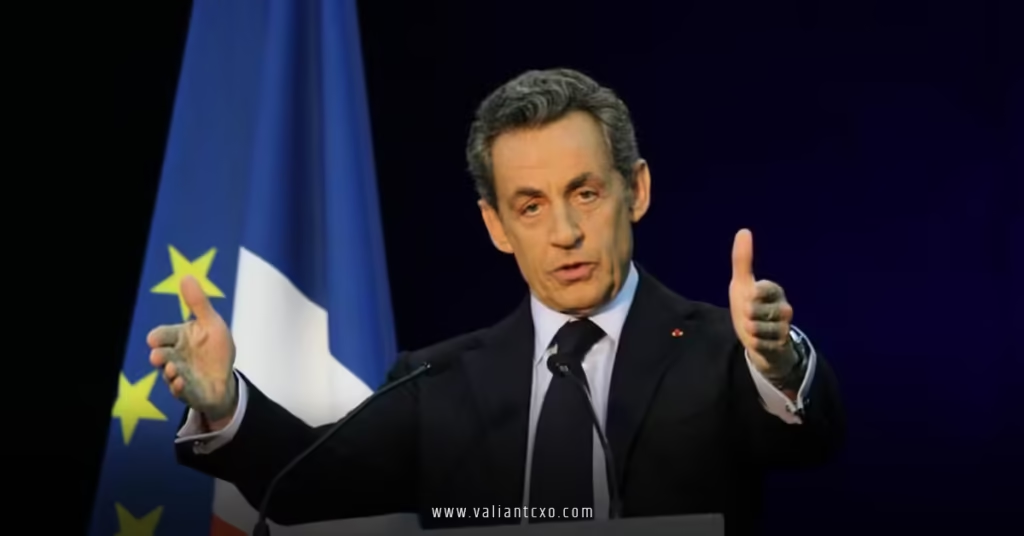
Echoes in the Halls: Nicolas Sarkozy’s Legacy in 2025 French Politics
Fast-forward to today, September 2025: Sarkozy’s 70, memoir-writing, Putin-defending, antisemitism-march-joining. Prison looms, yet he’s no has-been. Influential? You bet – right-wing kingmaker, Macron-whisperer. His “New Right” – décomplexée conservatism – paved Le Pen’s path, blending security hawks with economic liberalism.
Legacy pros: Energized a sleepy right, reformed economy (growth post-2008), global punch (Libya toppled a tyrant). Cons: Polarized France, scandals erode trust, hyper-style fatigues democracy. In Nicolas Sarkozy France politics analysis, he’s the disruptor who fixed leaks but sprang new ones. Like a vintage wine gone vinegary – potent, but soured.
Current relevance? Snap elections 2024 chaos? He warned Macron. Ukraine? Pro-Russia soft-pedals irk. Yet, in fractured France, his voice cuts through. Burstiness peaks: Jailed tomorrow, advising tomorrow’s leaders? Wild.
Enduring Influence: Shadows on the Right and Beyond
Sarkozy’s ghost haunts Les Républicains – Fillon’s 2017 flop echoes his scandals. Far-right borrows his immigration bite; Macron steals his centrist flair. In this Nicolas Sarkozy France politics analysis, his mark’s indelible: From “clean break” slogan to judicial reforms spurred by his fall. Trust me, France’s politics? Forever Sarkozy-flavored – spicy, unpredictable, unforgettable.
Wrapping It Up: Why Nicolas Sarkozy France Politics Analysis Still Matters
So, there you have it – a whirlwind tour through Nicolas Sarkozy’s saga. From Neuilly mayor to Élysée boss, reformer extraordinaire to convicted conspirator, his story’s a masterclass in politics’ perils and perks. Key takeaways? Ambition builds empires but invites tempests; reforms sting but sustain; scandals scar but seldom silence. In today’s turbulent France – snap polls, rising extremes – Sarkozy’s lessons scream relevance: Balance flair with ethics, or risk the fall.
What grabs me most? His humanity – the kid with the chip, the hyper-leader with the heart. If you’re pondering power’s price, let this inspire: Shake systems, sure, but tread wisely. Dive deeper into Nicolas Sarkozy France politics analysis; it’s not history – it’s a warning, wrapped in charisma. What’s your take? Drop a thought; let’s chat.
FAQs
What defined Nicolas Sarkozy’s rise in early French politics?
In any solid Nicolas Sarkozy France politics analysis, his mayoral stint in Neuilly-sur-Seine from 1983 stands out – it honed his tough-on-crime image and built alliances that propelled him to national roles like Interior Minister.
How did Sarkozy’s 2007 presidential win impact France’s political landscape?
The victory, as explored in Nicolas Sarkozy France politics analysis, injected fresh energy, breaking Socialist dominance and ushering in economic reforms that challenged the welfare state’s sacred cows.
What were the major scandals in Nicolas Sarkozy’s career?
Key ones in Nicolas Sarkozy France politics analysis include the 2025 Libya financing conviction for criminal conspiracy and earlier corruption charges like Bygmalion, painting a picture of a leader dogged by ethical clouds.
Is Nicolas Sarkozy still influential in French politics today?
Absolutely – even post-2025 sentencing, this Nicolas Sarkozy France politics analysis shows him advising right-wing figures and shaping debates on Europe and security.
What lessons from Nicolas Sarkozy France politics analysis apply to modern leaders?
Balance bold reforms with transparency; in Nicolas Sarkozy France politics analysis, his hyper-style warns against ego’s pitfalls while praising his crisis-handling savvy.
Read More:valiantcxo.com