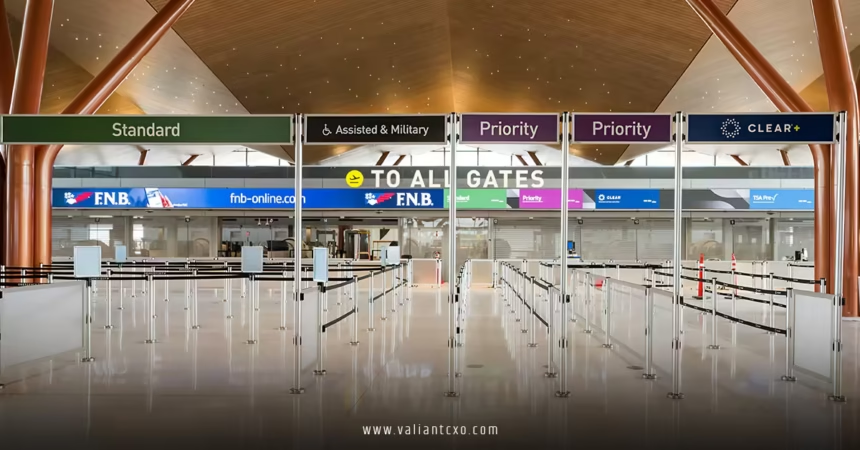
How to use MIA airport biometric passport screening for faster US arrivals? If you’ve ever staggered off a long-haul flight into Miami International only to face a soul-crushing customs line that feels longer than the flight itself, you already know why this question is pure gold in 2025. The good news? Miami International Airport (MIA) has rolled out one of the smoothest biometric entry systems in the country, and once you know the tricks, you can literally walk off the plane, smile at a camera, and be sipping a cafecito in the arrivals hall while everyone else is still fishing for their passport. Ready to shave 30–60 minutes off your arrival time? Let’s break it down step by step.
What Exactly Is Biometric Screening at MIA and Why Should You Care?
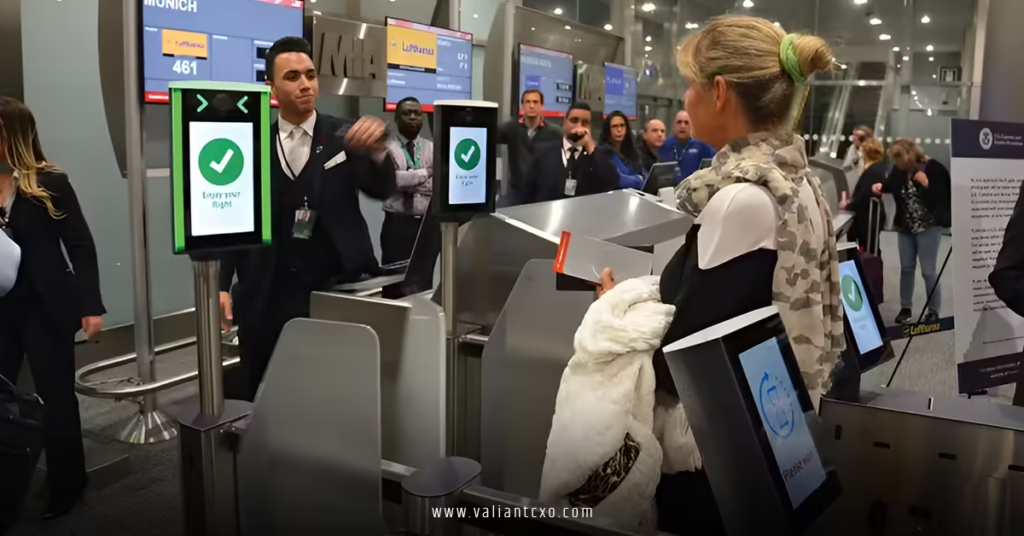
Picture this: instead of handing your passport to an officer who flips through it while asking if you packed your own bags, you walk up to a kiosk, look into a camera for two seconds, and boom — the gate opens. That’s biometric screening in a nutshell. MIA uses facial recognition technology that compares your live face to the photo in your passport’s chip. No more fumbling, no more “please remove your hat/sunglasses/mask” dance.
The system is officially called Simplified Arrival by U.S. Customs and Border Protection (CBP), and MIA has it in almost every international terminal now (Concourse D, E, F, and J). It’s 100% optional — but why on earth would you opt out when it can turn a 90-minute wait into a 10-minute breeze?
Who Can Actually Use MIA’s Biometric Passport Screening?
Before you get too excited, here’s the fine print on eligibility:
- U.S. citizens and lawful permanent residents (Green Card holders)
- Citizens of Visa Waiver Program countries (most of Europe, Australia, Japan, South Korea, etc.) using ESTA
- Canadian citizens (yes, even without an ESTA)
- Holders of most U.S. visas (B1/B2, F1, H1B, etc.) — as long as your passport has an electronic chip (the little gold symbol on the cover)
If you have one of those old non-electronic passports from the Stone Age, sorry — you’re stuck in the regular line.
How to Use MIA Airport Biometric Passport Screening for Faster US Arrivals: The Step-by-Step Playbook
Step 1: Make Sure You’re Flying an Airline That Participates
Almost every major carrier at MIA is on board now — American, Delta, British Airways, Lufthansa, LATAM, Copa, Air France, you name it. If you’re on a low-cost carrier or a tiny regional airline, double-check on their website or the MIA website, but 95% of international flights are covered.
Step 2: Use Global Entry or Mobile Passport Control as a Backup (But You Probably Won’t Need It)
Here’s the plot twist: you don’t even need Global Entry to use biometric screening at MIA anymore. The facial recognition kiosks are open to everyone who’s eligible. That said, having Global Entry still gives you the dedicated lanes on those rare days when the system is crowded.
Step 3: Follow the Purple “Simplified Arrival” Signs After You Deplane
As soon as you step into the arrivals corridor, look up. Purple signs with a camera icon will guide you like a treasure map. Ignore the old “U.S. Citizens” or “Visitors” signs unless you want to time-travel back to 2015.
Step 4: Walk Straight to the Biometric Kiosk — No Forms!
Remember the blue customs declaration card they used to hand out on the plane? Extinct at MIA for most passengers. The kiosk will ask you four quick yes/no questions on screen (did you bring food, more than $10,000 cash, etc.). Tap, tap, done.
Step 5: Look at the Camera Like You’re Taking a Selfie
- Stand on the footprints
- Remove hats, sunglasses, and (if asked) masks
apple - Stare at the camera for 2–4 seconds
- Watch the screen turn green and say “Match Confirmed”
That’s it. The gate swings open and you’re officially in the United States.
Step 6: Grab Your Bags and Breeze Through the Exit
Because your face already cleared immigration, the officer at the exit usually just waves you through. On a good day, you’re from plane seat to curbside Uber in under 25 minutes.
Pro Tips to Make MIA Biometric Screening Even Faster
- Fly into Concourse J if you can — it’s usually the least crowded for biometrics.
- Travel with carry-on only. Checked bags are the real bottleneck, not immigration.
- Do it early in the morning or late at night — peak chaos is 11 AM–3 PM when Europe and South America dump everyone at once.
- If you’re traveling with kids under 14 or over 79, they might need to go to a regular officer (rules change often — check the CBP website the week before).
What If the Biometric System Rejects You? (It Happens to 1–2% of People)
Don’t panic. Lighting, a new beard, or a bad hair day can trip it up. Just walk five feet to the CBP officer, hand over your passport the old-fashioned way, and you’re through in two minutes. No black mark on your record.
How Much Time Are We Really Talking? Real Numbers from 2025
CBP’s own data shows the average biometric passenger clears in 8–12 minutes gate-to-gate. Compare that to the regular line that routinely hits 60–120 minutes during peak season (December–April). That’s not marketing fluff — that’s thousands of passengers tracked daily.
The Privacy Question Everyone Asks
Yes, CBP takes your photo. No, they don’t keep it forever if you’re a U.S. citizen — it’s deleted right after you walk through. For non-U.S. citizens, it’s stored for up to 12 hours for audit purposes, then purged (unless you’re on a watchlist, obviously). You can always opt out and go to a live officer if it creeps you out.
How to Use MIA Airport Biometric Passport Screening for Faster US Arrivals on Connecting Flights
If Miami is just your entry point and you’re connecting domestically, biometric screening is still a massive win. You’ll exit into the sterile area, grab your bags (if checked), re-check them airside in 60 seconds thanks to the purple “Bag Drop” belts, and be at your next gate sipping overpriced Starbucks before your original flight’s seatbelt sign even turns off.
Future-Proofing: What’s Coming Next at MIA
By late 2025, MIA plans to roll out biometric boarding for select international departures too. Imagine never showing your boarding pass again — just smile at the gate. We’re basically living in a sci-fi movie, and I’m here for it.
Conclusion: Your New MIA Arrival Superpower
Learning how to use MIA airport biometric passport screening for faster US arrivals is honestly one of the highest-ROI travel hacks of the decade. Ten seconds of looking at a camera can save you an hour of your life every single trip. Next time you’re booking that flight to Miami, smile — because you now hold the cheat code to skipping the line that everyone else is still stuck in. Safe travels, and may your arrivals always be biometric-fast!
Frequently Asked Questions
1. Do I still need to fill out a customs form if I use biometric screening at MIA?
No! For most passengers using how to use MIA airport biometric passport screening for faster US arrivals, the old blue form is gone. You answer four quick questions on the kiosk screen instead.
2. Can my whole family use MIA biometric screening together?
Yes — as long as everyone is eligible. Kids 14+ can use the kiosks alone; younger ones usually go with a parent to a CBP officer (super quick).
3. What happens if I’m wearing heavy makeup or grew a beard since my passport photo?
99% of the time it still works. If not, just step over to the officer — no big deal.
4. Is biometric screening at MIA mandatory?
Never. You can always choose the traditional line if you prefer talking to a human.
5. Does using how to use MIA airport biometric passport screening for faster US arrivals affect Global Entry status?
Not at all. In fact, Global Entry members get priority biometric lanes when they’re busy.
For More Updates !! : valiantcxo.com