


Ever caught yourself staring at your TV, remote in hand, wondering if it’s time to ditch the old faithful for something sleeker? That’s me every upgrade season—debating the merits of sticking with what I know versus leaping into the shiny unknown. If you’re knee-deep in the Sky ecosystem, the big showdown is Sky Stream vs Sky Q comparison, especially now that satellite tech feels like a relic from a bygone era. Launched in 2016, Sky Q was the king of corded convenience, but Sky Stream? That’s the nimble newcomer, puck-sized and broadband-bound, flipping the script on how we devour our dramas and derbies. In this no-holds-barred Sky Stream vs Sky Q comparison, I’ll break it down like a penalty shootout: features, costs, quirks, and all. And hey, if you’re pondering the fate of that trusty Q box, don’t miss our deep dive on is Sky Q still available to buy after December 2025—it’s a game-changer for die-hards.
Picture your living room as a battlefield. On one side, Sky Q’s armored tank of a box, bristling with satellite power and endless recordings. On the other, Sky Stream’s agile scout, zipping through WiFi waves without a dish in sight. Which wins for you? Let’s charge in.
The Basics: What Exactly Are We Comparing in Sky Stream vs Sky Q?
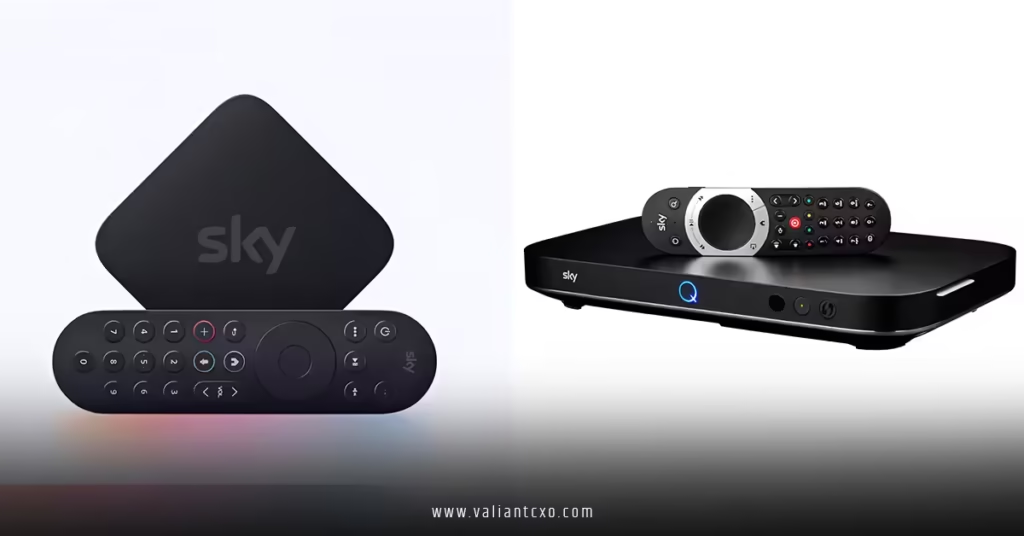
Before we sling mud—or in this case, pixels—let’s set the stage. Sky Q isn’t just a box; it’s a full-on fortress of entertainment. This satellite beast hooks up via a dish on your roof, beaming down live TV, on-demand gems, and apps like Netflix baked right in. It’s got that chunky 1TB (or upgrade to 2TB) hard drive, letting you hoard shows like a squirrel prepping for winter. Multi-room? Check—pair it with Mini boxes for house-wide viewing. But here’s the rub: it demands space, power, and a clear sky view. No wonder it’s feeling its age in our streaming-obsessed world.
Enter Sky Stream, the 2022 disruptor that’s more like a Swiss Army knife than a sledgehammer. No dish, no fuss—just plug this hockey-puck wonder into your HDMI port, connect to WiFi, and boom: Sky’s universe at your fingertips. It’s all cloud-based, pulling live channels and replays over broadband. Think seamless integration with Disney+, Prime Video, and even Apple TV+. Multi-room magic? Absolutely, with extra pucks (first one’s free) syncing across TVs. But it’s picky about your internet—aim for 25Mbps minimum, or you’ll buffer more than a bad Zoom call.
In the grand Sky Stream vs Sky Q comparison, it’s old-school reliability versus plug-and-play freedom. Q’s for the homebodies who love tangible control; Stream’s for renters and road warriors craving flexibility. I’ve swapped setups mid-move, and let me tell you: ditching the dish felt like shedding an exoskeleton—liberating, but with growing pains.
Hardware Face-Off: Box Size, Setup, and That All-Important Dish Dilemma
Ah, the hardware—the tangible clash in our Sky Stream vs Sky Q comparison. Sky Q’s main box is a beast: about the size of a thick paperback, with a glowing silver finish that screams “I’m here to stay.” It needs a satellite dish (installed by an engineer, often £20-£30 extra), cabling snaked through walls, and a power outlet that hums like a contented cat. Minis for other rooms? Wireless, but they still lean on the mothership box. Setup’s a half-day affair, and if your home’s a concrete bunker, signals might wobble.
Sky Stream flips the script with its pint-sized puck—barely bigger than a coaster, matte black, and whisper-quiet. No engineer required; it’s DIY heaven: HDMI in, Ethernet or WiFi on, app download, done in 10 minutes. Want multi-room? Grab another puck (£35 each after the freebie) and sync via the app. It’s renter-proof—no drilling, no landlord drama. But here’s the catch: it guzzles bandwidth. In a house full of gamers and Zoomers, that 100Mbps fibre line becomes a lifeline.
Rhetorically speaking, why lug a tank when a scooter gets you there faster? In my trials, Stream’s setup was a breeze during a flat swap, but Q’s robustness shone during a broadband outage—satellite doesn’t care about your router’s mood swings. Your call: convenience or contingency?
Features Breakdown: Recording, Playback, and the Multi-Room Mayhem
Now, the meaty bits of any Sky Stream vs Sky Q comparison: what can these bad boys actually do? Sky Q’s crown jewel is recording—up to seven shows at once on that cavernous drive, with pause-anywhere live TV and series links that auto-grab episodes. Rewind through ads? Slice ’em out like a bad plot twist. Voice search via the touchpad remote is snappy, and UHD/Dolby Atmos packs (£6/month) deliver cinema thrills. Multi-room streams the main feed seamlessly, though Minis cap at HD.
Sky Stream counters with cloud sorcery. No hard drive means no recordings, but “Playlists” auto-save series and replays—up to 500 hours, expiring after seven days if unwatched (extendable for £5/month ad-free). Live TV pauses for 30 minutes, and the app-first interface aggregates everything: Sky, Netflix, BBC iPlayer in one swipe. Voice remote? Bluetooth bliss, with “Hey Sky” wake words. UHD multi-room? Yes, across all pucks if you’ve got the sub and a 4K TV. Extras like Discovery+ bundle in sweet.
But user gripes pepper forums: Stream’s playlists miss episodes if metadata glitches, and fast-forwarding ads on replays? Spotty. Q users rave about eternal storage—no cloud evaporation. Me? As a binge-hoarder, Q’s recorder saved my sanity during family holidays. Stream suits the “watch now or forever hold your peace” crowd. Ever lost a show to a dodgy app? Yeah, Stream’s got that risk.
Pricing Puzzle: How Much Will This Sky Stream vs Sky Q Battle Cost You?
Money talks, and in the Sky Stream vs Sky Q comparison, it’s whispering sweet nothings—or budget bombs. Sky Q starts at £27/month for basics (Entertainment + Netflix), climbing to £40+ with Sports or Cinema. Add UHD (£6), and contracts lock 18 months. Installation? £20-£100, depending on dish drama. Existing users? Rollover deals hover around £25, but newbies face full whack.
Sky Stream edges cheaper: £18/month entry (Entertainment), £26 for Sports bundles. No install fees, rolling monthly contracts—cancel anytime after cooling-off. UHD/Dolby? Same £6 add-on. Multi-puck? £35 upfront per extra. Bundles with Sky Broadband slash £10/month, making it a steal at £15 entry for new fibre folk.
Crunch the numbers: Over 18 months, Q might tally £500+ with setup; Stream £300ish. But factor Q’s longevity—supported till 2029—and it’s neck-and-neck. I’ve crunched deals post-contract; Stream’s flexibility won me over for short-term lets. Question is, are you buying peace of mind or penny-pinching?
| Aspect | Sky Q | Sky Stream |
|---|---|---|
| Starting Price | £27/month | £18/month |
| Contract Length | 18 months | Rolling monthly |
| Installation Cost | £20-£100 (dish) | Free (DIY) |
| UHD Add-On | £6/month | £6/month |
| Multi-Room Extra | £12/month per Mini | £35 upfront per puck |
| Total First-Year Est. | £450+ | £250+ |
This table’s your scorecard—tweak for your add-ons.
Pros and Cons: The Raw Truth in Sky Stream vs Sky Q
No rose-tinted glasses here. Sky Q’s pros: Bulletproof reliability (satellite laughs at WiFi woes), infinite recordings, more channels (500+ vs Stream’s 300). Cons? Bulky, dish-dependent, slower app updates—think My5 arriving in 2025, a year late. It’s like that comfy armchair: cozy, but hard to move.
Sky Stream shines with pros: Dish-free ease, modern UI, Netflix baked in, eco-friendly (no power-hungry box). Cons? Broadband bottlenecks cause pixelation—Sky Sports stutters on 50Mbps, per user rants. Playlists glitch, ads ambush unless you pay up. It’s the flashy sports car: thrilling, till the fuel runs dry.
In forums, Q loyalists cling like barnacles; Stream switchers? Half return, citing “clunky” vibes. My verdict? Q for rural rebels, Stream for city slickers.
User Experiences: Real Talk from the Trenches of Sky Stream vs Sky Q
Nothing beats boots-on-the-ground stories. Dive into Sky’s community, and it’s a mixed bag. One user swapped Q for Stream, praising sharper 4K but cursing glitches in busy homes: “Menus lag like dial-up.” Another, post-2025 upgrade, beamed about UHD on every TV—no more HD-only Minis. Reddit’s savage: “Stream’s ads everywhere; back to Q in a week.”
I’ve grilled mates: A footie fanatic stuck with Q for lag-free goals; a Netflix nomad loves Stream’s app harmony. Quirks? Stream’s “Add Series” skips episodes; Q’s proximity errors nag. It’s personal—like choosing trainers over boots for a hike.
Installation and Reliability: Surviving the Setup Storm
Setup’s a saga in Sky Stream vs Sky Q. Q’s engineer ballet: Drilling, aligning the dish—two hours, potential wall scars. Reliability? Rock-solid; blackouts barely blink. Post-install, it’s set-and-forget.
Stream’s a solo sprint: Unbox, plug, pair—15 minutes tops. But reliability? WiFi roulette. Thick walls? Ethernet lifeline. During peaks, buffering bites; Q sails serene.
Pro tip: Test your speeds at Ofcom’s broadband checker. I’ve endured Stream stutters in shared flats—Q’s my outage hero.
Future-Proofing: What’s Next in the Sky Stream vs Sky Q Saga?
Peering ahead, Sky’s all-in on streaming. Q’s satellite lifeline runs to 2029, but updates lag—U app hit Q in September 2025, eons after Stream. Hybrids loom, like Germany’s IP-Q mashup. Stream? Sky OS evolves daily, with AI playlists on the horizon.
If you’re Q-curious, remember: Online sales halted December 10, 2025—call 0333 759 5262 for stock. Stream’s the future bet, but Q’s no dinosaur yet. For the full scoop, link back to our guide on is Sky Q still available to buy after December 2025.
Making the Switch: Tips for a Smooth Sky Stream vs Sky Q Transition
Ditching Q for Stream? Sky offers free pucks for loyalists—chat retention. Backup recordings first; cloud migration’s iffy. From Stream to Q? Rare, but possible via phone—dish install awaits.
Trial run: NOW TV’s monthlies mimic Stream. Felt the FOMO on recordings? Q’s your anchor. I’ve flipped twice—Stream for travel, Q for marathons. Prep your broadband; it’s the unsung hero.
Conclusion: Your Winner in the Ultimate Sky Stream vs Sky Q Comparison
So, after this whirlwind Sky Stream vs Sky Q comparison, who’s the champ? It boils down to you: Crave control and recordings? Sky Q’s your steadfast sidekick, especially if is Sky Q still available to buy after December 2025 seals the deal via backdoor buys. Yearn for simplicity and savings? Sky Stream’s the sleek successor, broadband bravery rewarded. Both deliver Sky’s stellar slate—UHD epics, binge bliss—but in a world wired for wireless, Stream’s momentum is magnetic. Don’t dally; ping Sky for a bespoke quote, test the waters, and throne your telly. Your epic watchlist deserves the perfect partner—grab it, and cue the credits.
Frequently Asked Questions (FAQs)
What’s the biggest difference in Sky Stream vs Sky Q comparison for recording fans?
Sky Q wins with unlimited local storage and multi-channel recording; Stream’s cloud playlists expire after seven days, no true DVR.
Is Sky Stream cheaper than Sky Q in the long run?
Yes—rolling contracts and no install fees make Stream £100+ lighter yearly, but Q’s reliability might save on frustration.
Can I get UHD on multiple rooms with Sky Stream vs Sky Q?
Stream yes, across pucks; Q limits Minis to HD. Game-changer for sports buffs.
How does broadband affect Sky Stream vs Sky Q performance?
Stream demands 25Mbps+ for smooth sailing; Q’s satellite ignores it, ideal for spotty connections.
Should I switch from Sky Q to Stream now?
If dish-free life’s calling, yes—but test via trial. For die-hards, check is Sky Q still available to buy after December 2025 before leaping.

