US LNG export terminals are booming like never before, turning America into the world’s top supplier of this super-chilled fuel. As of late 2025, these massive facilities along the Gulf Coast are pumping out record volumes, with more on the way to meet skyrocketing global demand. Have you ever wondered how the U.S. flipped from importing LNG to dominating exports? It’s a story of shale revolution magic, smart infrastructure, and perfect timing. Let’s break down the current landscape of US LNG export terminals, from the heavy hitters already operating to the exciting projects under construction.
This map from the EIA shows key US LNG export terminals and their locations, highlighting the Gulf Coast dominance.
The Rise of US LNG Export Terminals
Think of US LNG export terminals as giant freezers for natural gas—cooling it to -260°F to shrink it 600 times for easy shipping overseas. The boom started around 2016 when Sabine Pass flipped from import to export mode. Fast-forward to December 2025, and the U.S. has solidified its spot as the global leader, exporting more than anyone else.
Why the surge? Abundant shale gas from places like the Permian and Marcellus keeps costs low, while events like Europe’s energy crunch supercharged demand. Today, US LNG export terminals handle over 15 Bcf/d in capacity, with projections pushing toward 25-30 Bcf/d by the end of the decade. It’s not just business; it’s energy security for allies and a massive economic engine at home.
Operating US LNG Export Terminals in 2025
Right now, nine major US LNG export terminals are churning out cargoes, mostly clustered in Louisiana and Texas. These facilities represent years of investment and now operate at high utilization rates.
Key players include:
- Sabine Pass (Cheniere Energy): The pioneer, with multiple trains pushing out around 4 Bcf/d.
- Corpus Christi (Cheniere): Including recent Stage 3 additions, a powerhouse in Texas.
- Freeport LNG: Known for flexibility and strong output.
- Cameron LNG: Joint venture delivering reliably.
- Cove Point (Dominion): On the East Coast, smaller but strategic.
- Elba Island: Modular design for efficiency.
- Calcasieu Pass (Venture Global): Fast-build champ using mid-scale tech.
- Plaquemines LNG (Venture Global): The newest, with Phase 1 shipping since late 2024 and Phase 2 ramping up.
These US-LNG-export-terminals exported record volumes in 2025, often exceeding nameplate capacity thanks to optimizations.
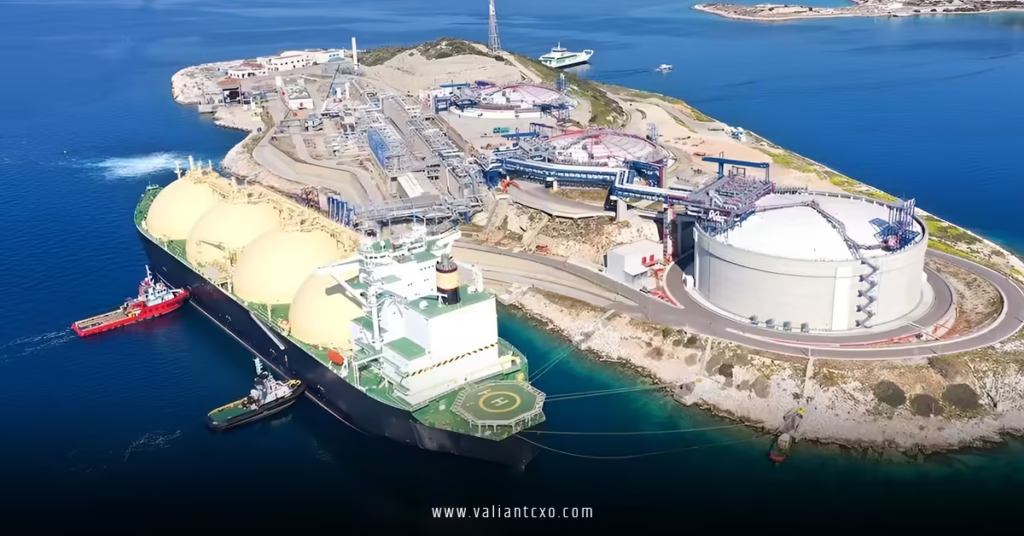
An aerial view of a Gulf Coast LNG facility under development, showcasing the scale of these US-LNG-export-terminals.
Standout Performers Among US LNG Export Terminals
Cheniere leads the pack with Sabine Pass and Corpus Christi, mastering long-term contracts and spot sales. Venture Global’s innovative mid-scale approach has slashed build times, making projects like Plaquemines game-changers. Ever notice how these terminals look like sci-fi cities from above? Massive storage tanks, flares, and jetties—it’s engineering on steroids.
US LNG Export Terminals Under Construction
The pipeline is packed! Several US-LNG-export-terminals are in build mode, set to add billions of cubic feet per day soon.
Notable ones:
- Golden Pass LNG (ExxonMobil/QatarEnergy): In Texas, targeting startup soon with huge capacity.
- Port Arthur LNG (Sempra): Phase 1 advancing quickly.
- Rio Grande LNG (NextDecade): Brownfield advantages speeding progress.
- Woodside Louisiana LNG: A standout newcomer—check the latest Woodside Energy Louisiana LNG project update for details on this ambitious development in Calcasieu Parish, aiming for first gas in 2029.
- Expansions like Corpus Christi midscale trains and Plaquemines Phase 2.
These under-construction US-LNG-export-terminals will push total capacity north of 20 Bcf/d nominally by 2028, with peaks even higher.
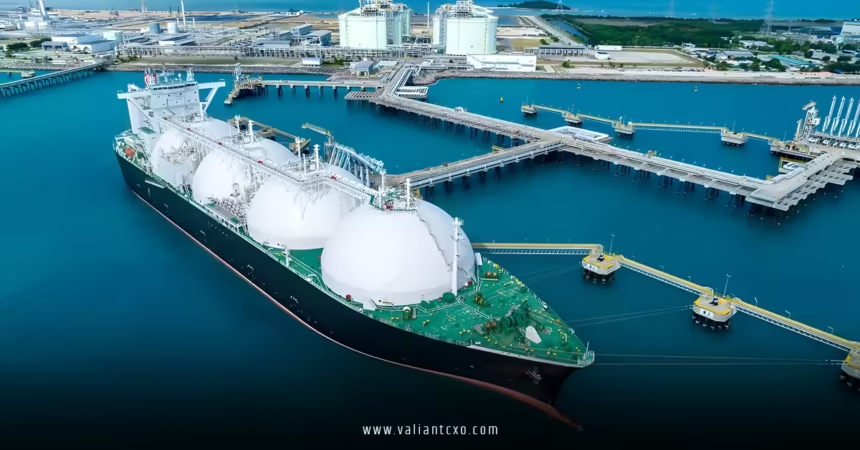
An LNG tanker loading at a terminal—exactly what happens daily at operating US LNG export terminals.
Economic Impact of US LNG Export Terminals
These aren’t just steel and pipes; US LNG export terminals create jobs—tens of thousands during construction peaks—and billions in economic ripple effects. Louisiana and Texas reap the most, with taxes funding schools and infrastructure. Globally, they stabilize prices and diversify supply away from riskier sources. Rhetorical question: Without US LNG export terminals, where would Europe turn during crises?
Challenges Facing US LNG Export Terminals
It’s not all smooth sailing. Regulatory hurdles, community concerns over emissions, and market volatility pose risks. Yet, operators focus on efficiency and lower-carbon tech, like electric drives, to stay ahead.
Future Outlook for US LNG Export Terminals
Looking ahead, US LNG export terminals are poised for more growth. With demand in Asia and Europe rising, and new FIDs in 2025, capacity could double again by 2030. Projects like CP2 and additional phases keep the momentum. Analogy: It’s like the shale boom 2.0, but for exports.
One exciting development is the Woodside Louisiana LNG—stay updated with the Woodside Energy Louisiana LNG project update to see how it’s progressing toward becoming a major player.
In summary, US LNG export terminals have transformed America into an energy superpower, delivering reliable fuel worldwide while boosting the domestic economy. From nine operating giants to a wave of new builds, the sector’s growth shows no signs of slowing. As global transitions unfold, these terminals bridge the gap, offering cleaner alternatives and security.
Curious about diving deeper? The future looks bright—and chilled.
Frequently Asked Questions About US LNG Export Terminals
1. How many US LNG export terminals are operating in 2025?
Nine major facilities are fully operational, with combined capacity exceeding 15 Bcf/d.
2. What is the total capacity of US LNG export terminals?
Current operating and ramping terminals hit around 17 Bcf/d peak, with under-construction projects adding more to reach 25+ Bcf/d by 2028.
3. Where are most US LNG export terminals located?
Primarily along the Gulf Coast in Louisiana and Texas, with a few on the East Coast.
4. Which company operates the most US LNG export terminals?
Cheniere Energy leads with Sabine Pass and Corpus Christi facilities.
5. Are new US LNG export terminals still being built?
Yes, several like Golden Pass, Port Arthur, and Woodside Louisiana are under construction—refer to the Woodside Energy Louisiana LNG project update for one key example.