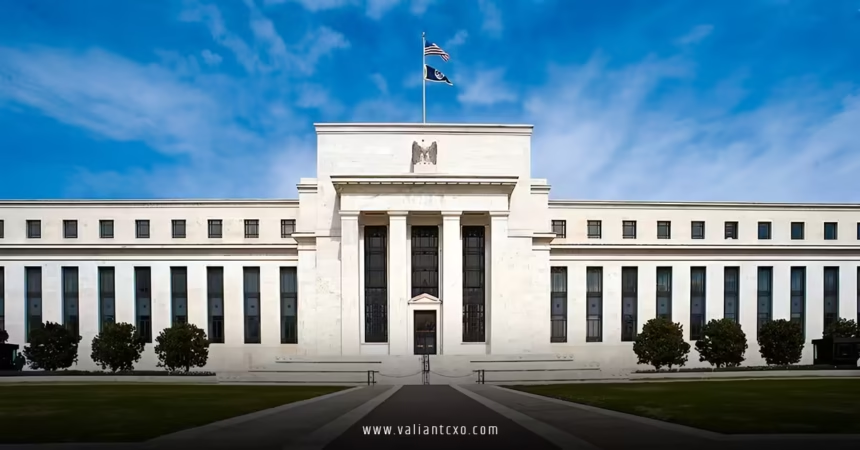
Federal Reserve independence under threat has become a headline-grabbing reality in early 2026, sparking intense debate across economic, political, and financial circles. As the U.S. central bank navigates turbulent times, recent events have spotlighted just how fragile this cornerstone of modern monetary policy can be. Think about it: the Fed has operated with relative autonomy for over a century, making decisions based on data rather than directives from the White House. But now, with escalating tensions, many are asking—could political pressure erode this vital shield?
This isn’t abstract theory. The latest flashpoint ties directly to the ongoing Jerome Powell criminal investigation over Fed headquarters renovation statements, where Chair Jerome Powell faces a DOJ probe over his congressional testimony. What started as scrutiny over a building project has morphed into what Powell calls a “pretext” for broader interference. If you’re concerned about your mortgage rates, stock portfolio, or the broader economy, you should be paying attention. Let’s unpack why Federal Reserve independence under threat matters so much, exploring history, current drama, and potential fallout.
Why Federal Reserve Independence Matters: A Quick Primer
Ever wonder why the Federal Reserve isn’t directly controlled by the president or Congress? It’s by design. Established in 1913 after banking panics, the Fed’s independence allows it to prioritize long-term economic stability over short-term political gains.
The Core Principles of Fed Autonomy
Independence means the Fed sets interest rates, manages inflation, and oversees banking without needing approval from elected officials. Chairs like Powell serve fixed terms (four years for the chair role, 14 for governors), insulating them from immediate firing. This setup prevents politicians from juicing the economy before elections—lowering rates to boost growth, risking future inflation spirals.
History backs this up. Countries with politicized central banks often suffer hyperinflation or recessions. The U.S. model? It’s been a global gold standard, helping tame inflation in the 1980s under Paul Volcker and steering through crises like 2008 and the pandemic.
But when Federal Reserve independence is under threat, markets jitter. Investors crave predictability; political meddling introduces chaos.
Historical Threats: Lessons from the Past
Presidents have griped about the Fed before. Nixon pressured Arthur Burns in the 1970s, contributing to stagflation. Trump, during his first term, publicly blasted Powell for not cutting rates fast enough, even floating ideas of firing him (legally dubious).
Yet norms held—until perhaps now. With Federal Reserve independence under threat in 2026, echoes of those past battles feel louder.
The Current Storm: Federal Reserve Independence Under Threat in 2026
Fast-forward to today, January 2026. The Trump administration’s actions have ignited fears that Federal Reserve independence is under threat like never before.
The Powell Probe: A Pretext for Pressure?
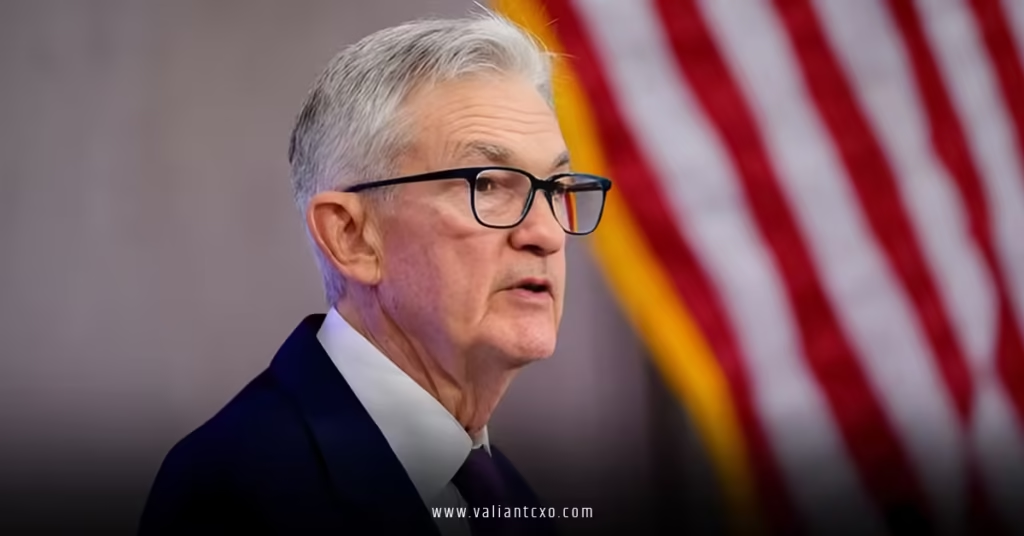
On January 11, 2026, Jerome Powell released a rare video statement addressing a DOJ criminal investigation into his June 2025 testimony about the Fed’s headquarters renovation. The probe, involving grand jury subpoenas, focuses on alleged discrepancies in Powell’s statements about project costs and features.
Powell didn’t mince words: “This unprecedented action should be seen in the broader context of the administration’s threats and ongoing pressure.” He argued the renovation scrutiny is a “pretext,” with the real aim being to force rate cuts against the Fed’s judgment.
For deeper details on this probe, read about the Jerome Powell criminal investigation over Fed headquarters renovation statements. It’s a saga blending billion-dollar budgets with high-stakes politics.
Trump’s Long-Running Feud with Powell and the Fed
Trump’s criticism of Powell dates back years. He appointed Powell in 2017 but later regretted it, calling for aggressive rate cuts to fuel growth. In 2025-2026, with inflation lingering and rates high, tensions boiled over.
Reports suggest Trump wants more say in monetary policy, floating loyalists as potential replacements (Powell’s term ends in May 2026). Allies have attacked the Fed’s $2.5 billion renovation—citing overruns from $1.9 billion—as evidence of mismanagement, tying it to broader competence questions.
This escalation raises a rhetorical question: If the executive can wield the DOJ against the Fed chair, what’s left of independence?
Reactions to Federal Reserve Independence Under Threat
The backlash has been swift and bipartisan—rare in today’s polarized climate.
Lawmakers Sound the Alarm
Senators from both parties decried the probe. Democrat Mark Warner called it a “direct assault” on the Fed’s foundation. Even some Republicans expressed unease about DOJ weaponization.
Experts warn of chilled decision-making: Fed officials might hesitate on tough but necessary moves, fearing reprisal.
Market Ripples and Global Concerns
Investors reacted immediately. The dollar dipped, gold rose, and stocks wobbled briefly. Why? Eroding Federal Reserve independence under threat signals uncertainty—higher long-term borrowing costs, potential inflation resurgence.
Globally, allies watch warily. The dollar’s reserve status relies on trust in U.S. institutions. For real-time market reactions, check this Reuters coverage.
The Fed Headquarters Renovation: Flashpoint in the Battle
At the probe’s center: the multi-year overhaul of the Marriner S. Eccles Building and a nearby facility.
Breaking Down the Costs and Controversies
Budgeted initially lower, costs hit $2.5 billion due to inflation, asbestos surprises, and construction challenges. Early plans included upscale features like new marble and VIP amenities, later scaled back amid criticism.
Powell testified these were dropped or modified, but discrepancies alleged in documents fueled the referral—leading to today’s crisis.
This isn’t just about buildings; it’s symbolic. Critics use overruns to question Fed stewardship, while defenders see it as a smokescreen for rate demands. Learn more in the official Fed FAQ here: Federal Reserve Building Project FAQs.
Broader Implications for Oversight
Congress rightfully oversees the Fed, but criminal probes over testimony? That’s unprecedented territory, blurring accountability into intimidation.
Why Protecting Federal Reserve Independence Is Crucial for Everyone
You might think this is insider baseball, but it’s not. Independent monetary policy affects everyday life.
Economic Stability at Stake
Political influence risks boom-bust cycles: easy money pre-election, painful corrections later. Volcker’s tough medicine in the ’80s hurt short-term but conquered inflation long-term—something harder without independence.
Trust in Institutions
When Federal Reserve independence is under threat, it erodes faith in the system. Higher risk premiums mean costlier loans for homes, cars, businesses.
Analogy time: The Fed is like a referee in sports. Politicians want favorable calls; independence ensures fair play for the whole game.
For historical context on threats, see this New York Times analysis.
Potential Outcomes: Where Could This Lead?
The probe might fizzle, strengthen norms, or set dangerous precedents. Powell vows to stand firm: “Public service sometimes requires standing firm in the face of threats.”
If independence erodes, expect volatility. Conversely, bipartisan pushback could reinforce it.
Conclusion: Safeguarding the Fed’s Legacy
Federal Reserve independence under threat in 2026 represents a pivotal moment for U.S. economic governance. From historical safeguards to today’s high-drama probe—tied inextricably to the Jerome Powell criminal investigation over Fed headquarters renovation statements—this saga tests institutional resilience.
Powell and supporters frame it as intimidation over rates; critics demand accountability. Whatever your view, the stakes are immense: stable prices, maximum employment, trusted institutions. As global challenges mount, protecting the Fed’s autonomy isn’t partisan—it’s essential for prosperity. Stay vigilant; your financial future depends on it.
Frequently Asked Questions (FAQs)
1. What does Federal Reserve independence under threat mean exactly?
It refers to political pressures, like the current DOJ probe into Powell, potentially influencing monetary policy decisions away from economic data toward electoral or executive preferences.
2. How does the Jerome Powell investigation relate to Federal Reserve independence under threat?
Powell calls the probe a “pretext” for pressuring rate cuts, exemplifying how oversight can veer into interference.
3. Has Federal Reserve independence been threatened before?
Yes, from Nixon’s era to Trump’s first term criticisms, but the 2026 criminal probe marks an unprecedented escalation.
4. What are the economic risks if Federal Reserve independence is under threat?
Higher inflation volatility, reduced investor confidence, and costlier borrowing—impacting everything from mortgages to jobs.
5. How have markets reacted to Federal Reserve independence under threat in 2026?
Brief dips in the dollar and stocks, with spikes in safe-havens like gold, signaling unease over potential politicization.