New England Patriots ownership history is a fascinating rollercoaster of ambition, financial drama, near-relocations, and ultimate triumph. Picture this: a team born in the scrappy American Football League, bouncing through owners who ranged from visionary founders to razor tycoons, and almost fleeing to St. Louis—only to land in the steady hands of a local businessman who turned it into a dynasty. That’s the essence of New England Patriots ownership history. In this deep dive, we’ll trace every twist, from the humble beginnings to the billionaire-backed empire of today. If you’re a die-hard fan or just love a good underdog story, buckle up—you’re in for an engaging ride.
The Founding Era: Billy Sullivan Launches New England Patriots Ownership History
New England Patriots ownership history kicks off in 1959 with Billy Sullivan, a Boston businessman bursting with promotional flair. Back then, the AFL was challenging the established NFL, and Sullivan snagged one of the eight charter franchises for a bargain—just $25,000. He named them the Boston Patriots, reflecting that revolutionary spirit.
Why does Sullivan deserve the spotlight in New England Patriots ownership history? He built the team from nothing. With charm and hustle—starting with a mere $8,000 investment—he rallied investors and fans. The early years were tough: playing in rickety venues like Boston University Field and Fenway Park, the Patriots struggled on the field but gained a loyal following off it.
Sullivan’s tenure lasted nearly three decades, from 1959 to 1988. He navigated the 1970 AFL-NFL merger, rebranded to New England Patriots in 1971 after moving to Foxborough, and opened Schaefer Stadium (later Sullivan Stadium, then Foxboro). Financial woes mounted, though—debts from stadium costs and a failed Jackson family concert deal piled up. By 1988, Sullivan sold the team amid bankruptcy threats. Yet, his legacy endures: Robert Kraft later inducted him into the Patriots Hall of Fame as a contributor. Without Sullivan’s grit, New England Patriots ownership history might not exist at all.
Challenges Under Sullivan’s Watch
Think about the 1970s and 1980s—disco, big hair, and mostly losing seasons for the Pats. Sullivan’s era saw just one Super Bowl appearance in 1985 (a loss to the Bears), but he laid the groundwork. Rhetorical question: Could you imagine starting a pro football team on a shoestring budget today? Sullivan did, proving vision beats deep pockets sometimes.
Victor Kiam’s Rocky Ride in New England Patriots Ownership History
Enter Victor Kiam in 1988—the Remington razor guy famous for saying, “I liked the shaver so much, I bought the company.” He did the same with the Patriots, purchasing the debt-laden team for around $84-85 million. Initially partnering with Fran Murray, Kiam soon took majority control.
But New England Patriots ownership history took a turbulent turn here. Kiam’s time was marred by controversy. In 1990, a locker room incident involving reporter Lisa Olson led to player fines and public backlash—Kiam’s insensitive comments didn’t help. On the field? Mediocrity continued, with no playoff wins.
Financially, things crumbled. Kiam faced bankruptcy from Remington woes and owed millions to partners. By 1992, he sold to James Orthwein. Kiam’s brief stint highlighted risks in New England Patriots ownership history: passion for the game doesn’t always translate to smart management.
James Orthwein’s Short-Lived Ownership and Relocation Drama
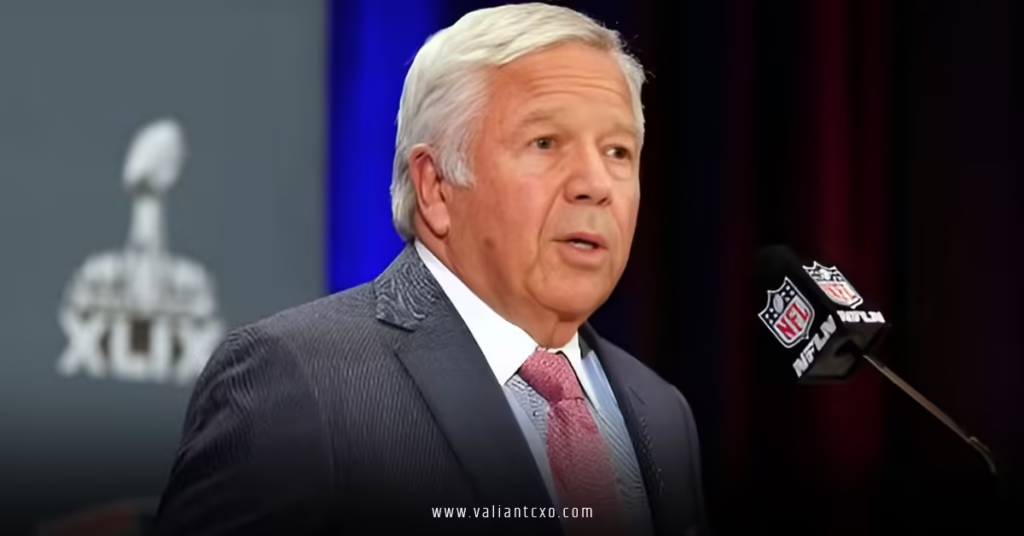
James Busch Orthwein, a St. Louis businessman and Anheuser-Busch heir, bought the Patriots in 1992 for about $110 million. His two-year reign is a nail-biter in New England Patriots ownership history.
Orthwein wanted the team in his hometown. He trademarked “St. Louis Stallions” and pushed for relocation. Fans panicked—New England could lose its team! But lease issues at Foxboro Stadium complicated moves.
Orthwein invested in upgrades, hiring Bill Parcells and drafting Drew Bledsoe in 1993—a bright spot. Yet, his heart wasn’t in New England. By 1994, he sold to Robert Kraft. Orthwein’s era? A close call that unified fans and set the stage for stability.
The Almost-Move to St. Louis
Imagine the Patriots as Stallions? Orthwein’s plan nearly happened, but Kraft’s savvy intervened. This chapter in New England Patriots ownership history shows how fragile team loyalties can be.
Robert Kraft’s Transformative Era in New England Patriots Ownership History
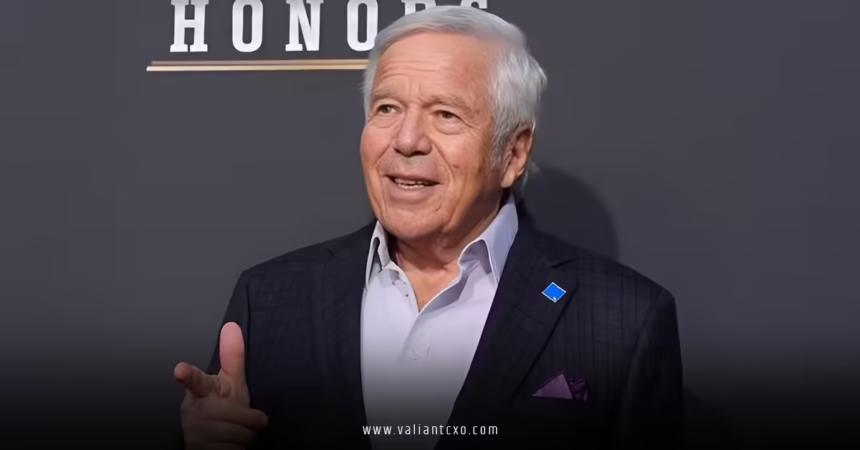
Here’s where New England Patriots ownership history shines brightest. In January 1994, Robert Kraft—a longtime season ticket holder who already owned Foxboro Stadium—bought the team for a then-record $172 million. He outbid others and secured the lease, keeping the Pats in New England.
Under Kraft, everything changed. From a laughingstock, the Patriots became a powerhouse: six Super Bowl wins, 11 appearances, 19 division titles. Kraft hired Bill Belichick in 2000, drafted Tom Brady (sixth round steal), and built a dynasty.
Stadium-wise? He privately financed Gillette Stadium in 2002 (now with massive renovations), plus Patriot Place—a retail/entertainment hub. The team’s value skyrocketed—from $172 million to over $9 billion by 2025, when Kraft sold an 8% minority stake to investors like Sixth Street and Dean Metropoulos. The Kraft family retains control.
Kraft’s approach? Fan-first, innovative, community-focused. He’s navigated controversies but delivered sustained success. Curious about his broader empire? Dive into the Robert Kraft Kraft Group leadership role for insights on how his business acumen fuels this success.
Key Achievements Under Kraft
- Dynasty Building → Brady-Belichick era: 20+ years of dominance.
- Modern Facilities → From rundown Foxboro to state-of-the-art Gillette.
- Recent Developments → In 2025, minority sales reflect NFL’s evolving rules, boosting valuation while keeping family leadership.
Post-Brady Transitions and Future Outlook
Even after Brady’s 2020 departure, Kraft invests heavily—new coaches, drafts, facilities. New England Patriots ownership history under Kraft proves longevity through adaptation.
Lessons from New England Patriots Ownership History
What can we learn from New England Patriots ownership history? Stability matters—Sullivan founded, Kiam and Orthwein disrupted, Kraft stabilized. Local roots help; Kraft’s commitment kept the team home. And vision pays off: from near-relocation to NFL’s gold standard.
Analogously, it’s like nurturing a garden—early planters sow seeds, but the dedicated gardener reaps the harvest. New England Patriots ownership history inspires entrepreneurs and fans: perseverance turns potential into legacy.
In conclusion
New England Patriots ownership history spans gritty beginnings with Billy Sullivan, turbulent transitions through Kiam and Orthwein, to enduring excellence under Robert Kraft. From AFL upstart to six-time champions, the journey reflects resilience, smart risks, and fan loyalty. As the team evolves with minority investors and new eras, one thing’s clear: this franchise’s story motivates. What’s your favorite chapter in New England Patriots ownership history? The dynasty years, or the dramatic saves? Whichever, it reminds us great things build over time.
FAQs
1. Who started the New England Patriots ownership history?
Billy Sullivan founded the team in 1959 as the Boston Patriots, owning it until 1988 and setting the foundation for New England Patriots ownership history.
2. Why did the Patriots almost move to St. Louis in New England Patriots ownership history?
During James Orthwein’s 1992-1994 ownership, he planned relocation to his hometown, but Robert Kraft’s purchase preserved the team in New England Patriots ownership history.
3. How long has Robert Kraft been part of New England Patriots ownership history?
Since 1994, Kraft has owned the Patriots, transforming the franchise and marking the most successful period in New England Patriots ownership history.
4. What recent changes occurred in New England Patriots ownership history?
In 2025, Kraft sold an 8% minority stake at a $9+ billion valuation, while the family retains control in ongoing New England Patriots ownership history.
5. How has stadium evolution tied into New England Patriots ownership history?
From Sullivan Stadium under early owners to Kraft’s privately funded Gillette Stadium, venues reflect investment shifts throughout New England Patriots ownership history.