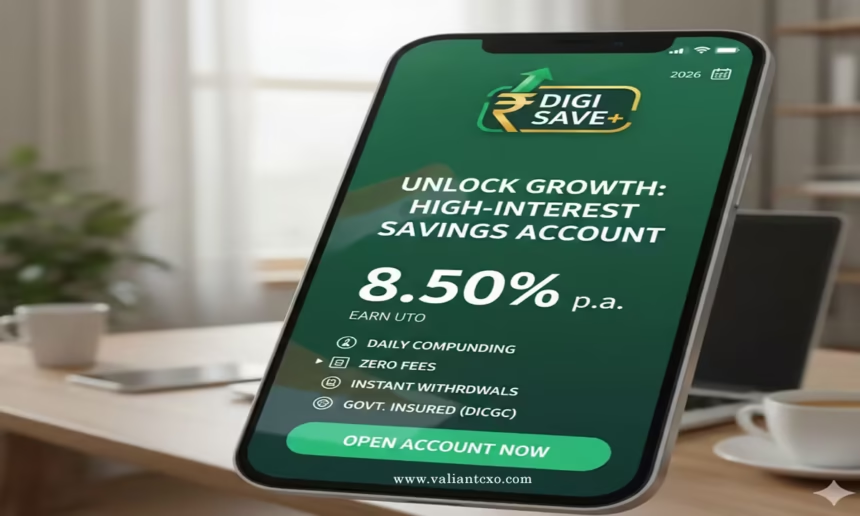
How to open a high interest savings account online in India 2026? If you’re tired of watching your hard-earned money sit in a low-yield account earning peanuts while inflation nibbles away, you’re not alone. In 2026, the banking landscape in India has evolved dramatically, thanks to digital innovations, Video KYC, and competition from small finance banks and private players. You can now open an account from your couch in minutes and potentially earn up to 7% or more on your savings—far better than the standard 2.5-3% from big public sector names.
Gone are the days of long queues and endless paperwork. Today, high interest savings accounts are just a few taps away on your phone. Whether you’re a salaried professional stashing away bonuses or someone building an emergency fund, learning how to open a high interest savings account online in India 2026 can supercharge your financial growth. Let’s dive in and explore why this matters and how you can make it happen.
Why Choose a High Interest Savings Account in 2026?
Think of your savings account as a silent worker. In traditional setups, it barely breaks a sweat—earning maybe 2.5% to 3.5% annually. But in 2026, with rising competition, certain banks offer tiered rates that climb higher as your balance grows. Small finance banks (SFBs) and some private lenders lead the pack, providing returns that rival short-term fixed deposits without locking your money away.
The beauty? Liquidity remains intact. You can withdraw anytime without penalties (though some have limits on free transactions). Plus, your deposits are insured up to ₹5 lakh by DICGC, just like any RBI-regulated bank. In a year where inflation hovers around 4-6%, settling for low returns feels like leaving free money on the table. Why not let your savings work harder for you?
Benefits of Opening High Interest Savings Accounts Online
Opening online isn’t just convenient—it’s often smarter. Here’s why:
- Instant Approval: Video KYC verifies your identity in real-time—no branch visits required.
- Zero or Low Minimum Balance: Many digital-first options waive hefty average balance requirements.
- No Hidden Fees: Competitive players avoid monthly charges and offer free ATM withdrawals.
- Extra Perks: Cashback, rewards, or seamless UPI integration sweeten the deal.
- Higher Earnings Potential: Rates often start from 3-4% and escalate to 6-7.5% on higher slabs.
Imagine your ₹5 lakh balance earning an extra ₹15,000-20,000 annually compared to a basic account. That’s real money for vacations, investments, or emergencies.

Top Banks Offering High Interest Savings Accounts in 2026
In 2026, the highest rates often come from small finance banks and select private ones. Here’s a snapshot of standout options (rates as of early 2026; always verify current slabs):
- IDFC FIRST Bank: Progressive rates up to 6.50% on balances above ₹10 lakh (3% up to ₹1 lakh, 5% up to ₹10 lakh).
- Ujjivan Small Finance Bank: Up to 7%+ on higher slabs, with strong digital features.
- RBL Bank: Competitive tiers reaching 6.5-7% for larger balances.
- AU Small Finance Bank: Solid rates up to 6.75-7%, zero-balance digital options.
- ESAF or Suryoday Small Finance Banks: Often top the charts with 7-7.75% on select slabs.
Big names like SBI, HDFC, or ICICI stick closer to 2.5-3.5%, great for trust but not for maximizing interest. For how to open a high interest savings account online in India 2026, prioritize banks with robust apps and Video KYC support.
Step-by-Step Guide: How to Open a High Interest Savings Account Online in India 2026
Ready to get started? The process is straightforward and beginner-friendly. Here’s your roadmap for how to open a high interest savings account online in India 2026:
- Research and Choose Your Bank
Compare rates on official sites or aggregators. Focus on your expected balance—higher tiers mean bigger rewards. Check eligibility (usually 18+, Indian resident, valid Aadhaar/PAN). - Download the App or Visit the Website
Head to the bank’s official app (Google Play/App Store) or site. Search for “Open Savings Account” or “Digital Account Opening.” - Fill Basic Details
Enter your mobile number, email, name, date of birth. An OTP verifies your contact. - Complete KYC with Video Verification
Upload Aadhaar (front/back) and PAN. Opt for Video KYC—a quick live call with a bank executive confirms your identity. Smile for the camera; it’s secure and takes 5-10 minutes. - Set Up Account Preferences
Choose account type (zero-balance if available), nominate a beneficiary, and link UPI. - Fund Your Account
Transfer via UPI, net banking, or initial deposit. Some activate instantly; others in 24 hours. - Start Earning
Once active, interest credits quarterly or monthly. Monitor via app.
The whole thing? Often under 15 minutes. No stamps, no signatures—just digital magic.
Documents Required for How to Open a High Interest Savings Account Online in India 2026
Keep these handy:
- Aadhaar card (linked mobile preferred for OTP).
- PAN card (mandatory for tax purposes).
- Recent passport-size photo (auto-captured in Video KYC).
- Address proof (Aadhaar usually suffices; some accept Voter ID or utility bills).
No physical copies needed—everything uploads digitally.
Eligibility Criteria You Should Know
Most banks require:
- Age 18+ (some allow minors with guardians).
- Indian resident.
- Valid Aadhaar and PAN.
- No major defaults (CIBIL check may apply).
Digital banks make it inclusive—even students or homemakers qualify easily.
Tips to Maximize Returns on Your High Interest Savings Account
Want to squeeze every rupee?
- Maintain higher balances for tiered boosts.
- Avoid frequent large withdrawals that drop slabs.
- Use sweep-in facilities (some auto-transfer excess to FD-like options).
- Monitor rate changes—RBI doesn’t fix savings rates, so banks adjust.
- Pair with UPI for daily spends without dipping into principal.
It’s like planting a money tree—nurture it, and it grows steadily.
Common Mistakes to Avoid When Opening Online
Don’t rush:
- Skipping rate comparisons.
- Ignoring fees (debit card charges, SMS alerts).
- Not verifying DICGC coverage.
- Using unofficial apps/sites—stick to official channels.
Double-check everything; security first.
Conclusion
Mastering how to open a high interest savings account online in India 2026 is one of the simplest yet most powerful moves for your finances. With instant digital processes, attractive rates from innovative banks, and full RBI-backed security, there’s no excuse to let your money idle at low returns. Pick a reputable high-yield option, follow the quick steps, and watch your savings grow passively.
Take action today—your future self will thank you for that extra interest compounding quietly in the background. Start exploring now and turn your savings into a smarter asset.
Here are three high-authority external links for more details:
- Reserve Bank of India Official Website – For latest banking regulations and guidelines.
- IDFC FIRST Bank Savings Account Page – Current high interest rates and online opening info.
- BankBazaar Savings Account Comparison – Compare rates across banks.
FAQs
1. What is the easiest way for how to open a high interest savings account online in India 2026?
The easiest way involves downloading a bank’s app (like IDFC FIRST or Ujjivan SFB), completing Video KYC with Aadhaar/PAN, and activating in minutes—no branch visit needed.
2. Which banks offer the highest rates when learning how to open a high interest savings account online in India 2026?
Small finance banks like Ujjivan, AU, or ESAF often top 7%, while IDFC FIRST and RBL provide strong tiered rates up to 6.5-7% on higher balances.
3. Do I need to visit a branch for how to open a high interest savings account online in India 2026?
No—most use Video KYC for fully online opening, making it paperless and instant from home.
4. Is my money safe when I learn how to open a high interest savings account online in India 2026?
Yes, RBI-regulated banks insure deposits up to ₹5 lakh via DICGC. Choose established names for added peace of mind.
5. Can NRIs follow how to open a high interest savings account online in India 2026?
NRIs typically use NRE/NRO accounts; some banks offer digital options, but rules differ—check specific eligibility.