Operation Metro Surge Minnesota has become one of the most talked-about immigration enforcement actions in recent U.S. history. Launched in December 2025, this large-scale Department of Homeland Security (DHS) initiative flooded the Twin Cities area—Minneapolis and St. Paul—with thousands of federal agents from Immigration and Customs Enforcement (ICE) and Customs and Border Protection (CBP). What started as a targeted push against criminal non-citizens quickly escalated into widespread protests, tragic shootings, legal battles, and even a general strike. Have you wondered how a single operation could turn a Midwestern state into a national flashpoint? Let’s unpack it all, including how it ties directly into Tom Homan Minnesota ICE operations, where Trump’s border czar stepped in to take control amid the chaos.
Think of Operation Metro Surge Minnesota like a sudden storm rolling over calm lakes—it hit hard, disrupted everything in its path, and left communities scrambling to respond. With over 3,000 federal officers deployed at its peak, the operation aimed to remove dangerous criminals, but the execution sparked debates about overreach, public safety, and federal vs. state power.
What Is Operation Metro Surge Minnesota? The Basics Explained
Operation Metro Surge Minnesota kicked off in early December 2025 as DHS’s biggest interior immigration enforcement effort ever. The goal? To identify, arrest, and deport individuals subject to removal, with a heavy focus on those DHS labeled the “worst of the worst”—murderers, rapists, gang members, child sex offenders, and serious fraud perpetrators.
DHS officials highlighted arrests of violent criminals, including domestic abusers and pedophiles, during the early phases. By late January 2026, ICE reported around 3,000 arrests in the Minneapolis area alone. The surge brought in roughly 2,000 ICE officers and 1,000 Border Patrol agents, turning neighborhoods into temporary hotspots of activity.
But why Minnesota? Federal sources pointed to alleged massive welfare fraud schemes—some claiming billions siphoned from public assistance programs—often linked to immigrant communities. Critics, including state leaders, called it political payback against a Democratic stronghold with sanctuary policies. Either way, Operation Metro Surge Minnesota quickly became more than routine enforcement; it transformed into a symbol of the Trump administration’s mass deportation agenda.
How Operation Metro Surge Minnesota Evolved Over Time
The operation expanded from the Twin Cities to statewide efforts. Early raids targeted businesses suspected of fraud, following viral videos exposing alleged daycare scams. As arrests mounted, so did resistance—community observers filmed agents, protests grew, and clashes became frequent. By mid-January, the scale drew comparisons to past operations in cities like Los Angeles and Chicago, but with a twist: Minnesota’s response was fiercer, fueled by local outrage.
The Human Cost: Shootings and Protests During Operation Metro Surge Minnesota
Nothing escalated tensions like the shootings. In early January, ICE agent Jonathan Ross fatally shot Renée Good, a 37-year-old U.S. citizen, during an encounter. Accounts varied wildly—federal officials claimed threats, while eyewitnesses and videos disputed that. Then came Alex Pretti, an ICU nurse and another U.S. citizen, killed by Border Patrol agents on January 24, 2026. A third non-fatal shooting involved Julio Cesar Sosa-Celis.
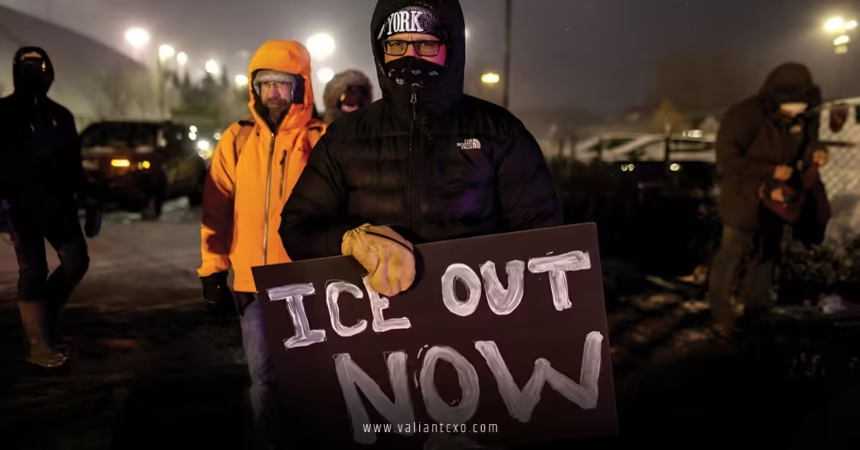
These incidents lit the fuse. Protests erupted across Minneapolis, with thousands marching in sub-zero temperatures. A January 23 general strike—”ICE Out of MN: Day of Truth and Freedom”—saw labor unions, faith groups, and businesses shut down in solidarity. Hundreds of clergy were arrested at the airport protesting detainee transport. Schools shifted to remote learning, businesses reported sales drops over 30%, and fear gripped immigrant neighborhoods.
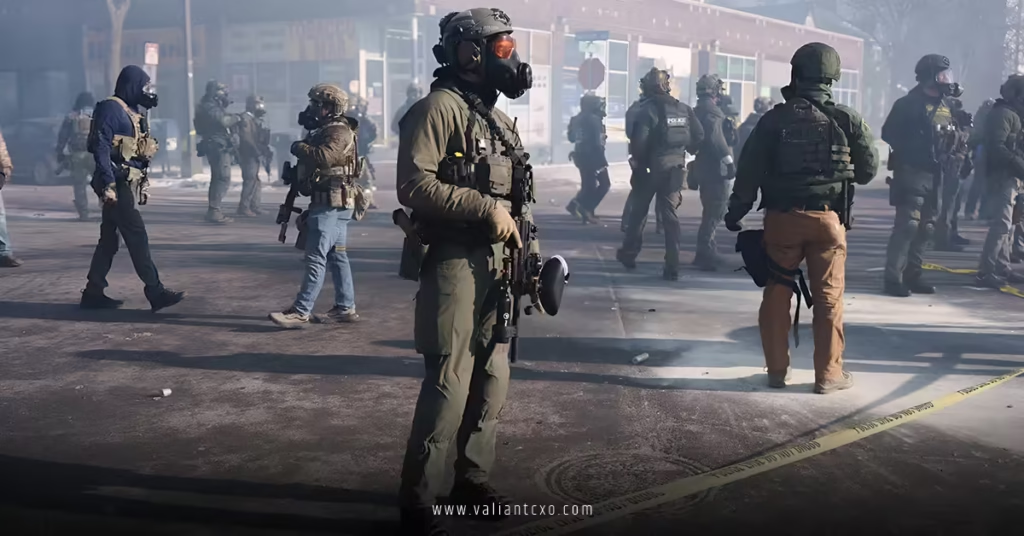
Analogy: Imagine a neighborhood watch gone federal scale—intended to protect, but ending up scaring the very people it aimed to serve. Operation Metro Surge Minnesota’s aggressive tactics, including alleged tear gas on peaceful crowds, turned routine enforcement into a public safety crisis for many Minnesotans.
Legal Battles and Calls to End Operation Metro Surge Minnesota
Minnesota Attorney General Keith Ellison, Minneapolis Mayor Jacob Frey, and St. Paul officials sued to halt the surge, arguing it violated the 10th Amendment (state sovereignty), First Amendment rights, and amounted to unconstitutional occupation. They claimed it was retribution for sanctuary policies, not genuine enforcement.
Federal Judge Katherine Menendez heard arguments in late January 2026, ordering the government to explain if the operation punished sanctuary laws. Preliminary injunctions limited agent retaliation against peaceful protesters. The ACLU filed multiple suits, calling tactics “police-state” moves. Other states, like Maryland, joined amicus briefs warning of nationwide threats.
The Turning Point: Link to Tom Homan Minnesota ICE Operations
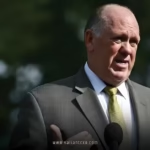
Amid the turmoil—after the Pretti shooting—President Trump announced he was sending border czar Tom Homan to oversee things directly. Reports indicated Border Patrol’s Gregory Bovino and some agents would leave, signaling a shift. Trump described Homan as “tough but fair,” and said he’d report straight to him.
This move tied Operation Metro Surge Minnesota straight into Tom Homan Minnesota ICE operations. Homan met with Walz and Frey, focusing on handing over criminals while probing fraud. Some agents began departing, and tone softened—Trump called talks with local leaders “productive.” It suggested a recalibration: from broad surge to targeted, experienced leadership under Homan.
Why the change? Backlash from shootings, protests disrupting arrests, and court scrutiny likely prompted it. Homan’s decades in ICE (even under Obama) brought credibility for precise enforcement without chaos.
Broader Impacts of Operation Metro Surge Minnesota on Communities and Economy
Immigrant families lived in fear—some avoided work or school. Businesses closed temporarily, tourism dipped, and local police diverted resources. Supporters argued it made streets safer by removing threats; opponents said it endangered everyone through mistrust and division.
Economically? A general strike hit hard, with ripple effects on daily life. Politically, it boosted figures like Frey while hurting others tied to fraud scandals.
What’s Next for Operation Metro Surge Minnesota?
As of late January 2026, the operation continued but scaled back. Court rulings loomed, Homan’s oversight promised focus on criminals, and some agents left. Will it wind down fully? Or evolve into sustained enforcement? The answer hinges on legal outcomes and political will.
Conclusion: Operation Metro Surge Minnesota and the Future of Immigration Enforcement
Operation Metro Surge Minnesota started as a bold crackdown on crime and fraud but became a lightning rod for debates on federal power, civil rights, and humane enforcement. With thousands arrested, tragic losses like Renée Good and Alex Pretti, massive protests, and now oversight under Tom Homan Minnesota ICE operations, it’s clear this isn’t just Minnesota’s story—it’s a preview of national immigration battles.
If you’re concerned about public safety, community trust, or policy overreach, stay tuned. These events remind us how quickly enforcement can polarize a nation. Informed dialogue is key—because the stakes involve real lives on all sides.
FAQs About Operation Metro Surge Minnesota
What triggered Operation Metro Surge Minnesota?
Launched in December 2025, it targeted criminal non-citizens and alleged welfare fraud in the Twin Cities, becoming DHS’s largest interior enforcement action amid broader deportation goals.
How many arrests occurred during Operation Metro Surge Minnesota?
ICE reported around 3,000 arrests in Minneapolis by late January 2026, focusing on serious offenders like murderers, gang members, and fraud perpetrators.
Why did shootings happen during Operation Metro Surge Minnesota?
Fatal incidents involving U.S. citizens Renée Good and Alex Pretti stemmed from encounters with agents, sparking disputes over threats vs. excessive force and fueling nationwide protests.
How does Operation Metro Surge Minnesota connect to Tom Homan Minnesota ICE operations?
After escalating unrest, President Trump deployed Tom Homan to oversee the effort, shifting from aggressive tactics to more targeted enforcement under his direct leadership.
What legal challenges face Operation Metro Surge Minnesota?
Minnesota and cities sued claiming constitutional violations, including 10th Amendment overreach; courts issued limits on agent actions against protesters while weighing a full halt.