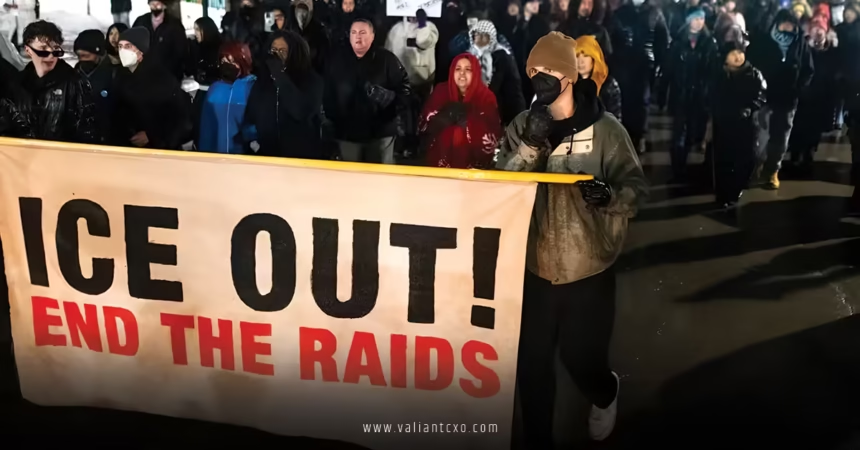
The ICE Abolition Debate in Minnesota has never been more intense or urgent. Fueled by recent federal enforcement actions, tragic incidents, and passionate local activism, this discussion has captured national attention. At the heart of it lies Rep. Ilhan Omar’s vocal stance against ICE, highlighted dramatically during the Ilhan Omar town hall attack Minneapolis syringe incident on January 27, 2026, where she was assaulted while calling for the agency’s abolition and the resignation of DHS Secretary Kristi Noem.
Minnesota, home to one of the nation’s largest Somali-American communities (around 80,000–100,000 people, mostly in the Twin Cities), has become a flashpoint. What started as calls for reform has evolved into demands to abolish ICE entirely. Let’s break down the debate, its roots, key events, arguments on both sides, and what it means for the future.
Why the ICE Abolition Debate in Minnesota Is Heating Up
Minnesota’s story with immigration enforcement isn’t new, but 2025–2026 events turned up the volume dramatically. The state welcomed Somali refugees fleeing civil war starting in the 1990s, building thriving communities in Minneapolis and St. Paul. These neighborhoods contribute economically and culturally, yet they’ve faced scrutiny, especially amid allegations of fraud in social programs.
Enter Operation Metro Surge, a massive federal deployment of ICE and Border Patrol agents starting late 2025. Thousands of agents flooded the Twin Cities, leading to thousands of arrests, widespread protests, and heartbreaking tragedies. Two fatal shootings by federal agents in January 2026—one killing Renee Nicole Good, a mother of three, and another an ICU nurse named Alex Jeffrey Pretti—sparked outrage. Protesters filled streets in freezing temperatures, businesses closed in solidarity, and lawsuits flew from state and local officials.
Rep. Ilhan Omar, representing Minnesota’s 5th District, has been a leading voice. As the first Somali-American in Congress, she represents many directly affected constituents. Her repeated calls to abolish ICE stem from these incidents, which she describes as “out of control” and “beyond reform.” Just before the Ilhan Omar town hall attack Minneapolis syringe, she declared ICE “cannot be reformed” and demanded Noem’s resignation or impeachment.
This moment crystallized the debate: a congresswoman advocating abolition amid rising threats and community fear.
The Core Arguments: Why Some Want to Abolish ICE in Minnesota
Advocates for abolishing ICE argue the agency has become a tool of fear rather than fair enforcement.
- Excessive Force and Lack of Accountability — Recent shootings, like Renee Good’s killing (shot at point-blank range in her car) and Alex Pretti’s death, highlight deadly overreach. Protesters faced tear gas, flash-bangs, and arrests. Critics say masked agents operate without warrants, racially profile based on appearance or accents, and terrorize families.
- Impact on Immigrant Communities — Minnesota’s Somali residents, mostly U.S. citizens or legal residents, report harassment. Daycares, mosques, and workplaces have been targeted, leading to children detained and families separated. Omar and allies argue this creates a “war zone” atmosphere in once-welcoming neighborhoods.
- Beyond Reform — Omar and progressives like Rep. Shri Thanedar push that ICE’s structure incentivizes abuse. They propose replacing it with a new system focused on humane immigration processing, not militarized enforcement.
- Political Weaponization — Many see the surge as retribution against Minnesota’s Democratic leadership and Somali voters, tied to fraud investigations but amplified by inflammatory rhetoric labeling communities “garbage.”
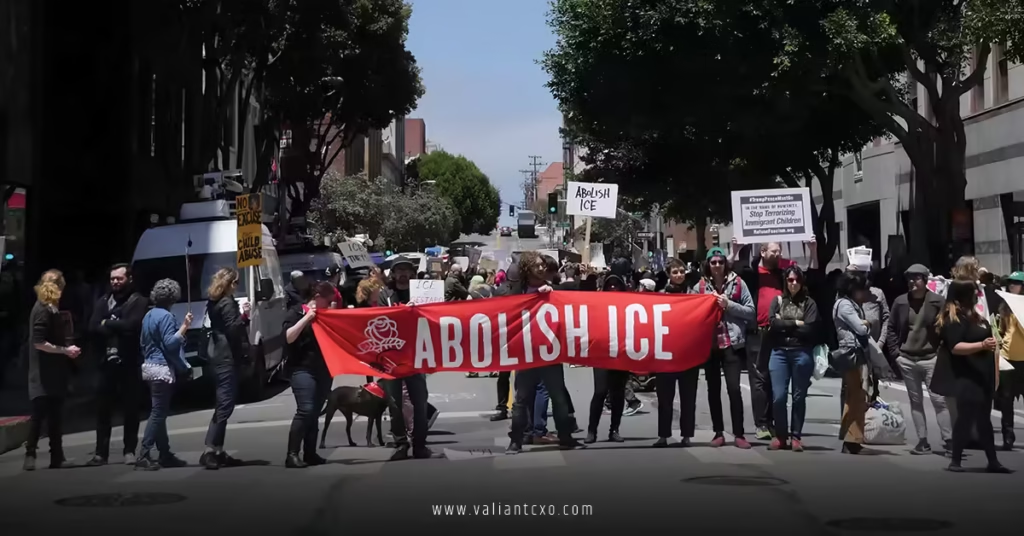
Protests, rapid-response patrols (like the Somali American Leadership Table), and lawsuits from AG Keith Ellison show grassroots resistance. Thousands marched chanting “ICE out of Minnesota,” turning the state into a symbol of defiance.
Counterarguments: Why Others Defend ICE and Oppose Abolition
Opponents argue abolition would weaken national security and border control.
- Enforcing Existing Laws — Supporters say ICE targets undocumented individuals and criminals. The surge addresses fraud schemes (like the $250 million+ Feeding Our Future scandal involving some Somali-linked nonprofits) and removes threats.
- Public Safety Concerns — Defenders claim abolishing ICE invites chaos, allowing unchecked illegal immigration. They point to federal statements criticizing protests as defending “illegal alien murderers, rapists,” etc.
- Reform Over Abolition — Some suggest body cameras, training, or oversight rather than elimination. Polls show more Americans oppose full abolition, though recent tragedies have shifted views slightly.
Local Republicans and some officials acknowledge overreach concerns but deny political motives, calling for balanced enforcement.
How the Ilhan Omar Town Hall Attack Minneapolis Syringe Ties Into the ICE Abolition Debate in Minnesota
The Ilhan Omar town hall attack Minneapolis syringe wasn’t random—it occurred amid heated discussion of ICE’s actions. Omar was mid-remarks condemning the agency when a man rushed the stage, spraying an unknown substance from a syringe. Security intervened quickly; Omar, unharmed, continued defiantly: “I’m going to finish my remarks.”
This incident underscored the debate’s volatility. Supporters saw it as proof of dangers faced by abolition advocates; critics viewed it as fallout from polarized rhetoric. It amplified calls for abolition while highlighting threats to public officials.
Broader Implications for Minnesota and Beyond
The ICE abolition debate in Minnesota reflects national divides on immigration. It questions: Can enforcement be humane? Should communities live in fear? How do we balance security and rights?
Minnesota’s response—lawsuits, protests, community patrols—shows resilience. Yet it also reveals deep polarization. With funding fights in Congress and potential shutdowns looming, the debate could reshape policy.
Omar’s stance, amplified by the Ilhan Omar town hall attack Minneapolis syringe, keeps the conversation alive. Abolitionists push for systemic change; defenders demand accountability without dismantling the system.
Conclusion: Where the ICE Abolition Debate in Minnesota Goes Next
The ICE abolition debate in Minnesota is far from over. Tragedies, protests, and bold leadership like Rep. Ilhan Omar’s have made it a national symbol of resistance. Whether through reform or full abolition, change feels inevitable.
Stay engaged—read local reports, support community efforts, and demand accountability. Minnesota’s story reminds us immigration policy affects real lives. Let’s push for solutions that protect everyone without fear or division.
For more:
- U.S. House – Ilhan Omar’s Official Site
- PBS News on Minnesota ICE Surge
- The Guardian Coverage of ICE Protests
FAQs About the ICE Abolition Debate in Minnesota
What sparked the current ICE abolition debate in Minnesota?
Recent federal operations like Metro Surge, fatal shootings by agents, and Rep. Ilhan Omar’s calls for abolition amid community fears have intensified the discussion.
How does the Ilhan Omar town hall attack Minneapolis syringe relate to the ICE abolition debate in Minnesota?
The attack happened while Omar advocated abolishing ICE during a town hall focused on immigration enforcement, highlighting the debate’s high stakes and dangers.
Who supports abolishing ICE in Minnesota?
Progressives like Rep. Ilhan Omar, local Somali leaders, protesters, and groups like the Somali American Leadership Table argue ICE is irreformable and harms communities.
What are the main arguments against abolishing ICE?
Opponents say it would undermine border security, ignore laws, and address real issues like fraud, preferring targeted reforms over elimination.
What’s the future of the ICE abolition debate in Minnesota?
Ongoing lawsuits, protests, and congressional fights suggest continued tension, potentially influencing national policy on immigration enforcement.