
Swing trading risk management is the foundation of long-term success in this fast-paced trading style. You can have the best chart patterns, the sharpest entry signals, or even nail high-volatility setups like those in earnings stocks swing trading strategies, but without disciplined risk controls, one bad trade can erase weeks of profits. In this comprehensive guide, we’ll break down proven swing trading risk management techniques, why they matter, and how to implement them effectively so you can trade with confidence.
Swing trading involves holding positions for several days to weeks, aiming to capture short- to medium-term price swings. The potential rewards are exciting, but so are the risks—gaps, sudden reversals, and unexpected news can turn a winning trade sour quickly. That’s why swing trading risk management isn’t optional; it’s what separates consistent traders from those who blow up accounts.
Why Swing Trading Risk Management Matters More Than Perfect Entries
Have you ever entered a trade thinking it was a sure thing, only to watch it reverse and wipe out your gains? It happens to everyone. The truth is, no one predicts the market with 100% accuracy. Even the most sophisticated swing trading risk management can’t eliminate losses entirely, but it can keep them small and survivable.
Professional traders often say they make money not because they win more often, but because they lose less when they’re wrong. A solid win rate might be 50-60%, but with good risk management, you still come out ahead. Without it, a string of losses can devastate your portfolio. Effective swing trading risk management protects your capital, reduces emotional stress, and lets you stay in the game long enough to compound gains.
Core Principles of Swing Trading Risk Management
Let’s dive into the essential building blocks. These principles form the backbone of any robust swing trading risk management plan.
1. The 1% Rule: Never Risk More Than You Can Afford to Lose
The golden rule of swing trading risk management is simple: never risk more than 1-2% of your total trading capital on a single trade. For example, if your account is $50,000, your maximum risk per trade should be $500-$1,000.
Why 1%? It ensures that even a series of losses won’t cripple you. Ten consecutive losers at 1% risk would only draw down your account by 10%—painful, but recoverable. At 5% per trade, the same streak wipes out 40%, and recovery becomes exponentially harder.
Apply this religiously. Calculate position size based on your stop-loss distance. If a stock is $100 and you set a stop at $95, your risk per share is $5. To keep total risk at $500, you’d buy 100 shares. This disciplined approach is non-negotiable in swing trading risk management.
2. Stop-Loss Orders: Your Automatic Safety Net
Stop-losses are the most practical tool in swing trading risk management. They automatically exit your position if the price moves against you beyond a predetermined level.
There are different types:
- Hard stops: Fixed price levels.
- Trailing stops: Move up (for longs) as the price rises, locking in profits.
- Mental stops: Avoid these—emotions often override them.
Place stops based on technical levels—below support for longs, above resistance for shorts—not arbitrary percentages. In volatile setups like earnings plays, widen stops slightly to avoid getting shaken out by gaps, but never skip them. A well-placed stop is the difference between a manageable loss and a disaster in swing trading risk management.
3. Risk-Reward Ratio: Only Take Trades That Make Mathematical Sense
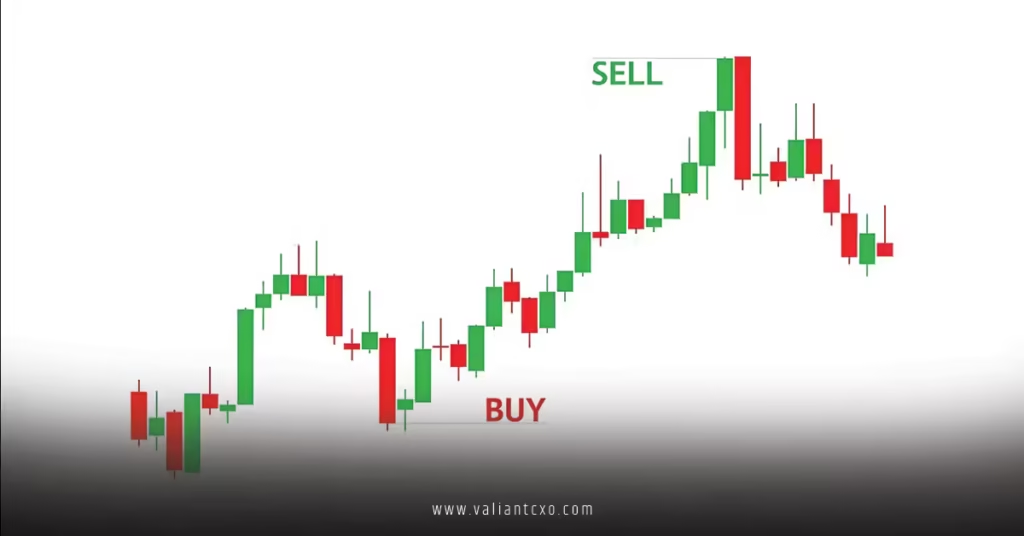
Before entering any trade, ask: “What’s my potential reward versus risk?” A good swing trading risk management rule is to aim for at least a 2:1 risk-reward ratio—meaning you stand to make twice what you risk.
For instance, if you risk $500 (distance to stop), your profit target should be at least $1,000. A 3:1 ratio is even better. This way, even with a 50% win rate, you’re profitable. Many beginners chase , ignoring this principle, and wonder why they lose money despite being “right” half the time.
Combine this with high-probability setups. When applying swing trading risk management to earnings stocks swing trading strategies, for example, target post-earnings drifts where historical data shows strong follow-through, giving you favorable risk-reward odds.
Position Sizing Strategies for Consistent Swing Trading Risk Management
Position sizing ties directly into the 1% rule but deserves deeper attention. It’s not just about how much you risk—it’s about adjusting based on volatility and confidence.
Use the ATR (Average True Range) to gauge volatility. High-ATR stocks require smaller positions to keep dollar risk consistent. Tools like volatility-based position sizing calculators help automate this.
Also consider correlation: don’t overload on stocks from the same sector. If tech tanks, multiple positions suffer simultaneously. Diversification within swing trading risk management keeps drawdowns contained.
Psychological Aspects of Swing Trading Risk Management
Risk management isn’t just mechanical—it’s mental. Fear and greed are your biggest enemies.
Common psychological traps:
- Moving stops farther away hoping the trade turns (revenge trading).
- Taking profits too early out of fear.
- Overtrading after a win to “make more.”
Combat these with a written trading plan. Define entry/exit rules, risk parameters, and daily loss limits upfront. Journal every trade to spot emotional leaks. Discipline in swing trading risk management builds over time and is what turns good traders into great ones.
Applying Swing Trading Risk Management to Specific Scenarios
Different setups require tailored risk approaches.
Earnings Season Trades
Earnings announcements create massive volatility—perfect for swings but dangerous without caution. As highlighted in detailed earnings stocks swing trading strategies, always reduce position size around reports. Use wider stops or avoid holding through the announcement entirely. Post-earnings, trail stops tightly to capture drift while protecting gains.
Trending vs. Range-Bound Markets
In strong trends, give trades more room with trailing stops. In choppy markets, tighten stops and reduce size. Adapting your swing trading risk management to market conditions prevents unnecessary losses.
Overnight and Weekend Risk
Swing traders often hold overnight, exposing them to gaps. Mitigate by avoiding low-volume stocks or using options for protection in high-risk scenarios.
Common Mistakes in Swing Trading Risk Management (And How to Avoid Them)
Even experienced traders slip up. Here are frequent errors:
- No plan: Trading without predefined rules.
- Overleveraging: Using margin aggressively.
- Ignoring the big picture: Trading against the broader market trend.
- Averaging down: Adding to losers hoping for reversal.
- Neglecting drawdowns: Not having a maximum daily/weekly loss limit (e.g., stop trading after 3-5% drawdown).
Avoid these by treating trading like a business. Regular reviews and strict adherence to swing trading risk management rules keep you on track.
Tools and Resources to Support Your Swing Trading Risk Management
Modern platforms make implementation easier:
- TradingView for charting and alerts.
- Thinkorswim or TradingStation for automatic position sizing calculators.
- Journals like Edgewonk or TraderSync to track performance.
Backtest your rules historically. Paper trade new adjustments. Continuous improvement is key to mastering swing trading risk management.
Building a Complete Swing Trading Risk Management Plan
Put it all together:
- Define your account size and 1-2% risk rule.
- Set risk-reward minimums.
- Choose stop-loss types per setup.
- Limit total open risk (e.g., no more than 5-10% of capital at risk across all trades).
- Review weekly.
Start small, scale as you prove consistency. Over time, strong swing trading risk management becomes second nature.
Swing trading risk management is what transforms trading from gambling into a sustainable profession. By protecting your capital first, you give yourself the freedom to capitalize on opportunities—whether in trending markets, breakout patterns, or specialized plays like earnings stocks swing trading strategies. Implement these techniques consistently, stay disciplined, and watch your equity curve smooth out while climbing higher. Risk less, win more—that’s the real edge.
Frequently Asked Questions
1. What is the most important rule in swing trading risk management?
The 1% rule—never risk more than 1-2% of your capital on a single trade—is widely considered the cornerstone.
2. How do I calculate position size for swing trading risk management?
Divide your maximum dollar risk (e.g., 1% of account) by the distance from entry to stop-loss in dollars per share.
3. Should I adjust swing trading risk management during earnings season?
Yes—reduce position sizes and consider wider stops or avoiding holds through announcements to account for gaps.
4. What risk-reward ratio is best for swing trading risk management?
Aim for at least 2:1, preferably 3:1, to ensure profitability even with a moderate win rate.
5. How does diversification fit into swing trading risk management?
Limit exposure to any single sector or correlated stocks to prevent multiple positions moving against you simultaneously.