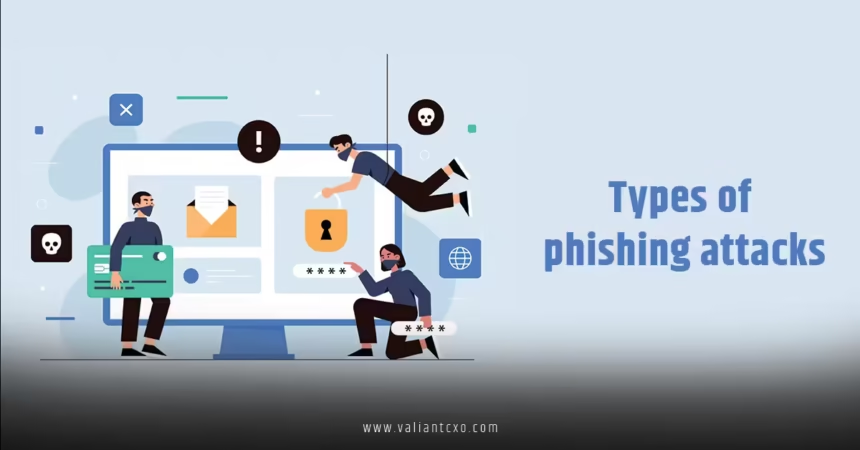
types of phishing attacks that cybercriminals use today? Phishing has evolved far beyond generic spam emails—scammers now craft sophisticated traps that exploit trust, technology, and human psychology. If you’re new to the concept, start with our beginner-friendly guide on [What is Phishing Attack Explained in Simple Words] to grasp the fundamentals before exploring these variants.
Why Understanding Types of Phishing Attacks Matters More Than Ever
Phishing remains one of the top cyber threats worldwide, causing billions in losses annually. In 2026, attackers leverage AI, deepfakes, and multi-channel approaches to bypass defenses. Knowing the types of phishing attacks helps you spot red flags early and avoid falling victim. Let’s explore the most common and emerging ones with real-world examples and practical tips.
Classic Email Phishing: The Most Common Type
Email phishing, often called deceptive phishing, is the granddaddy of all types of phishing attacks. Attackers send mass emails pretending to be from trusted sources like banks, Amazon, or Microsoft, urging you to click a link or download an attachment.
How it works: These emails create urgency—”Your account is suspended!”—and direct you to a fake site that steals your credentials.
Example: A message from “PayPal” claiming unusual activity and asking you to log in via a provided link.
Why it succeeds: Volume. Millions receive these daily, and a small percentage bite.
Spot it: Check sender addresses carefully (e.g., support@paypa1.com), hover over links, and watch for poor grammar.
Spear Phishing: Personalized and Dangerous
Spear phishing targets specific individuals with tailored messages, making it one of the most effective types of phishing attacks. Attackers research you on LinkedIn, social media, or data breaches to personalize their approach.
How it differs: Unlike bulk email phishing, it’s precise—like a spear instead of a net.
Example: An email appearing from your boss asking for urgent wire transfer details, referencing a real project.
Why it’s scary: Success rates are high because it feels legitimate.
Protection tip: Verify requests through another channel, like a phone call.
Whaling: Going After the Big Fish
Whaling is a high-stakes subset of spear phishing targeting executives, CEOs, or celebrities—”whales” with access to big money or data.
How it works: Attackers pose as lawyers, board members, or regulators in urgent legal or financial matters.
Example: A fake email from a “law firm” about a confidential acquisition, tricking a CEO into sharing sensitive files.
Impact: One successful whaling attack can cost millions.
Defense: Executives need extra training and strict verification protocols.
Smishing and Vishing: Attacks Beyond Email
Smishing (SMS Phishing)
Smishing uses text messages to deliver phishing lures. Your phone buzzes with an “urgent alert” from your bank or a delivery service.
Example: “Your package is delayed. Track here:” followed by a malicious link.
Why it works: Texts feel more immediate and trustworthy than emails.
Vishing (Voice Phishing)
Vishing involves phone calls. Scammers spoof caller ID to appear as your bank or tech support.
Example: A call claiming “fraud on your account” and asking for verification codes.
Tip for both: Never share info over unsolicited calls or texts. Hang up and call back using official numbers.
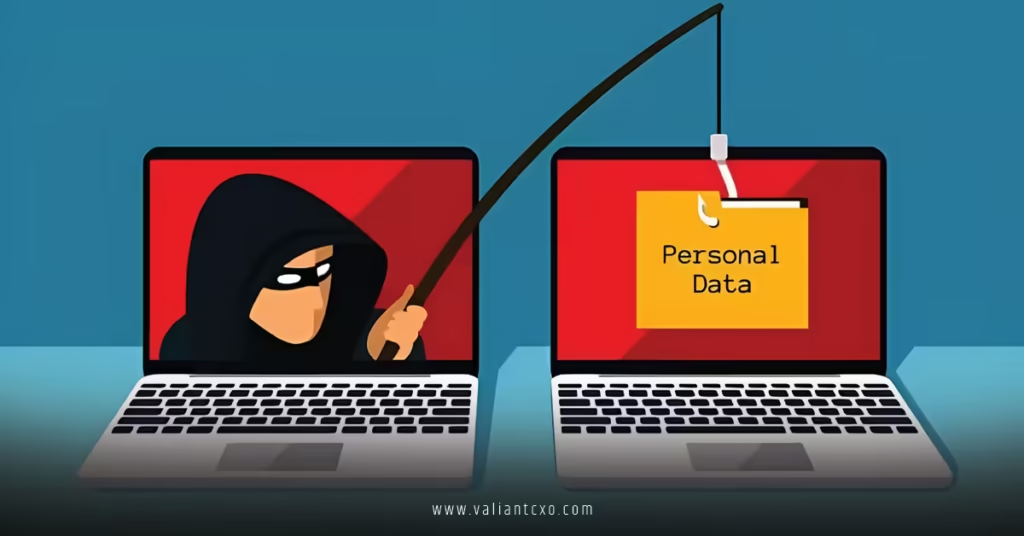
Clone Phishing: Duplicating Legitimate Messages
Clone phishing takes a real email you’ve received, clones it exactly, but swaps in a malicious link or attachment.
How it’s done: Attackers compromise an account or spoof a sender, then “resend” with a subtle change.
Example: A cloned invoice email with a malware-laden PDF.
Detection: Compare with the original thread carefully.
Quishing: The Rise of QR Code Phishing
Quishing, or QR code phishing, is a newer entry among types of phishing attacks. Scammers send QR codes via email, text, or physical posters that lead to fake sites.
Why it’s growing in 2026: QR codes are everywhere, and scanning doesn’t reveal the URL.
Example: A parking ticket with a QR code for payment that installs malware.
Safeguard: Use camera apps that preview URLs before opening.
Pharming: Poisoning Your DNS
Pharming redirects you to fake websites without clicking anything—by altering DNS settings or poisoning caches.
How it happens: Malware on your device or router changes where legitimate URLs point.
Example: Typing “bankofamerica.com” takes you to a scammer’s site.
Prevention: Use secure DNS services like 1.1.1.1.
Angler Phishing: Lurking on Social Media
Angler phishing targets social media users with fake customer service accounts or direct messages.
Example: A fake airline Twitter account DMing about a refund, asking for card details.
Why it’s tricky: Social platforms feel casual and responsive.
Emerging Types of Phishing Attacks in 2026
AI-powered phishing → Attackers use generative AI for flawless, personalized emails that evade detection.
Deepfake vishing → Voice or video calls with cloned voices of loved ones or bosses.
MFA fatigue attacks → Bombarding you with authentication requests until you approve one.
Adversarial phishing → Bypassing AI filters with clever evasion techniques.
These show how types of phishing attacks constantly evolve—staying informed is your best defense.
Comparison of Major Types of Phishing Attacks
| Type | Medium | Targeting | Common Goal | Difficulty to Spot |
|---|---|---|---|---|
| Email Phishing | Mass | Credentials/Malware | Medium | |
| Spear Phishing | Individual | Sensitive Data | Hard | |
| Whaling | Email/Call | Executives | Large Transfers | Very Hard |
| Smishing | Text | Broad | Links/Credentials | Medium |
| Vishing | Phone | Individual | Verbal Info | Hard |
| Quishing | QR Codes | Opportunistic | Malware Installation | Hard |
| Clone Phishing | Previous Recipients | Malware | Very Hard |
How to Protect Yourself from All Types of Phishing Attacks
- Enable multi-factor authentication everywhere.
- Use email filters and antivirus with phishing protection.
- Verify unsolicited requests independently.
- Keep software and devices updated.
- Educate yourself regularly—knowledge beats any single tool.
Conclusion
The types of phishing attacks are diverse and constantly adapting, but they all rely on one thing: tricking you into trusting them. By understanding email phishing, spear phishing, smishing, quishing, and emerging AI threats, you’re already ahead of most people. Stay skeptical, double-check everything, and share this knowledge with friends and family. In the world of cybersecurity, awareness is your strongest shield.
FAQs
1. What are the most common types of phishing attacks in 2026?
Email phishing and smishing remain the most widespread, but spear phishing and quishing are rising fast due to personalization and mobile reliance.
2. How is spear phishing different from regular phishing?
Regular phishing is broad and generic; spear phishing is highly targeted with personal details gathered from social media or breaches.
3. What is quishing in phishing attacks?
Quishing uses malicious QR codes to direct victims to fake sites—often spread via email, texts, or physical locations.
4. Can phishing happen on social media?
Yes—it’s called angler phishing, where fake accounts pose as customer support to steal information via direct messages.
5. How do I report different types of phishing attacks?
Forward suspicious emails to report@phishing.gov or your email provider’s abuse team, and report texts/calls to authorities like the FTC.