Picture this: Your phone rings. It’s your son, sounding panicked, saying he’s been in a car accident and needs money fast for bail. His voice cracks just like it does when he’s stressed—exact tone, accent, even that little hesitation before he says “Mom.” You wire the cash immediately. Hours later, your real son calls, safe and confused. What just happened? Welcome to AI voice cloning scams, one of the most emotionally devastating and rapidly growing threats in 2026.
These scams, often called vishing (voice phishing), use artificial intelligence to replicate someone’s voice with shocking accuracy—sometimes from just three seconds of audio scraped from social media, podcasts, or voicemail. As we dive deeper into what makes AI voice cloning scams so dangerous right now, remember this is part of the bigger picture of what is AI-powered phishing in 2026—where AI supercharges every angle of deception, turning simple phone calls into high-stakes nightmares.
What Exactly Are AI Voice Cloning Scams?
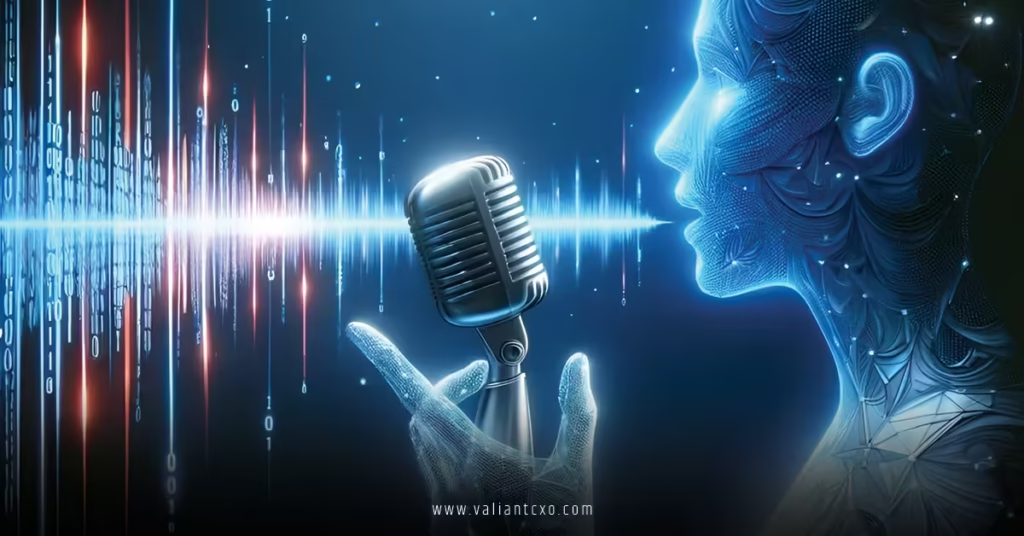
AI voice cloning scams involve cybercriminals using generative AI tools to create synthetic audio that mimics a real person’s speech patterns, intonation, cadence, and even emotional nuances. Tools analyze short samples—often publicly available—and generate new speech on demand.
In practice, scammers call targets pretending to be:
- A family member in distress (the classic “grandchild” or “child in trouble” ploy).
- A company executive authorizing urgent transfers (Business Email Compromise gone vocal).
- Government officials or law enforcement demanding immediate payment.
The realism is the killer. Unlike old robocalls with robotic monotones, these voices sound human—breathing, pauses, background noise added for effect. McAfee research shows clones can hit 85% accuracy with minimal input, fooling most listeners.
This ties directly into what is AI-powered phishing in 2026: Voice cloning is the audio arm of AI-enhanced social engineering, blending with text phishing or deepfakes for multi-channel attacks.
How Do AI Voice Cloning Scams Actually Work in 2026?
Scammers follow a chillingly efficient playbook:
- Collect Audio Samples — They scour Instagram Reels, TikTok videos, LinkedIn posts, YouTube interviews, or even public speeches. Three to ten seconds is often enough.
- Clone the Voice — Free or cheap AI platforms (some dark-web services offer this as-a-service) train on the sample to produce custom audio.
- Craft the Scenario — Urgency is key: “I’m in jail—don’t tell Dad!” or “CEO here—transfer funds now before market close.”
- Spoof Caller ID — Make it look like the call comes from a known number.
- Execute and Vanish — Victims act fast; money moves via wire, crypto, or gift cards.
In 2026, attacks scale massively. Reports show over 1,000 AI scam calls per day hitting major retailers alone, with vishing surging dramatically.
Hybrid tactics amplify danger: A phishing email primes you, then a cloned-voice call seals the deal.
Shocking Statistics: The Scale of AI Voice Cloning Scams
The numbers paint a grim picture in 2026:
- Voice phishing (vishing) incidents surged 442% in recent periods, largely AI-driven.
- Deepfake-enabled fraud, including voice cloning, is projected to cause $40 billion in global losses by 2027.
- Over 10% of banks report deepfake vishing losses exceeding $1 million, averaging $600K per incident.
- McAfee found one in four people has encountered or knows someone hit by voice cloning, with 77% of victims losing money.
- AI scams overall exploded 1,210% in 2025, outpacing traditional fraud growth.
These aren’t distant threats—families, businesses, even officials face them daily. Median victim loss hovers around $1,400, but big hits reach millions.
Real-Life Horror Stories from AI Voice Cloning Scams
Real cases drive home the terror:
- Parents receive calls from “kids” in fake emergencies—car crashes, kidnappings—demanding bail or ransom. One Florida mom nearly lost thousands before verifying.
- A Hong Kong finance worker transferred $25 million after a video call with cloned executive voices and faces.
- Italian business leaders sent nearly €1 million to fraudsters cloning a defense minister’s voice.
- U.S. officials’ voices were cloned in phishing campaigns targeting contacts for access or funds.
- Romance scams now layer cloned voices in “video chats” to build trust before the cash ask.
These exploit emotion—fear, love, authority—bypassing logic faster than any email ever could.
Why Are AI Voice Cloning Scams Exploding in 2026?
Accessibility is the culprit. AI tools democratized fraud: Low-skill criminals rent kits or use open platforms. Social media provides endless audio goldmines. Legacy phone defenses (caller ID, basic filters) fail against realism.
It fits what is AI-powered phishing in 2026 perfectly—low barrier, high reward, human psychology as the weak link.
How to Protect Yourself from AI Voice Cloning Scams
Don’t panic—practical steps work:
- Create a Family Safe Word — Pick a secret phrase only your circle knows. Ask for it in “emergencies.” AI can’t guess it.
- Verify Independently — Hang up and call back using a known number from your contacts—not the one shown.
- Avoid Unknown Calls — Let voicemail catch them. Don’t engage unknowns.
- Limit Public Audio — Be cautious posting voice videos. Use automated voicemail greetings.
- Use Tech Defenses — Enable call screening, voice biometric tools (where available), and real-time deepfake detectors emerging in apps.
- Slow Down — Urgency screams scam. Pause, breathe, question.
- Educate Loved Ones — Especially elderly relatives—share these tips.
Businesses: Implement callback policies, train on vishing simulations, deploy anomaly detection.
Conclusion: Don’t Let Your Voice Betray You
AI voice cloning scams represent one of the most personal and frightening evolutions in cyber fraud—turning trusted voices against us in seconds. With surges in attacks, massive projected losses, and emotional manipulation at play, 2026 demands heightened vigilance. By understanding the tactics, using verification habits like safe words and separate callbacks, and staying skeptical of urgent requests, you can slam the door on these scammers.
Knowledge is your best shield. Share this with family, stay informed on what is AI-powered phishing in 2026, and remember: If it feels off—even if it sounds exactly right—verify first. Your peace of mind (and wallet) depends on it.
For deeper reading:
- Explore AI scam trends and statistics from Vectra AI.
- Learn about voice cloning defenses via the FTC.
- Check deepfake and vishing insights from Group-IB.
FAQs About AI Voice Cloning Scams
1. How much audio do scammers need for AI voice cloning?
Often just 3-10 seconds from public sources like social media videos—enough for 85%+ accurate clones.
2. What’s the most common type of AI voice cloning scam?
Family emergency vishing—pretending to be a loved one in distress needing money fast.
3. Can businesses protect against executive voice cloning?
Yes—enforce strict callback verification for financial requests, use voice anomaly tools, and run regular simulations.
4. Are there tools to detect cloned voices?
Emerging real-time detectors and apps analyze patterns; watermarking audio or adding perturbations can prevent cloning.
5. How does this connect to broader AI phishing?
Voice cloning is a core element of what is AI-powered phishing in 2026—AI making every channel (email, voice, video) more convincing and dangerous.