
Mark McMorris Olympic career injuries tell one of the most inspiring stories in winter sports—a tale of brutal crashes, life-threatening setbacks, and an unbreakable will to return stronger. As a three-time Olympic bronze medalist in snowboard slopestyle, McMorris has become synonymous with perseverance. His journey includes everything from a near-fatal backcountry accident to a last-minute scare right before the biggest stage. Yet, time and again, he straps in and delivers, proving why fans root so hard for him.
Have you ever wondered how someone keeps flying off massive jumps after their body has been through hell? Let’s dive into the key moments that shaped Mark McMorris Olympic career injuries and how they fueled his legendary comebacks.
Early Career Setbacks: The First Warnings
Mark McMorris burst onto the scene young, winning big at Dew Tours and X Games before slopestyle even hit the Olympics in 2014. But injuries started early. Just 11 days before the Sochi 2014 Winter Olympics, he fractured a rib at the Winter X Games in Aspen. Most athletes might sit out, but McMorris pushed through, earning bronze in his Olympic debut.
Then came 2016. At Shaun White’s Air + Style Big Air in Los Angeles, he attempted a frontside triple cork 1440. His toe edge caught, flipping him awkwardly. Result? A broken right femur—the longest, strongest bone in the body. Doctors inserted a rod, and rehab was grueling. Yet, only months later, he was back on podiums, grabbing World Cup medals in big air. That injury taught him patience, but it was just a preview of tougher battles ahead.
These early hits built the foundation for his reputation: tough, adaptable, and always hungry to compete.
The 2017 Nightmare: A Crash That Nearly Ended Everything
If there’s one moment that defines Mark McMorris Olympic career injuries, it’s March 25, 2017. While filming in the Whistler backcountry with friends—including his brother Craig—McMorris drifted left on a jump, hit fog, and slammed into a tree at high speed.
The damage was catastrophic:
- Fractured jaw
- Fractured left arm
- Ruptured spleen
- Stable pelvic fracture
- Multiple rib fractures
- Collapsed left lung
Doctors induced a coma to save his life. He underwent two emergency surgeries—one to control spleen bleeding, another to repair his jaw and arm. He later described scribbling a note in the hospital: “Will I be able to snowboard again?”
Many thought his career was over. But McMorris defied the odds. By November 2017, he was winning big air and slopestyle events in China. In 2018, he claimed another Olympic bronze in PyeongChang—less than a year after nearly dying. That comeback remains one of snowboarding’s greatest stories.
It’s like the sport’s version of a phoenix rising: burned down to ashes, then soaring higher.
Other Notable Injuries Along the Way
McMorris’s list doesn’t stop at the big ones. He’s dealt with:
- A broken fibula in later years (around 2023 reports)
- Various strains, bruises, and tweaks from high-impact training
Each added hardware—rods in his leg, plates in his arm and jaw. Yet he kept competing at the elite level, stacking X Games golds and staying in the Olympic conversation.
These cumulative hits make his consistency remarkable. In a sport where one bad landing can end seasons, McMorris has four Olympic appearances under his belt.
The 2026 Pre-Olympic Scare: Testing Limits Again
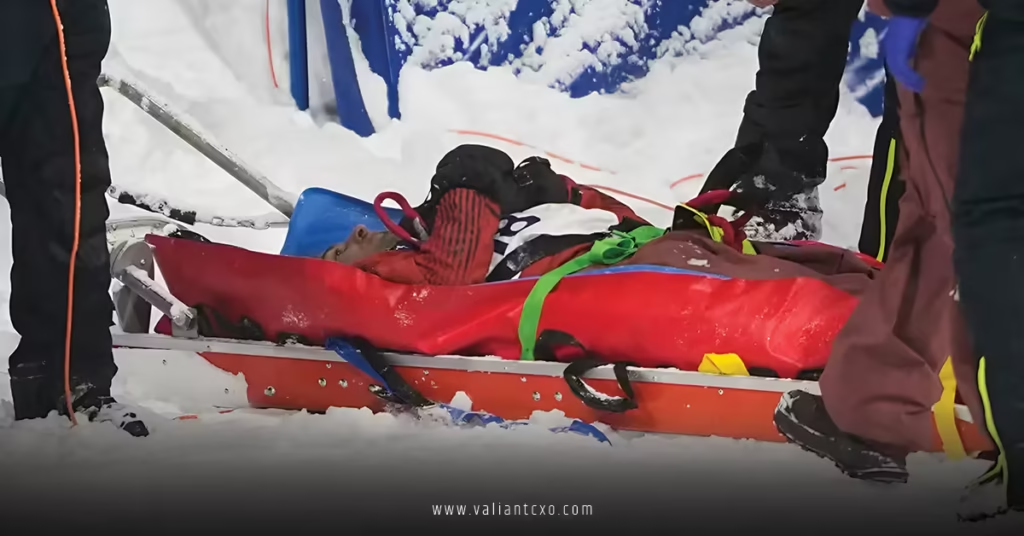
Fast-forward to February 4, 2026, just days before the Milano Cortina Games. During big air training in Livigno, McMorris caught a “snow snake”—hidden debris that wedged under his board—leading to a heavy crash. He hit his head, lost consciousness briefly, and suffered:
- Concussion
- Bruising at the top of his pelvis
- Strained abdominal muscles
Stretchered off the course, he missed big air entirely. Doctors ran concussion protocol. For fans, it felt eerily familiar—another Olympic dream hanging by a thread.
But true to form, McMorris recovered fast. Cleared after nine days, he said, “Nothing that a week or nine days couldn’t fix.” He qualified third in slopestyle and advanced to the final. That resilience ties directly back to his history of bouncing back, making the men’s snowboard slopestyle final Milano Cortina 2026 Mark McMorris one of the most anticipated events of the Games.
What These Injuries Teach Us About Mental and Physical Toughness
Snowboarding demands creativity, power, and fearlessness—but injuries expose the brutal reality. McMorris has spoken openly about the mental side: doubt creeps in during long rehab, yet belief from family, teammates, and fans pulls you through.
His story resonates because it’s relatable on a human level. Whether you’re an athlete or just facing your own hurdles, watching someone overcome a ruptured spleen, broken bones, and concussions reminds us: setbacks don’t define you; your response does.
He credits smart recovery, medical teams, and sheer grit. No shortcuts—just consistent work.
Why Mark McMorris Remains an Inspiration
Through every crash, McMorris has shown snowboarding’s evolution: from a fringe sport to Olympic mainstay, driven by athletes who refuse to quit. His Olympic medals—three bronzes across Sochi, PyeongChang, and Beijing—stand as proof that talent plus tenacity wins.
As he chases more history, his injury saga adds depth to every run. Fans don’t just cheer tricks; they cheer the man who’s survived the unimaginable.
In the end, Mark McMorris Olympic career injuries aren’t just a list of breaks and bruises—they’re chapters in a story of unbreakable spirit. From near-death in Whistler to quick recovery in Livigno, he keeps proving that the comeback is always sweeter. If you’re inspired to hit the slopes or tackle your challenges, remember his example: strap in, heal smart, and keep riding. The mountain’s always waiting.
Here are three high-authority external links for more details:
- Mark McMorris Athlete Profile on Olympics.com
- NBC Olympics Coverage of McMorris Injuries
- CBC Sports on Mark McMorris Comebacks
FAQs
What was the most severe injury in Mark McMorris Olympic career injuries?
The 2017 backcountry crash stands out—fractured jaw, left arm, pelvic fracture, rib fractures, ruptured spleen, and collapsed lung—requiring induced coma and multiple surgeries.
How did Mark McMorris recover from his 2017 injuries for the Olympics?
He underwent emergency surgeries, followed intense rehab, and returned to competition by late 2017, winning events and earning bronze at PyeongChang 2018 less than a year later.
Did Mark McMorris face injuries right before the Milano Cortina 2026 Games?
Yes, a February 4, 2026, big air training crash caused a concussion, pelvic bruising, and abdominal strain, forcing him to miss big air but allowing him to compete in slopestyle.
How many Olympic medals has Mark McMorris won despite his injuries?
He has three bronze medals in men’s snowboard slopestyle—from Sochi 2014, PyeongChang 2018, and Beijing 2022—making him a consistent force even with setbacks.
What makes Mark McMorris’s story unique in relation to the men’s snowboard slopestyle final Milano Cortina 2026 Mark McMorris?
His history of overcoming severe Mark McMorris Olympic career injuries added massive drama to his push for a fourth straight medal in the men’s snowboard slopestyle final Milano Cortina 2026 Mark McMorris.