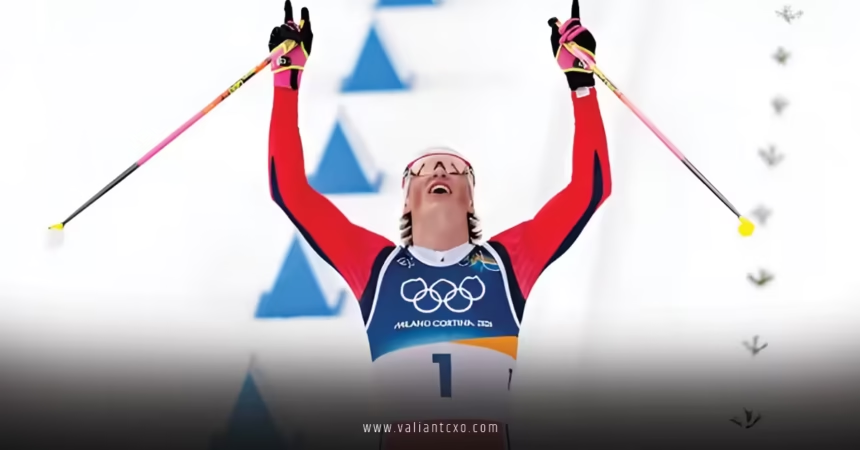
Norway’s record-breaking performance at the 2026 Winter Olympics was nothing short of legendary. With a staggering 41 total medals – including a historic 18 golds – the small Scandinavian nation of just 5.7 million people once again proved that size doesn’t matter when it comes to winter sports dominance. They topped the medal table for the fourth straight Winter Games, smashing their own previous records and leaving powerhouses like the United States and host Italy in the dust. If you’re tracking the full picture, check out the 2026 Winter Olympics Milano Cortina medal standings live updates for the complete leaderboard that captured every thrilling shift.
Hey, fellow sports lovers – can you imagine a country smaller than many U.S. states out-medaling giants with populations 50 times larger? That’s exactly what Norway pulled off in Milano Cortina from February 6 to 22, 2026. Their haul wasn’t just numbers on a board; it was a masterclass in preparation, culture, and sheer athletic brilliance. Let’s dive into how they did it, who the stars were, and why this performance will be talked about for generations.
How Norway Shattered Winter Olympics Records in 2026
Norway entered the 2026 Games with sky-high expectations – after all, they’d led the medal count in the last three Winter Olympics. But they didn’t just meet them; they obliterated them. Their 18 gold medals set a new all-time record for the most golds by any nation at a single Winter Olympics, topping their own 16 from Beijing 2022. The total of 41 medals (18 gold, 12 silver, 11 bronze) also became the highest ever, edging past their 39 from PyeongChang 2018.
Think about it like this: while bigger nations spread resources thin across dozens of sports, Norway funnels everything into their winter strengths – cross-country skiing, biathlon, Nordic combined, and more. It’s like a laser-focused strategy in a video game where you max out one skill tree and dominate. This approach paid off massively in Milano Cortina, where snow-heavy events played to their home-field advantage (even if it was in Italy!).
The dominance was so complete that Norway won more medals than entire continents combined in some categories. Their athletes swept events, stacked podiums, and turned what could have been close races into Norwegian parades.
The Medal Breakdown: Gold Rush on Snow and Ice
Norway’s medal table looked like this at the end:
- Gold: 18 (record)
- Silver: 12
- Bronze: 11
- Total: 41 (record)
Most of these came from snow disciplines – cross-country skiing alone delivered a lion’s share. They claimed 17 golds across snow events, showing why Norway is often called the “king of winter.” Ice sports? They grabbed one notable gold, but their real magic happened where the snow falls deep and the tracks are long.
Compared to previous Games:
- Beijing 2022: 16 gold, 37 total
- PyeongChang 2018: 14 gold (tied), 39 total
The jump to 18 golds in 2026? That’s evolution in action – better tech, younger talent blending with veterans, and a national obsession with winter sports that starts in kindergarten.
Star Athletes Who Powered Norway’s Historic Haul
No team wins alone, and Norway’s success hinged on superstars who delivered when it mattered most.
Johannes Høsflot Klæbo: The Cross-Country Phenomenon
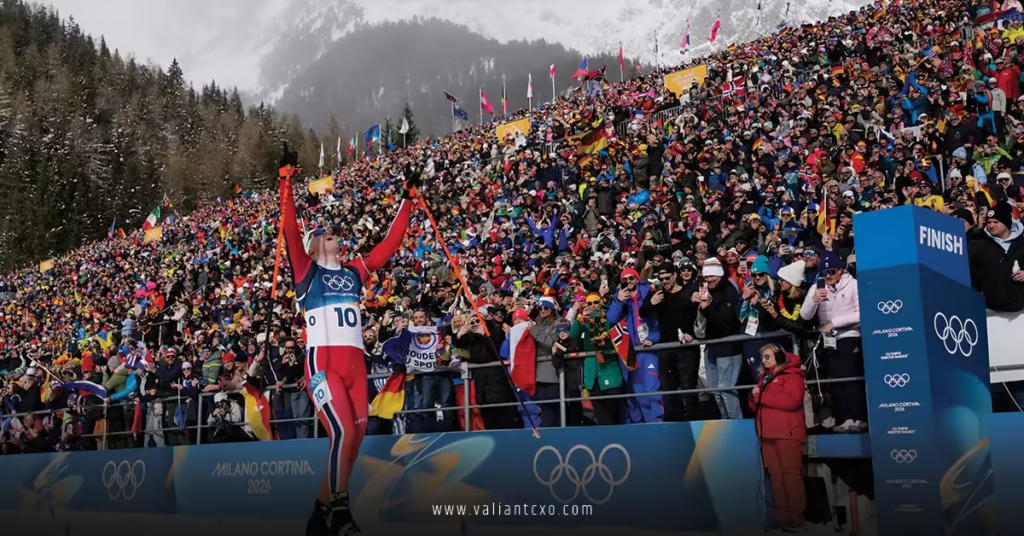
If one name defines Norway’s 2026 dominance, it’s Johannes Høsflot Klæbo. The cross-country skiing wizard went a perfect 6-for-6 in his events, sweeping every race he entered for six gold medals. That’s more golds than most countries won total!
Klæbo’s haul pushed his career Olympic golds to 11, making him the most successful Winter Olympian ever behind only Michael Phelps (23 total Olympic golds). His sprint finishes were electric – imagine a cheetah on skis exploding past competitors in the final meters. In the 50km marathon, he endured brutal conditions to cap his historic sweep. Fans in Norway watched in awe as he rewrote the record books, turning cross-country into a national spectacle.
Other Key Contributors
- Biathlon stars stepped up big time, with multiple relays and individual golds adding to the tally.
- Nordic combined and ski jumping teams delivered consistent podiums.
- Women’s cross-country skiers matched the men’s intensity, ensuring balanced dominance.
These athletes weren’t just competing; they were inspiring an entire generation back home, where kids strap on skis as soon as they can walk.
Why Norway Dominates Winter Sports: Culture, System, and Secrets
Ever wonder why a tiny nation like Norway consistently crushes the Winter Olympics? It’s no accident.
Norway treats winter sports like a religion. From school programs to community clubs, everyone grows up skiing. The ” dugnad” spirit – voluntary community work – extends to supporting local athletes. Funding is smart and targeted, focusing on high-success disciplines rather than spreading thin.
Their training system? Brutal but effective. Altitude camps, tech innovations in skis and wax, and mental coaching create edges that add up over races. Plus, the cold, snowy geography is literally their backyard lab.
In 2026, warmer weather in some venues tested adaptability, but Norway’s depth shone through – when one event got tricky, another discipline picked up the slack.
Population vs. Performance: The Underdog Myth
With only 5.7 million people, Norway beat the U.S. (342 million) in both golds and totals. It’s like David not just beating Goliath but lapping him multiple times. This efficiency highlights how investment and culture trump raw population size in niche sports.
Historical Context: Norway’s Winter Olympic Legacy
Norway has led the Winter medal table many times, but 2026 cemented their dynasty. They’ve now topped totals in three straight Games and golds in four. All-time, they boast over 400 Winter medals – far ahead of anyone.
This performance builds on legends like Ole Einar Bjørndalen and Marit Bjørgen. Klæbo’s rise continues that torch-passing tradition.
Looking ahead to 2030 in the French Alps? Norway’s young talent pool suggests more records could fall.
The Impact of Norway’s 2026 Success
Beyond medals, Norway’s showing inspired millions. Kids in Oslo and Tromsø dreamed bigger. It reinforced winter sports’ place in Norwegian identity and showcased sustainability – many venues reused existing infrastructure.
For global fans, it was a reminder: the Olympics celebrate excellence, no matter where you’re from.
In the end, Norway’s record-breaking performance at the 2026 Winter Olympics was pure magic – 41 medals, 18 golds, and a legacy that grows stronger. If you want to relive the full drama of how the leaderboard unfolded day by day, dive into the 2026 Winter Olympics Milano Cortina medal standings live updates. What a ride it was – and proof that in winter sports, Norway remains untouchable.
FAQs
1. How many medals did Norway win at the 2026 Winter Olympics, and why was it a record?
Norway crushed it with a historic 41 total medals (18 gold, 12 silver, 11 bronze) at the 2026 Winter Olympics in Milano Cortina – the highest total ever by any nation at a single Winter Games. This topped their own previous record of 39 from PyeongChang 2018. Their 18 golds also set a new benchmark for the most gold medals in Winter Olympics history, breaking their Beijing 2022 mark of 16. It’s like they turned the Games into their personal playground!
2. Who was the standout athlete behind Norway’s dominance in 2026?
Cross-country skiing legend Johannes Høsflot Klæbo stole the show by winning six gold medals – a clean sweep of every event he entered, setting an all-time record for the most golds by any athlete at a single Winter Olympics. This pushed his career total to 11 Olympic golds, making him the most successful Winter Olympian ever (behind only Michael Phelps overall). His explosive finishes and endurance were unreal – think of him as the Michael Jordan of skis!
3. In which sports did Norway rack up the most medals during the 2026 Winter Olympics?
Norway dominated cross-country skiing with 14 medals (including 7 golds), followed by biathlon (11 medals, 3 golds) and strong showings in Nordic combined, ski jumping, freestyle skiing, and speed skating. They swept podiums in several events, like the men’s 50km classic where they took gold, silver, and bronze. Snow disciplines were their superpower – ice events added a few, but the real haul came from the tracks and trails.
4. How does Norway’s 2026 performance compare to previous Winter Olympics?
This was Norway’s fourth straight Games topping the medal table (and fourth in golds). They’ve now led total medals in the last three Winter Olympics and golds in the last four. The jump from 37 medals in Beijing 2022 to 41 in 2026 shows their system keeps evolving – better tech, deeper talent pools, and that unbreakable winter culture. No other nation comes close to this consistency!
5. Where can I see the full context of Norway’s record in the 2026 medal standings?
For the complete leaderboard and day-by-day drama of how Norway pulled ahead, head over to the 2026 Winter Olympics Milano Cortina medal standings live updates. It captures every shift, from early surges in cross-country to the final tallies that sealed their historic dominance. Perfect for reliving why Norway remains the undisputed king of winter sports!