Civil Rights Movement in Birmingham stands as a cornerstone of American history, where ordinary people fought extraordinary battles against segregation and injustice in the 1950s and 1960s. This pivotal era in Birmingham transformed the city into a symbol of resistance, leading to landmark changes that echoed nationwide. If you’ve ever wondered how grassroots activism can reshape society, think of the Civil Rights Movement in Birmingham as a roaring river, carving deep paths through barriers of discrimination and paving the way for events like the [Birmingham Black History Festivals], which celebrate this legacy today.
The Roots of the Civil Rights Movement in Birmingham
Ever curious about what sparks a movement? The Civil Rights Movement in Birmingham began in the early 20th century, fueled by decades of systemic racism and Jim Crow laws that enforced segregation in schools, public spaces, and daily life. By the 1950s, Birmingham earned the nickname “Bombingham” due to frequent attacks on Black communities, highlighting the urgent need for change. Organizations like the Southern Christian Leadership Conference (SCLC), led by figures such as Rev. Martin Luther King Jr., took root here, using nonviolent protests to challenge inequality.
What made the Civil Rights Movement in Birmingham unique was its focus on economic boycotts and sit-ins, tactics that disrupted the status quo and drew national attention. For instance, the 1963 Birmingham Campaign targeted discriminatory hiring practices, showing how economic pressure could amplify civil rights demands. This period wasn’t just about protests; it was a strategic evolution, linking local struggles to broader national reforms.
Key Events That Defined the Civil Rights Movement in Birmingham
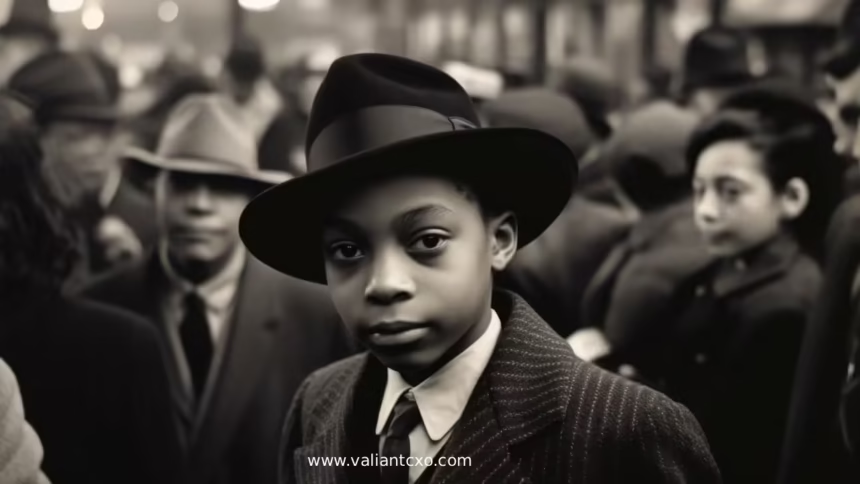
Picture a city on the brink of change: The Civil Rights Movement in Birmingham exploded into the spotlight with events like the Children’s Crusade in May 1963. Thousands of young protesters marched, only to face fire hoses, police dogs, and arrests—images that shocked the world and pressured President John F. Kennedy to push for the Civil Rights Act. Have you considered how media played a role? Television coverage turned these moments into a national wake-up call, exposing the brutality and accelerating support for equality.
Another pivotal event was the bombing of the 16th Street Baptist Church in September 1963, which killed four young girls and became a tragic catalyst for federal intervention. The Civil Rights Movement in Birmingham didn’t stop at protests; it included voter registration drives and legal battles, such as those led by attorney Fred Shuttlesworth, whose fearless challenges to segregation ordinances mirrored a high-stakes game of strategy. These events not only advanced civil rights but also set the stage for celebrations like the Birmingham Black History Festivals, where attendees can relive and honor this history.
Notable Figures in the Civil Rights Movement in Birmingham
Who were the heroes behind the headlines? The Civil Rights Movement in Birmingham was driven by trailblazers like Rev. Martin Luther King Jr., whose “Letter from Birmingham Jail” became a manifesto for nonviolent resistance. King’s collaboration with local leaders, such as Diane Nash and James Bevel, orchestrated mass demonstrations that tested the limits of endurance. Think of them as the architects of a movement, designing blueprints for justice that influenced generations.
Then there’s Arthur Shores, a civil rights lawyer whose courtroom victories dismantled segregation laws, and Vivian Malone Jones, who bravely integrated the University of Alabama. The Civil Rights Movement in Birmingham thrived on diverse voices, from students to ministers, creating a network of support that extended beyond the city. For a deeper dive into how this era is commemorated, exploring the [Birmingham Black History Festivals] offers a vibrant connection to these figures’ enduring impact.
The National and Global Impact of the Civil Rights Movement in Birmingham
Why does the Civil Rights Movement in Birmingham matter beyond Alabama? Its successes, like the Civil Rights Act of 1964 and the Voting Rights Act of 1965, rippled across the U.S., inspiring similar fights for equality worldwide. Economically, it challenged discriminatory practices that stifled Black businesses, leading to greater opportunities and community empowerment. Experts from sources like the National Archives highlight how Birmingham’s struggles influenced international human rights discussions, drawing parallels to anti-apartheid efforts in South Africa.
Today, the Civil Rights Movement in Birmingham serves as a blueprint for addressing modern issues, such as racial justice reforms. By linking historical lessons to contemporary events, it reinforces the importance of unity, much like how the [Birmingham Black History Festivals] use festivals to educate and unite people today.
Challenges and Legacy of the Civil Rights Movement in Birmingham
No movement is without obstacles: The Civil Rights Movement in Birmingham faced fierce opposition, including violent backlash and arrests, yet it forged ahead through resilience and solidarity. Internal debates over tactics, like the shift from nonviolence to more militant approaches, added complexity, but ultimately strengthened the cause. Have you thought about the long-term legacy? It laid the groundwork for progress in education, housing, and employment, though challenges like voter suppression persist.
This legacy is preserved through museums and memorials, ensuring that the stories of bravery endure. The Civil Rights Movement in Birmingham not only shaped American policy but also inspired ongoing celebrations, such as the [Birmingham Black History Festivals], which keep the flame of activism alive.
Conclusion
In essence, the Civil Rights Movement in Birmingham was a transformative force that redefined equality, turning a city of division into a beacon of hope. From the marches in Kelly Ingram Park to the legal triumphs that followed, it demonstrated the power of collective action and perseverance. As we reflect on these events, it’s clear that their lessons remain relevant, encouraging us to stand against injustice and support initiatives like the [Birmingham Black History Festivals]. So, why not dive deeper into this history and see how it continues to inspire change in our communities?
Frequently Asked Questions
What were the main goals of the Civil Rights Movement in Birmingham?
The Civil Rights Movement in Birmingham aimed to end segregation and discrimination, focusing on desegregating public facilities and promoting voting rights, which laid the foundation for events like the Birmingham Black History Festivals.
How did the Civil Rights Movement in Birmingham influence national laws?
Through high-profile protests and tragedies, the Civil Rights Movement in Birmingham pressured the government to pass the Civil Rights Act, highlighting its role in broader American history and linking to celebrations like the Birmingham Black History Festivals.
Who were some key leaders in the Civil Rights Movement in Birmingham?
Leaders like Martin Luther King Jr. and Fred Shuttlesworth drove the Civil Rights Movement in Birmingham, using strategic nonviolence that is still honored today through educational programs at the Birmingham Black History Festivals.
What lasting changes resulted from the Civil Rights Movement in Birmingham?
The movement led to desegregation and economic reforms, with its legacy preserved in memorials and events such as the Birmingham Black History Festivals, which educate on these achievements.
How can I learn more about the Civil Rights Movement in Birmingham today?
Visit historical sites or attend the Birmingham Black History Festivals to experience interactive exhibits that bring the Civil Rights Movement in Birmingham to life for modern audiences.