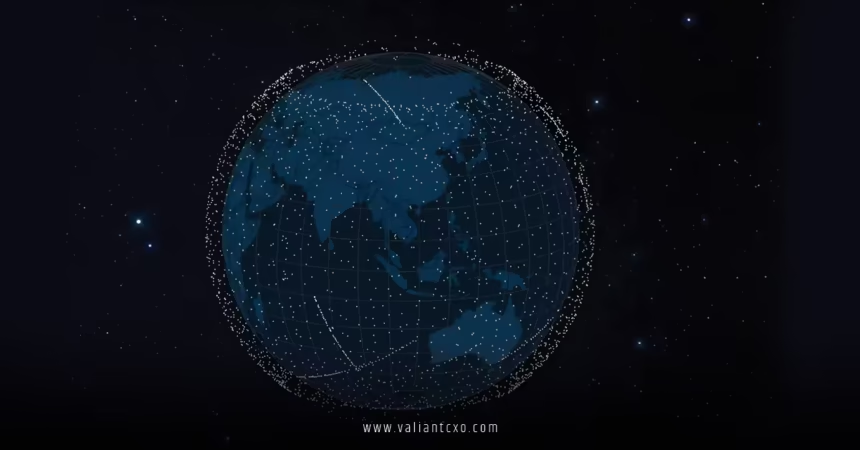
Starlink satellite constellation represents one of the most ambitious space projects ever undertaken, transforming how people access the internet from the most remote corners of the planet. Imagine a sky filled with thousands of tiny satellites working together like a digital blanket, beaming high-speed broadband to places where cables never reach. That’s exactly what SpaceX has built with the Starlink satellite constellation. As of early March 2026, this megaconstellation boasts nearly 10,000 active satellites in low Earth orbit, making it the largest operational satellite network in history. Whether you’re in a rural village in Maharashtra or an offshore rig in the ocean, the Starlink satellite constellation promises reliable connectivity that feels almost magical.
What started as a bold idea from Elon Musk has grown into a game-changer. Have you ever lost signal during a road trip or struggled with slow internet in a remote area? The Starlink satellite constellation tackles those frustrations head-on by using low-orbit satellites that slash latency and boost speeds compared to traditional satellite internet.
What Is the Starlink Satellite Constellation?
At its core, the Starlink satellite constellation is a massive fleet of small satellites designed to provide global broadband internet. SpaceX launched the first batch back in 2019, and since then, they’ve ramped up deployments dramatically. Each satellite is compact—roughly the size of a small car—and equipped with advanced tech like phased-array antennas and laser links for inter-satellite communication.
The goal? Create a mesh network in space that routes data efficiently across the globe. Unlike old-school geostationary satellites that hover at 36,000 km and introduce noticeable delays, Starlink satellites orbit much closer to Earth. This proximity means faster response times—often under 30 ms—and higher bandwidth potential. Think of it as upgrading from a landline to fiber, but from space.
The Starlink satellite constellation isn’t just about numbers; it’s about coverage. With satellites spread across multiple orbital planes, users almost always have multiple satellites overhead, ensuring seamless handoffs as they zip across the sky at blistering speeds.
How the Starlink Satellite Constellation Works: A Simple Breakdown
Ever wondered how your phone or dish connects to the internet via space? Here’s the straightforward flow.
Your Starlink dish (that flat, pizza-sized antenna) locks onto the nearest satellites overhead. These satellites talk to each other using onboard lasers—think of them as space highways for data. The information then beams down to ground stations connected to the regular internet backbone.
Key tech makes this possible:
- Hall-effect thrusters for precise maneuvering and deorbiting at end-of-life.
- Autonomous collision avoidance to dodge space junk.
- Laser interlinks that allow data to hop between satellites without always needing a ground station nearby.
The Starlink satellite constellation operates mainly in low Earth orbit (LEO) at altitudes around 550 km, with plans to lower many to 480 km in 2026 for better safety and faster natural decay. Lower orbits mean less latency but require more satellites for full coverage—hence the massive scale.
Current Status of the Starlink Satellite Constellation in 2026
Fast-forward to March 2026, and the Starlink satellite constellation has exploded in size. Recent trackers show over 11,000 satellites launched total, with around 9,800–9,900 active and working. That’s insane growth—SpaceX has been launching almost weekly, adding dozens at a time.
For example, the Falcon 9 launch March 1 2026 Cape Canaveral successfully deployed another 29 v2 Mini satellites, pushing the constellation closer to its goals. This mission from SLC-40 at Cape Canaveral Space Force Station added to the hundreds already sent up in 2026 alone. With boosters reused dozens of times, costs drop, and launches accelerate.
By now, the Starlink satellite constellation covers most populated areas with solid performance. Millions of users worldwide rely on it for everything from remote work to streaming in Antarctica. SpaceX even rolled out Direct-to-Cell capabilities on some satellites, letting phones connect directly without special hardware.
Orbital Architecture: Shells, Altitudes, and Inclinations
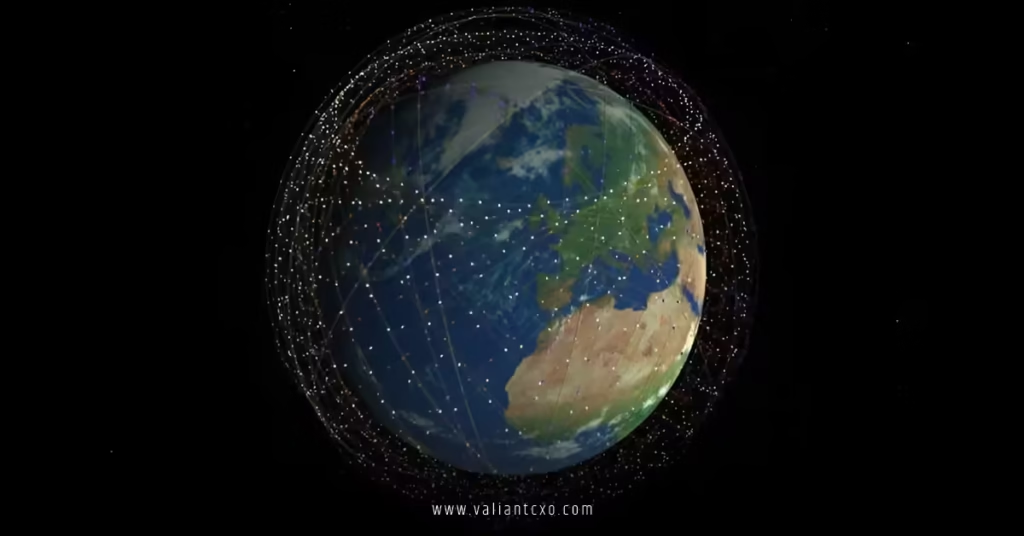
The Starlink satellite constellation isn’t a random swarm—it’s carefully organized into “shells” for optimal coverage.
- Primary shell: Around 550 km altitude (with many shifting to 480 km in 2026), inclination ~53 degrees—great for mid-latitudes like much of India and the US.
- Other shells: Inclinations like 43°, 70°, and polar orbits (97–98°) for global reach, including high latitudes.
Satellites orbit at about 27,000 km/h, circling Earth every 90 minutes or so. Multiple planes (up to 72 in some shells) ensure constant visibility. This setup minimizes blackouts and maximizes throughput.
In 2026, SpaceX is actively reconfiguring parts of the constellation—lowering thousands of satellites to reduce collision risks and debris concerns. It’s a proactive move that shows they’re thinking long-term about sustainable space use.
Benefits and Real-World Impact of the Starlink Satellite Constellation
Why does all this matter? The Starlink satellite constellation bridges the digital divide like never before.
- Rural and remote areas get speeds up to 200+ Mbps download.
- Disaster zones regain communication quickly.
- Maritime and aviation users stay connected mid-ocean or in-flight.
- Emerging Direct-to-Cell service turns regular phones into satellite phones.
In places like Bhusawal or other parts of Maharashtra, where fiber might lag, Starlink offers a viable alternative. It’s empowering education, telemedicine, and business in underserved regions. Plus, with low latency, gaming and video calls feel local.
Of course, it’s not perfect—weather can affect the signal slightly, and the initial dish setup costs money—but the progress is undeniable.
Challenges and Criticisms Facing the Starlink Satellite Constellation
No massive project escapes scrutiny. Astronomers worry about light pollution from satellites reflecting sunlight, creating bright streaks in night skies. SpaceX mitigates this with darkening coatings and orientation tweaks.
Space debris is another hot topic. With thousands in orbit, collision risks rise, but Starlink satellites autonomously avoid threats and deorbit reliably (most within years, not decades).
Regulatory hurdles persist globally—some countries restrict operations—but approvals keep rolling in.
The Future of the Starlink Satellite Constellation
SpaceX eyes 12,000+ satellites initially, with potential for 30,000–40,000. Gen2 designs promise even higher speeds, gigabit capabilities, and more Direct-to-Cell coverage.
As launches continue (often via reliable workhorses like the one in the Falcon 9 launch March 1 2026 Cape Canaveral), the constellation grows smarter and denser. Imagine seamless global roaming or backup internet during outages—it’s getting closer.
The Starlink satellite constellation isn’t just tech; it’s reshaping connectivity for billions.
In summary
from humble beginnings to nearly 10,000 satellites strong, the Starlink satellite constellation stands as a testament to innovation. It delivers on the promise of universal internet, powered by frequent missions like the Falcon 9 launch March 1 2026 Cape Canaveral. Whether you’re stargazing or streaming, this network touches your life more than you might realize. Stay tuned— the sky’s the limit, and it’s only getting busier up there.
FAQs
How many satellites are in the Starlink satellite constellation right now?
As of March 2026, the Starlink satellite constellation has around 9,800–9,900 active satellites, with over 11,000 launched in total.
How does the Starlink satellite constellation provide internet?
The Starlink satellite constellation uses low-Earth orbit satellites with laser links and ground stations to beam internet signals directly to user dishes, offering low latency and high speeds worldwide.
What role did the Falcon 9 launch March 1 2026 Cape Canaveral play in the Starlink satellite constellation?
The Falcon 9 launch March 1 2026 Cape Canaveral deployed 29 additional Starlink satellites, further expanding coverage and capacity in the growing constellation.
Are there any plans to change the Starlink satellite constellation orbits in 2026?
Yes, SpaceX plans to lower about 4,400 satellites from ~550 km to ~480 km in 2026 to improve safety, reduce debris risks, and shorten deorbit times.
Can the Starlink satellite constellation work in rural areas like?
Absolutely—the Starlink satellite constellation excels in rural and remote locations, providing high-speed internet where traditional infrastructure is limited or unavailable.