US submarine sinks IRIS Dena Indian Ocean – those words hit like a thunderclap on March 4, 2026, when news broke that a U.S. Navy fast-attack submarine had torpedoed and sent the Iranian frigate IRIS Dena to the bottom of the Indian Ocean. Have you ever wondered how a single underwater strike could ripple across global tensions, claiming lives and reshaping alliances? This wasn’t some distant skirmish; it unfolded in international waters off Sri Lanka’s southern coast, far from the Middle East hotspots, yet tied directly to the escalating U.S.-Iran conflict. Let’s dive into what really happened, why it matters, and what it could mean for the future of naval warfare.
What Exactly Happened in the US Submarine Sinks IRIS Dena Indian Ocean Incident?
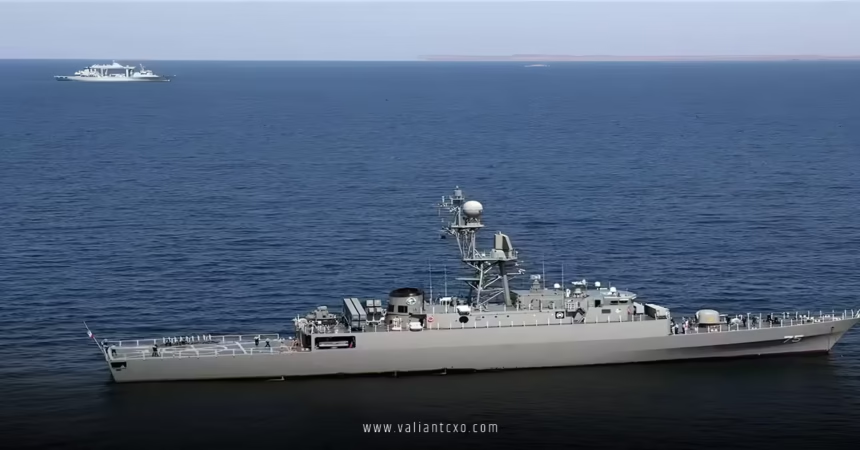
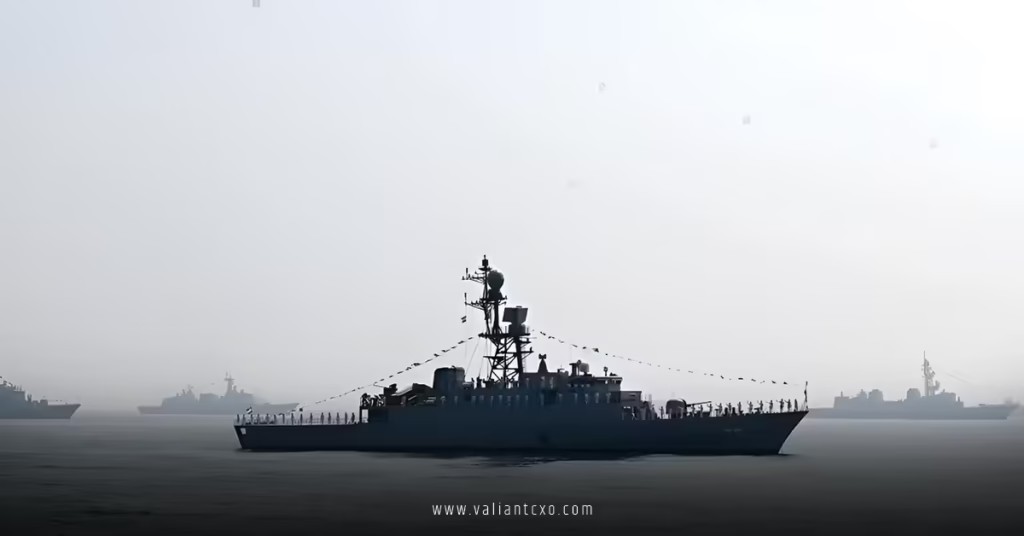
Picture this: It’s early March 2026, and the IRIS Dena, one of Iran’s proud Moudge-class frigates, is cruising through the vast Indian Ocean. Fresh from participating in India’s multinational MILAN 2026 naval exercise and the International Fleet Review in Visakhapatnam, the ship was heading home with around 180 crew members on board. Armed with heavy guns, anti-ship missiles, surface-to-air defenses, and even a helicopter, this relatively modern vessel (commissioned in 2021) represented Iran’s push for blue-water capabilities beyond the Persian Gulf.
Then, in the dead of night or early dawn, disaster struck. A U.S. Navy submarine – likely a Los Angeles-class or similar nuclear-powered attack sub – fired a single Mark 48 torpedo. This heavyweight weapon, a guided marvel of engineering, homed in silently and detonated beneath the frigate’s stern. The explosion was catastrophic: the ship lifted momentarily from the force before breaking apart and sinking rapidly. Pentagon footage later released showed the chilling periscope view – a massive plume of water and fire as the IRIS Dena met its end.
US Defense Secretary Pete Hegseth didn’t mince words in his briefing: “An American submarine sunk an Iranian warship that thought it was safe in international waters. Instead, it was sunk by a torpedo. Quiet death.” He called it the first U.S. submarine torpedo sinking of an enemy vessel since World War II. Think about that for a second – over 80 years without such an action from the “Silent Service,” and suddenly, boom, in the Indian Ocean.
The Timeline of Events Surrounding US Submarine Sinks IRIS Dena Indian Ocean
The sequence unfolded fast. On March 4, Sri Lanka’s navy picked up a distress signal from the IRIS Dena around 6-7 a.m. local time, about 40 nautical miles (roughly 74 km) south of Galle. Rescue ships and aircraft scrambled, pulling 32 survivors from the water – some injured, all in shock. Tragically, reports confirmed 87 bodies recovered, with dozens more missing, feared lost to the depths.
The U.S. confirmation came swiftly via the Pentagon. No prior warning, no surface engagement – just the stealthy precision of submarine warfare. Iranian officials decried it as an unprovoked act of aggression, while U.S. sources framed it as part of broader operations targeting Iran’s naval assets amid ongoing strikes in the region. The frigate’s recent stop in Indian waters added layers: Was it truly “safe” in international seas, or had intelligence flagged it as a threat?
Why Did the US Submarine Sink IRIS Dena in the Indian Ocean?
This is the million-dollar question, right? Context is everything. The incident didn’t happen in a vacuum. It ties into the wider U.S.-Israel campaign against Iran, which had intensified with airstrikes and naval interdictions. The IRIS Dena wasn’t just any ship; it was one of Iran’s newer, more capable frigates, sanctioned by the U.S. Treasury years earlier for links to drone supplies in other conflicts.
Officials suggested the strike aimed to degrade Iran’s naval reach, preventing potential reinforcements or disruptions far from home. Hegseth emphasized the “quiet death” – a nod to the submarine’s stealth advantage. Imagine a predator lurking unseen: that’s the power of modern subs. The location, thousands of miles from Iran, highlighted how the conflict had spilled over geographically, stretching into the Indian Ocean and challenging assumptions about safe transit routes.
Critics question the proportionality – was a single frigate returning from an exercise truly an imminent threat? Supporters point to Iran’s asymmetric tactics elsewhere, arguing preemptive action saves lives in the long run. Either way, the US submarine sinks IRIS Dena Indian Ocean event marked a bold escalation.
Technical Breakdown: The Mark 48 Torpedo and Submarine Warfare in the US Submarine Sinks IRIS Dena Indian Ocean Case
Let’s geek out a bit. The Mark 48 Advanced Capability (ADCAP) torpedo isn’t your grandpa’s WWII relic. It’s a wire-guided, sonar-homing beast with a 650-pound warhead, capable of speeds over 50 knots and ranges exceeding 20 miles. Fired from a submerged sub, it uses advanced sensors to track, evade countermeasures, and strike precisely below the keel – the classic “underwater hammer” that snaps a ship’s spine.
In this case, a single shot did the job. The footage? Grainy but dramatic: the torpedo impact lifts the stern, secondary explosions follow, and the ship lists fatally. Submarines like the one involved operate undetected for weeks, relying on nuclear power for endurance. No wonder they’re called the silent service – they strike without warning, then vanish.
This wasn’t a lucky hit; it showcased integrated intelligence, precise targeting, and overwhelming technological edge.
Geopolitical Ripples from the US Submarine Sinks IRIS Dena Indian Ocean Strike
The fallout? Massive. Sri Lanka found itself in the spotlight, managing rescue ops while staying neutral. India, host to the recent exercises, faced awkward questions – though the incident occurred in international waters, far from their shores.
Globally, it raised alarms about freedom of navigation. If a warship can be sunk en route home from a friendly port call, what does that mean for merchant traffic? Iran vowed retaliation, while allies like Russia and China watched closely. The event underscored the Indian Ocean’s growing strategic weight – no longer a backwater, but a theater where great powers clash.
For naval enthusiasts, it’s historic: the first SSN torpedo kill on a surface ship since HMS Conqueror’s sinking of ARA General Belgrano in 1982. A reminder that submarines remain the ultimate asymmetric weapon.
Casualties, Rescue Efforts, and Human Cost in the US Submarine Sinks IRIS Dena Indian Ocean Tragedy
Behind the headlines are real people. Of the 180 aboard, only 32 were saved – many suffering from hypothermia, injuries, or shock after hours in the water. Sri Lankan teams worked tirelessly, pulling bodies and survivors alike. Iran mourned its sailors as martyrs; families back home waited for news that never came for many.
This human toll reminds us: War isn’t just strategy. It’s lives cut short, dreams drowned. Rhetorically ask yourself – is any military objective worth such loss?
Future Implications: What Comes Next After US Submarine Sinks IRIS Dena Indian Ocean?
This could be a turning point. Expect heightened patrols, diplomatic furor at the UN, and perhaps new rules for submarine ops in contested waters. Iran’s navy, already battered, faces further erosion. For the U.S., it reaffirms sub dominance but risks broader escalation.
Naval planners everywhere are rethinking: How do you protect surface fleets against invisible threats? The era of uncontested blue-water ops might be over.
In wrapping up, the US submarine sinks IRIS Dena Indian Ocean incident stands as a stark, tragic milestone in 2026’s conflicts. A stealthy torpedo from the deep ended a proud frigate’s journey, claimed dozens of lives, and sent shockwaves worldwide. It highlights the lethal precision of modern warfare, the fragility of peace at sea, and the high stakes of great-power rivalry. Let’s hope lessons learned prevent worse tragedies ahead. Stay informed, question narratives, and remember the human side – because behind every headline are stories that deserve our attention.
For more context, check these high-authority sources:
FAQs
1. What exactly caused the US submarine sinks IRIS Dena Indian Ocean event?
A U.S. Navy fast-attack submarine fired a single Mark 48 torpedo at the Iranian frigate IRIS Dena on March 4, 2026, in international waters in the Indian Ocean, leading to its rapid sinking.
2. Were there any survivors in the US submarine sinks IRIS Dena Indian Ocean sinking?
Yes, Sri Lankan rescue teams saved 32 crew members from the IRIS Dena after the attack, though 87 bodies were recovered and many more remain missing.
3. Why is the US submarine sinks IRIS Dena Indian Ocean incident considered historic?
It marks the first time since World War II that a U.S. submarine used a torpedo to sink an enemy surface warship, highlighting a rare and significant use of submarine warfare.
4. Where did the US submarine sinks IRIS Dena Indian Ocean attack take place?
The sinking occurred approximately 40 nautical miles south of Galle, Sri Lanka, in the Indian Ocean’s international waters.
5. What was the IRIS Dena doing before the US submarine sinks IRIS Dena Indian Ocean incident?
The Iranian frigate had participated in India’s MILAN 2026 naval exercise and International Fleet Review in Visakhapatnam and was returning home when it was targeted.