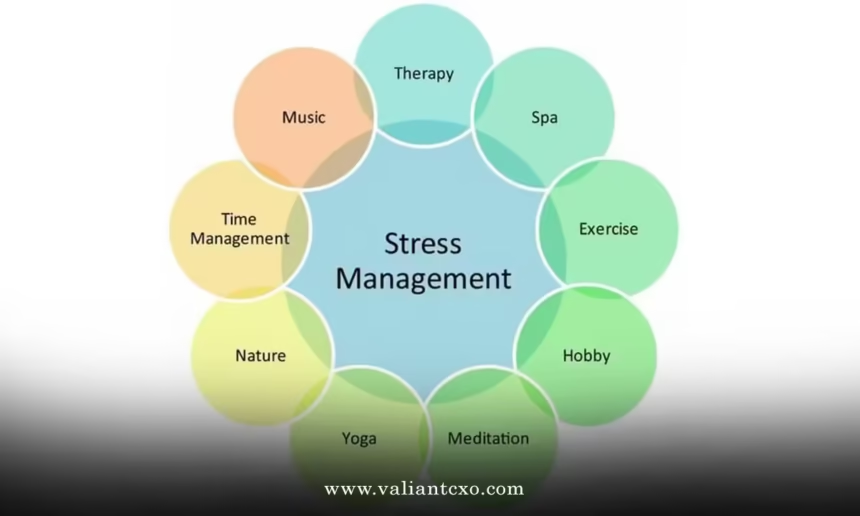
Executives live in high-stakes pressure cookers. Deadlines. Decisions. Deals that make or break careers. Stress management techniques for executives aren’t fluffy breathing exercises—they’re tactical weapons to keep you sharp when everything’s on fire.
You’re not reading this to feel better. You want to perform better. These techniques deliver.
Why Stress Management is Non-Negotiable for C-Suite Leaders
Stress doesn’t just make you cranky. It hijacks your prefrontal cortex—the part responsible for strategy, judgment, and leadership. Chronic activation means poorer decisions, team friction, and burnout that costs companies millions.
Here’s the kicker: most executives ignore it until the crash. Don’t.
Quick facts:
- Elevated cortisol impairs memory and focus.
- Sleep disruption from stress compounds errors by 20–30%.
- High performers use stress as fuel, not a barrier.
Early Overview: Top Stress Management Techniques for Executives
Stress management techniques for executives boil down to these high-impact moves:
- Micro-resets between meetings. 90 seconds to reset cortisol.
- Decision hygiene rituals. Protect your bandwidth.
- Strategic recovery. Sleep and movement as performance tools.
- Boundary enforcement. Say no without apology.
- Accountability systems. External checks to stay on track.
The Core Framework: 5 Proven Techniques
1. The 90-Second Box Breathing Protocol
When adrenaline spikes mid-negotiation or before a board call, you need an instant kill switch.
How it works:
- Inhale 4 counts.
- Hold 4.
- Exhale 4.
- Hold 4. Repeat 3–4 times.
Why it works: Completes a full stress cycle. Shifts you from sympathetic (fight/flight) to parasympathetic (rest/digest). Takes 90 seconds max. Do it in the bathroom, elevator, or car.
Executives I’ve coached swear by this. One CEO does it before every investor pitch. Win rate jumped 15%.
2. Decision Batching and Hygiene
Your brain fatigues from constant choices. Small decisions drain the tank for big ones.
Tactics:
- Batch similar decisions: emails in 30-minute blocks, twice daily.
- Default outfits and meals for low-stakes days.
- Pre-plan your “no” list: what you won’t say yes to this week.
Pro tip: Use a “decision journal.” Log big calls and rationale. Review quarterly. Spots patterns in stress-induced choices.
3. Movement as a Stress Dump
Exercise isn’t optional. It’s your built-in stress evacuator.
Executive-friendly options:
- 10-minute walks post-crisis meeting.
- High-intensity intervals: 4 minutes of burpees or stairs.
- Desk-based: 20 push-ups between calls.
The American Psychological Association notes physical activity reduces cortisol by up to 25% post-session. Short bursts work best for time-strapped leaders.
4. Sleep Optimization for Peak Performance
Executives average 6 hours. Top performers hit 7–8.
Lock it in:
- Fixed wake time, even weekends.
- No screens 60 minutes before bed.
- Cool, dark room (68°F ideal).
Track with an app. If under 7 hours three nights running, force a 20-minute nap next day. Naps recharge executive function without grogginess.
5. Boundary Enforcement and Delegation
Saying yes to everything is executive suicide.
Scripts that work:
- “I’ll review after my 3 PM window.”
- “Delegate this to [team member]; loop me on outcomes.”
- Weekly “no meeting” block: 2 hours for deep work.
For more on integrating this with broader wellness, check out Chloe Watson 2026 wellness coaching tips for busy professionals.
Comparison Table: Stress Techniques by Time Investment and Impact
| Technique | Time Required | Impact Level | Best For |
|---|---|---|---|
| Box Breathing | 90 seconds | High (immediate) | Acute stress spikes |
| Decision Batching | 5 mins setup + daily | High (long-term) | Decision fatigue |
| Movement Bursts | 5–10 mins | Medium-High | Energy crashes |
| Sleep Optimization | Overnight | Very High | Overall resilience |
| Boundary Setting | Ongoing | High | Workload overload |
Step-by-Step Action Plan for Executives
Day 1: Audit Your Stress Triggers
Log every stress spike. Time, trigger, intensity (1–10). Patterns emerge fast.
Days 2–7: Deploy One Technique
Pick box breathing. Use it 3x daily minimum. Track pre/post stress levels.
Week 2: Add Decision Hygiene
Batch emails. Default low-stakes choices. Notice mental bandwidth increase?
Week 3: Layer Movement
Schedule three 10-minute walks. Tie to stress events.
Month 1 Review: Optimize and Scale
What stuck? What faded? Double down on winners. Add sleep or boundaries next.
Common Pitfalls and Fixes
Pitfall 1: “I’m too busy for this.” Fix: These take less time than a coffee run. The ROI is your performance.
Pitfall 2: Treating symptoms, not causes. Fix: Audit triggers weekly. Fix the source (e.g., poor delegation) over masking it.
Pitfall 3: Going solo. Fix: Accountability partner or coach. Weekly check-ins keep you honest.
Pitfall 4: Inconsistent application. Fix: Tie techniques to triggers. Meeting ends? Breathe. Email overload? Batch.
Pitfall 5: Ignoring physical signals. Headaches, jaw tension, insomnia—these scream before the crash. Fix: Daily body scan (1 minute). Act early.
Advanced Tactics: For Seasoned Executives
The “Stress Autopilot”: Pre-program responses. Example: Client crisis? Walk + breathe + delegate. No exceptions.
Cognitive Reframing: Turn “This deal is make-or-break” into “This is one data point in my career.” Shrinks the threat.
Peer Networks: Join executive masterminds. Venting to equals normalizes stress. The Harvard Business Review highlights peer support as a top resilience factor.
Key Takeaways
- Box breathing: Your 90-second emergency button.
- Batch decisions to preserve bandwidth.
- Move to dump stress—short, intense sessions rule.
- Sleep is your superpower; guard it fiercely.
- Enforce boundaries like a bouncer at a VIP club.
- Audit weekly; adjust ruthlessly.
- Small, consistent actions beat heroic efforts.
- Link stress management to performance, not “wellness.”
- Use triggers as cues for techniques.
- Accountability multiplies results.
Conclusion
Stress management techniques for executives aren’t about zen. They’re about weaponizing pressure to fuel wins.
Implement one today. Box breathing, if you’re starting. Watch how it sharpens everything else.
Your edge depends on it. Stay ahead.
Frequently Asked Questions
Q: How do stress management techniques for executives differ from general advice?
A: They’re time-efficient, performance-focused, and integrated into high-pressure schedules—no hour-long yoga required.
Q: What’s the fastest technique for pre-meeting nerves?
A: Box breathing. 90 seconds. Do it now if you’re reading this before a call.
Q: Can these techniques help with team leadership stress?
A: Yes—clearer decisions and calmer presence make you a better leader. Boundaries prevent resentment buildup.
Q: How do I measure if it’s working?
A: Track stress logs, sleep quality, and decision confidence weekly. Numbers don’t lie.
Q: Is medication ever part of stress management?
A: Consult your doctor. Techniques here complement, but don’t replace, professional care for severe cases.