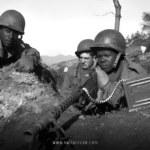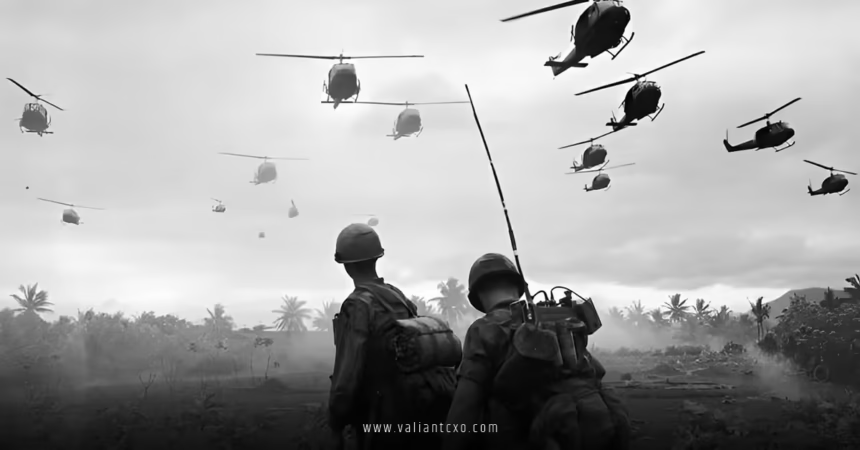
Vietnam War slang terms and military jargon glossary represents one of the most extensive collections of battlefield vernacular in American military history. These terms emerged from the unique conditions of jungle warfare, reflecting the experiences, fears, and camaraderie of soldiers fighting in Southeast Asia from 1955 to 1975.
Understanding this specialized language offers crucial insights into military culture, historical documentation, and the psychological landscape of combat. Whether you’re a history student, researcher, or veteran family member, this glossary serves as your decoder ring to comprehend firsthand accounts, documentaries, and historical records.
- Combat terminology that defined daily survival and communication
- Cultural slang that built unit cohesion and identity
- Technical jargon for equipment, tactics, and locations
- Psychological coping mechanisms expressed through dark humor and coded language
- Regional adaptations specific to Vietnamese geography and conditions
The Origins and Context of Vietnam War Military Language
Vietnam War slang didn’t emerge in a vacuum. It developed from multiple sources: existing military terminology, regional Vietnamese words, African American vernacular, and the unique stresses of guerrilla warfare.
Unlike previous conflicts, Vietnam presented soldiers with an invisible enemy, challenging terrain, and unclear objectives. This environment bred a distinctive linguistic culture.
Why did this slang matter so much?
Simple. Language creates identity.
When you’re 8,000 miles from home, facing an enemy you rarely see, words become weapons against fear and isolation. These terms weren’t just communication—they were survival mechanisms.
Essential Vietnam War Slang Terms Every Beginner Should Know
Combat and Operations Terms
Charlie – Viet Cong forces (from “Victor Charlie” in military phonetic alphabet)
Dink – Derogatory term for enemy soldiers
Gook – Offensive slang for Vietnamese people (origin: Korean War)
NVA – North Vietnamese Army (regular forces)
Sappers – Enemy infiltration specialists who penetrated defenses
LZ – Landing Zone for helicopters
PZ – Pickup Zone for helicopter extraction
AO – Area of Operations
Search and Destroy – Offensive operations to locate and eliminate enemy forces
Fire Base – Fortified artillery position supporting ground operations
Equipment and Weapons Slang
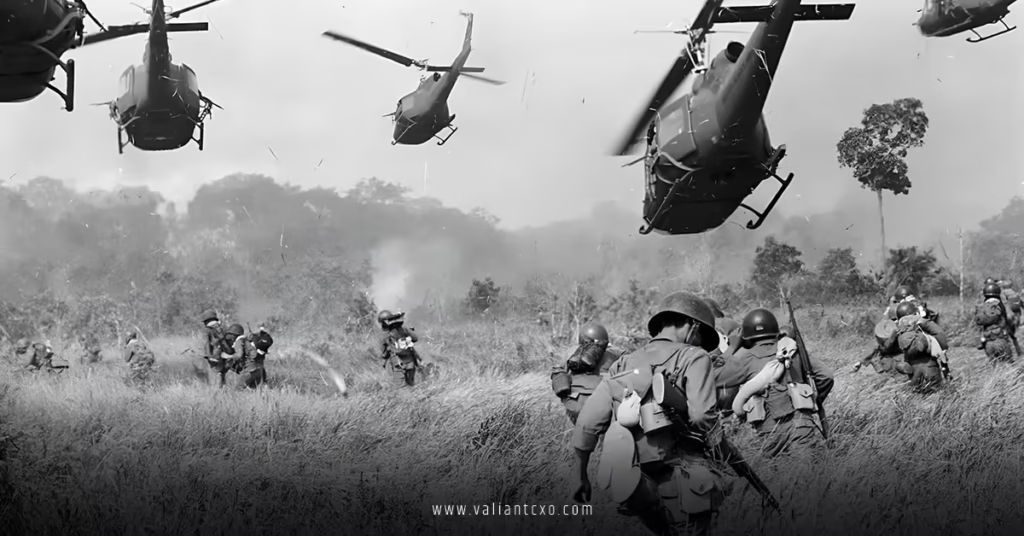
Huey – UH-1 helicopter (from “HU-1” designation)
Slick – Transport helicopter without weapons
Gunship – Armed helicopter providing fire support
Dustoff – Medical evacuation helicopter
Loach – OH-6 light observation helicopter
M-16 – Standard infantry rifle (often called “the sixteen”)
AK – Enemy AK-47 assault rifle
Claymore – Directional anti-personnel mine
Willie Pete – White phosphorus rounds
Blooper – M-79 grenade launcher
Geographic and Environmental Terms
Bush – Jungle or countryside
Boonies – Remote areas away from bases
Hooch – Any structure or shelter
Ville – Vietnamese village
Paddy – Rice field
Triple Canopy – Dense jungle with multiple vegetation layers
Delta – Mekong River delta region
DMZ – Demilitarized Zone (17th parallel)
Ho Chi Minh Trail – Enemy supply route through Laos and Cambodia
Advanced Military Jargon for Intermediate Learners
Tactical Communication Terms
Understanding Vietnam War slang terms and military jargon glossary requires grasping the tactical language that coordinated complex operations.
Broken Arrow – Nuclear weapons accident (also used for troops overrun)
Danger Close – Artillery support extremely near friendly forces
Fire for Effect – Artillery barrage on confirmed target
Suppressive Fire – Shooting to keep enemy heads down
Interlocking Fields of Fire – Overlapping weapon coverage
Contact – Engaging the enemy
Break Contact – Disengage from enemy forces
Immediate – Highest priority request
Sitrep – Situation report
Intel – Intelligence information
Medical and Casualty Terms
KIA – Killed in Action
WIA – Wounded in Action
MIA – Missing in Action
DOW – Died of Wounds
RTD – Return to Duty
Corpsman – Navy medic (Marines)
Medic – Army medical personnel
Dust-off – Medical evacuation
Golden Hour – Critical first hour after wounding
Triage – Medical priority sorting
Regional Variations and Vietnamese-Influenced Terms
Vietnam War military jargon absorbed significant Vietnamese vocabulary, creating hybrid terms that reflected the multicultural nature of the conflict.
Vietnamese-Origin Military Slang
Beaucoup – Many/much (from French “beaucoup”)
Dinky Dau – Crazy (from Vietnamese “dien cai dau”)
Mama-san – Older Vietnamese woman
Papa-san – Older Vietnamese man
Boom-boom – Sexual encounter
Chieu Hoi – “Open Arms” defection program
Kit Carson Scouts – Former enemy soldiers working with US forces
Montagnards – Indigenous highland peoples (US allies)
ARVN – Army of the Republic of Vietnam (South Vietnamese forces)
Geographic Slang Specific to Vietnam
The challenging Vietnamese terrain created location-specific terminology that appears throughout military records and memoirs.
| Term | Definition | Usage Context |
|---|---|---|
| Fire Base Charlie | Specific artillery position | Radio communications |
| Indian Country | Enemy-controlled territory | Mission planning |
| Green Line | Perimeter defense boundary | Base security |
| Red Ball | High-priority supply route | Logistics operations |
| Thunder Road | Highway 13 (dangerous route) | Convoy operations |
Psychological and Social Military Terminology
Vietnam War slang terms and military jargon glossary reveals how soldiers coped with extreme stress through language that processed trauma, fear, and dark humor.
Coping Mechanisms Expressed Through Slang
Short-timer – Soldier near end of tour
FNG – Fing New Guy (inexperienced soldier)
REMF – Rear Echelon Mother Fer (support personnel)
Lifer – Career military person
Draftee – Conscripted soldier
Dear John – Breakup letter from home
R&R – Rest and Recreation leave
DEROS – Date Eligible for Return from Overseas
Freedom Bird – Aircraft taking soldiers home
World, The – United States (home)
Dark Humor and Gallows Terminology
Combat stress produced terminology that processed the unprocessable through bitter humor and emotional detachment.
Crispy Critter – Severely burned casualty
Gomer – Enemy soldier (from “Gomer Pyle”)
Zapped – Killed
Wasted – Killed or destroyed
Grease – To kill
These terms weren’t callousness—they were psychological shields. When you’re 19 years old watching friends die, sometimes dark humor keeps you sane.
Communication Protocols and Radio Terminology
Military radio communication required precise, standardized language that could cut through static, confusion, and chaos.
Standard Radio Procedures
Roger – Message received and understood
Wilco – Will comply
Over – Message complete, awaiting response
Out – Conversation complete
Say Again – Repeat your last transmission
Charlie Mike – Continue Mission
Lima Charlie – Loud and Clear
Radio Check – Testing communication quality
Break – Interrupting transmission for priority message
Authentication – Code verification for security
Call Signs and Identification
Every unit, aircraft, and position received distinctive call signs that appear throughout Vietnam War documentation.
Spooky – AC-47 gunship
Puff the Magic Dragon – AC-47 gunship (alternate name)
Cobra – AH-1 attack helicopter
Jolly Green Giant – HH-53 rescue helicopter
Bird Dog – O-1 observation aircraft
Step-by-Step Guide to Understanding Vietnam War Military Documents
Want to decode historical records, interviews, or family letters? Here’s your action plan:
- Start with context – Identify the document type (after-action report, personal letter, oral history)
- Note the date and unit – Terminology evolved throughout the war
- Identify technical terms first – Weapons, locations, and unit designations
- Look for phonetic alphabet usage- Alpha, Bravo, Charlie indicate radio communications
- Recognize numerical codes- Grid coordinates, time formats, unit numbers
- Understand informal slang- Personal terms reveal individual experiences
- Cross-reference multiple sources- Verify unfamiliar terms through historical databases
- Consider emotional context – Some terms carry psychological weight beyond literal meaning
Common Mistakes When Interpreting Vietnam War Military Language
Understanding this specialized vocabulary requires avoiding several frequent misinterpretations:
Mistake #1: Taking Everything Literally
Problem: Military slang often uses metaphor, euphemism, and dark humor
Solution: Consider emotional and psychological context, not just surface meaning
Mistake #2: Ignoring Regional Variations
Problem: Different units and time periods used variations of the same terms
Solution: Cross-reference with unit history and deployment dates
Mistake #3: Missing Cultural Sensitivity
Problem: Some terms reflect period attitudes that seem offensive today
Solution: Understand historical context while acknowledging problematic language
Mistake #4: Confusing Formal vs. Informal Usage
Problem: Official reports use different terminology than personal accounts
Solution: Identify document type and intended audience
Mistake #5: Overlooking Psychological Coping Mechanisms
Problem: Dismissing seemingly callous language as simple cruelty
Solution: Recognize how extreme stress creates defensive linguistic behaviors
Key Takeaways for Vietnam War Military Language
- Context determines meaning – The same term might have different implications depending on situation, unit, and time period
- Language served psychological functions – Slang helped soldiers process trauma, build identity, and maintain sanity
- Vietnamese influence was significant – Local vocabulary merged with American military terminology
- Technical precision mattered – Radio communications and tactical terms required absolute clarity
- Evolution occurred throughout the conflict – Early war terminology differed from later periods
- Cultural barriers existed- Different branches, units, and backgrounds created linguistic variations
- Documentation varies widely – Official records, personal letters, and oral histories use different vocabularies
- Historical sensitivity is crucial – Some terminology reflects attitudes we now recognize as problematic
Beyond Basic Terminology: Understanding the Human Element
Here’s what separates surface knowledge from real understanding: recognizing that Vietnam War slang terms and military jargon glossary isn’t just about definitions.
These words carried the weight of young men thrust into impossible circumstances. They reflect fear, courage, frustration, and the dark humor that kept people alive.
When a veteran uses terms like “the World” to describe home, he’s not just being dramatic. He’s expressing the psychological distance that combat creates between soldiers and civilian life.
Understanding this language means understanding a piece of American experience that shaped a generation.
Conclusion
Vietnam War slang terms and military jargon glossary provides essential keys to unlocking historical documents, personal accounts, and cultural understanding of America’s longest war. These terms weren’t just military efficiency—they were survival mechanisms, identity builders, and psychological shields for soldiers facing unprecedented challenges.
Whether you’re researching family history, studying military culture, or seeking to understand veteran experiences, this vocabulary serves as your bridge to comprehending one of America’s most complex conflicts.
Start with the basic terms, understand their emotional context, and always remember: behind every piece of slang was a human being trying to make sense of war.
The language lives on because the experience shaped a generation.
Frequently Asked Questions
Q: Why did Vietnam War soldiers create so much unique slang compared to previous wars?
A: The nature of guerrilla warfare, unclear objectives, and extended individual tours (rather than unit rotations) created unique psychological pressures. Soldiers developed extensive slang as coping mechanisms and identity markers in an environment where traditional military structure often broke down.
Q: Are Vietnam War slang terms still used in modern military contexts?
A: Many basic military terms persist, but Vietnam-specific terminology like “Charlie,” “hooch,” and “dustoff” appear mainly in historical contexts. Modern conflicts have generated their own specialized vocabulary while maintaining core military communication principles.
Q: How can I verify the accuracy of Vietnam War slang terms I encounter in family letters or documents?
A: Cross-reference terms through multiple sources: the Vietnam Veterans Memorial Fund, National Archives military records, and Library of Congress Veterans History Project. Unit histories and period military manuals provide additional verification.
Q: What’s the difference between official military terminology and informal soldier slang in Vietnam War documents?
A: Official reports use standardized military terms (SITREP, KIA, AO), while personal accounts include informal slang (Charlie, gook, short-timer). Understanding both vocabularies is essential for comprehensive document interpretation.
Q: How should I handle offensive or dated language when researching Vietnam War slang terms and military jargon glossary?
A: Acknowledge historical context while recognizing problematic attitudes. These terms reflect period perspectives that we now understand as offensive. Use them for historical accuracy in research while maintaining awareness of their harmful nature.