
Caribbean citizenship programs 2026 continue dominating the global citizenship by investment landscape, offering some of the world’s most accessible and reliable pathways to second citizenship. Despite increased international scrutiny and program consolidation, five Caribbean nations maintain robust programs that attract thousands of investors annually.
Here’s your essential overview:
- Active Programs: St. Kitts & Nevis, Dominica, Grenada, Antigua & Barbuda, and St. Lucia
- Investment Range: $100K-$400K depending on program and family size
- Processing Time: 3-6 months for most applications
- Visa-Free Travel: 120-150+ destinations including EU Schengen zone
- Program Stability: All operating programs have 10+ year track records
The Caribbean Advantage: Why These Programs Dominate
The Caribbean region offers a unique combination of political stability, English common law systems, and strategic geographic positioning. Unlike European programs that face constant regulatory changes, Caribbean citizenship programs 2026 operate under established frameworks with predictable requirements.
Geographic and Strategic Benefits
These island nations sit perfectly positioned between North and South America, offering easy access to major business centers. Most Caribbean passports provide visa-free access to the UK, EU Schengen zone, Singapore, and Hong Kong—critical destinations for international business.
The time zone alignment works beautifully for North American investors. You can conduct business calls with London in the morning, New York at midday, and still have evening hours for Caribbean property management.
Program-by-Program Breakdown: 2026 Landscape
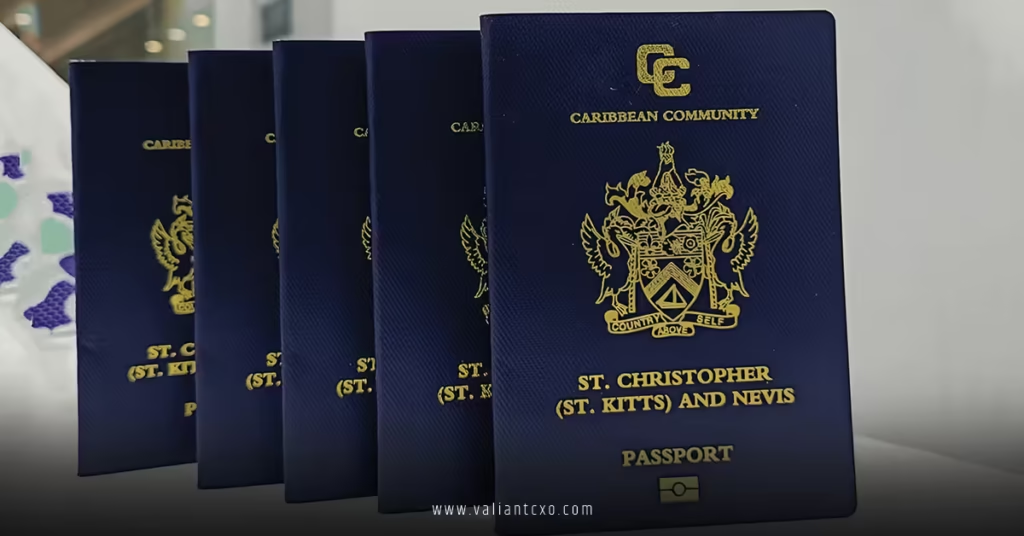
St. Kitts & Nevis: The Pioneer
Operating since 1984, St. Kitts & Nevis runs the world’s oldest citizenship by investment program. This track record provides unmatched stability and international recognition.
Investment Options:
- Donation: $150K (single), $195K (family of 4)
- Real estate: $400K minimum (resale allowed after 7 years)
Key Advantages:
- Longest operational history builds international credibility
- No residency requirements whatsoever
- Strong real estate market with genuine tourism demand
- Established banking relationships facilitate smooth transactions
Considerations: The higher price point reflects program prestige, but recent fee increases have pushed some investors toward more affordable alternatives.
Dominica: The Budget Leader
Dominica offers Caribbean citizenship programs 2026’s most affordable entry point without sacrificing program quality or international recognition.
Investment Options:
- Donation: $100K (single), $175K (family of 4)
- Real estate: $200K minimum (resale allowed after 3 years)
Key Advantages:
- Lowest minimum investment among established programs
- Fastest processing times (often 3-4 months)
- Strong passport ranking with 140+ visa-free destinations
- Eco-focused real estate projects align with sustainable tourism trends
Considerations: Limited direct flight connectivity requires connections through Barbados or other regional hubs for most international travel.
Grenada: The US Gateway
Grenada stands alone among Caribbean citizenship programs 2026 by offering access to US E-2 investor visas—a massive advantage for entrepreneurs targeting American markets.
Investment Options:
- Donation: $150K (single), $200K (family of 4)
- Real estate: $350K minimum (resale allowed after 5 years)
Key Advantages:
- Only Caribbean program with US E-2 treaty access
- Strong tourism infrastructure supports real estate values
- Well-regarded due diligence process builds international confidence
- Active government promotion creates ongoing program improvements
Considerations: E-2 visa applications require separate processes and additional documentation beyond citizenship requirements.
Antigua & Barbuda: The Residency Requirement
Antigua & Barbuda offers competitive pricing but requires actual physical presence—a dealbreaker for some investors but attractive for others seeking genuine Caribbean connections.
Investment Options:
- Donation: $100K (family of 4), $125K (family of 5+)
- Real estate: $400K minimum (resale allowed after 5 years)
Key Advantages:
- Family-friendly pricing structure favors larger households
- 5-day annual residency requirement manageable for vacation-minded investors
- Strong tourism sector supports legitimate real estate demand
- Government actively courts high-net-worth individuals with business incentives
Considerations: The residency requirement eliminates this option for investors seeking purely passive citizenship arrangements.
St. Lucia: The Newcomer
Launched in 2015, St. Lucia represents Caribbean citizenship programs 2026’s newest entrant, offering competitive terms while building international recognition.
Investment Options:
- Donation: $100K (single), $140K (couple), $150K (family of 4)
- Real estate: $300K minimum (resale allowed after 5 years)
Key Advantages:
- Competitive pricing across all investment categories
- Streamlined application process benefits from lessons learned by other programs
- Growing tourism sector creates authentic real estate demand
- Government commitment to program development and international promotion
Considerations: Newer program status means less international recognition and fewer banking relationships compared to established alternatives.
Investment Route Analysis: Real Estate vs. Donations
Understanding the fundamental difference between investment approaches helps optimize your Caribbean citizenship programs 2026 strategy. For detailed analysis of citizenship by investment real estate vs donation route 2026, consider how each approach aligns with your broader financial goals.
Real Estate Route Realities
Caribbean citizenship real estate operates differently than traditional property investment. You’re buying citizenship with real estate as the vehicle, not pursuing property investment that happens to include citizenship benefits.
Authentic Market Segments:
- Beachfront resort developments with legitimate tourism demand
- Luxury villa projects targeting high-end vacation rental markets
- Mixed-use developments combining residential and commercial components
- Eco-resort projects capitalizing on sustainable tourism trends
Market Performance Insights: Recent data from the Caribbean Hotel & Tourism Association shows strong tourism recovery post-2020, supporting real estate values in established markets like St. Kitts and Grenada.
Donation Route Advantages
Pure donations eliminate property management complexity while often providing faster processing and lower total costs when fees are factored comprehensively.
Government funds typically support infrastructure development, education systems, and economic diversification projects that strengthen long-term program sustainability.
Due Diligence Evolution: 2026 Standards
Caribbean citizenship programs 2026 operate under significantly enhanced due diligence procedures following international pressure and program maturation.
Enhanced Verification Processes
- Multi-jurisdictional background checks covering every country of residence
- Enhanced financial scrutiny requiring detailed source of funds documentation
- Professional reference verification with direct contact to provided references
- Social media and digital footprint analysis for reputation and character assessment
- Ongoing monitoring systems for citizenship revocation in case of subsequent criminal activity
Common Rejection Factors
The US Treasury Department maintains informal coordination with Caribbean programs regarding sanctioned individuals and politically exposed persons.
Automatic Disqualifiers:
- Any criminal convictions involving financial crimes, violence, or moral turpitude
- Outstanding tax obligations in any jurisdiction
- Inclusion on international sanctions lists or terrorist watch lists
- Inability to demonstrate legitimate source of investment funds
- Previous citizenship revocation from any jurisdiction
- Providing false or misleading information during application process
Processing Timelines and Expectations
Standard Processing Flow
Caribbean citizenship programs 2026 follow similar processing sequences regardless of specific country:
Phase 1: Document Review (4-6 weeks)
- Application completeness verification
- Initial document authentication
- Preliminary background check initiation
Phase 2: Due Diligence (8-12 weeks)
- Comprehensive background verification
- Financial source validation
- Reference confirmation
- Medical examination review
Phase 3: Final Approval (2-4 weeks)
- Government committee review
- Final approval decision
- Passport preparation and issuance
Factors Affecting Timeline
Complex financial structures, multiple jurisdictional backgrounds, or incomplete documentation can extend processing significantly. Applications involving cryptocurrency sources or recent large transactions require additional scrutiny.
Cost Structure: Beyond Minimum Investments
Understanding total program costs prevents budget surprises and enables accurate program comparison.
| Program | Minimum Investment | Government Fees | Due Diligence | Legal/Agent | Total Budget |
|---|---|---|---|---|---|
| Dominica | $100K | $25K | $7.5K | $15K+ | $147K+ |
| St. Kitts | $150K | $35K | $8.5K | $20K+ | $213K+ |
| Grenada | $150K | $30K | $8K | $18K+ | $206K+ |
| Antigua | $100K | $30K | $7.5K | $15K+ | $152K+ |
| St. Lucia | $100K | $25K | $7.5K | $15K+ | $147K+ |
Passport Power: Travel Benefits Analysis
Caribbean citizenship programs 2026 provide substantial travel freedom, though rankings vary slightly among programs.
Visa-Free Destination Highlights
Universal Access (All Caribbean Programs):
- European Union Schengen Zone (90 days)
- United Kingdom (180 days)
- Singapore (90 days)
- Hong Kong (90 days)
- South Korea (90 days)
- Most Caribbean and Central American nations
Program-Specific Advantages:
- Grenada: US E-2 visa eligibility
- St. Kitts: Strongest overall passport ranking
- Dominica: Fastest visa processing for additional destinations
Business Travel Considerations
For entrepreneurs and business professionals, Caribbean passports eliminate visa requirements for most major commercial centers. This proves particularly valuable for consulting, import/export, and international service businesses.
Regional banking relationships also benefit from Caribbean citizenship, with many international banks viewing these passports favorably for account opening procedures.
Tax Implications and Planning
Caribbean citizenship programs 2026 operate in jurisdictions with favorable tax structures, but your home country obligations typically continue unchanged.
Territorial Tax Systems
All five Caribbean programs operate in countries using territorial taxation—meaning no taxes on foreign-source income for citizens. However, tax planning requires professional guidance considering your specific circumstances.
US Citizen Considerations
American citizens pursuing Caribbean citizenship programs 2026 face unique complexities due to citizenship-based taxation. FATCA reporting requirements and potential FBAR obligations apply to Caribbean financial accounts regardless of how citizenship was obtained.
Banking and Financial Services
Caribbean citizenship facilitates international banking relationships, though compliance requirements have increased significantly since 2020.
Banking Access Benefits
- Enhanced credibility with international financial institutions
- Access to regional Caribbean banking networks
- Improved mortgage and financing options for regional real estate
- Investment account opening in multiple jurisdictions
- Reduced documentation requirements for routine banking services
Compliance Realities
Modern banking relationships require substantial documentation regardless of citizenship portfolio. Caribbean citizenship helps but doesn’t eliminate standard KYC (Know Your Customer) procedures for significant financial relationships.
Program Selection Framework
Choose St. Kitts & Nevis If:
- You prioritize maximum international recognition and program stability
- Budget allows for premium program positioning
- You value the longest operational track record
- You need maximum passport strength for global business
Choose Dominica If:
- You want the most affordable established program
- You prefer fastest processing times
- You don’t require US market access advantages
- You value environmental sustainability in investment projects
Choose Grenada If:
- US E-2 visa access provides substantial business value
- You can utilize the US market entry advantages
- You want strong tourism infrastructure supporting real estate investments
- You value balanced pricing between budget and premium options
Choose Antigua & Barbuda If:
- You have large families benefiting from family-friendly pricing
- You can satisfy the 5-day annual residency requirement
- You want authentic Caribbean connections beyond passport benefits
- You prefer established tourism infrastructure
Choose St. Lucia If:
- You want competitive pricing with modern processing systems
- You’re comfortable with newer program status
- You value streamlined application procedures
- You want exposure to growing tourism markets
Application Strategy and Best Practices
Pre-Application Preparation
Financial Documentation Requirements:
- 5+ years of tax returns from all jurisdictions
- Bank statements showing fund accumulation history
- Business ownership documentation and valuations
- Investment portfolio statements and transaction records
- Professional accountant certification of fund sources
Personal Documentation Standards:
- Apostilled birth and marriage certificates
- Police clearances from every jurisdiction of 6+ months residence
- Medical examinations from approved healthcare providers
- Professional and character references with contact verification
- Educational credentials and professional licensing documentation
Agent Selection Criteria
Working with properly licensed and experienced agents dramatically improves application success rates and processing speed.
Essential Agent Qualifications:
- Government-issued license for your target program
- Minimum 5+ years experience with multiple successful applications
- Direct relationships with government processing departments
- Transparent fee structure with no hidden costs
- Ability to provide verifiable client references
- Professional indemnity insurance coverage
Common Pitfalls and How to Avoid Them
Documentation Errors
Incomplete or incorrectly prepared documentation causes the majority of application delays and rejections in Caribbean citizenship programs 2026.
Critical Success Factors:
- Use only apostilled documents for international recognition
- Ensure all translations are certified and notarized
- Verify document expiration dates before submission
- Double-check spelling consistency across all documents
- Obtain multiple certified copies to prevent processing delays
Financial Planning Mistakes
Many applicants underestimate total program costs or fail to properly structure payment methods for optimal documentation.
Financial Planning Best Practices:
- Budget 30-50% above minimum investment for fees and expenses
- Use traditional banking channels for all transactions
- Maintain clear audit trails for source of funds verification
- Avoid cryptocurrency or cash transactions in the 24 months preceding application
- Obtain professional tax advice before committing to any program
Timeline Mismanagement
Unrealistic timeline expectations create unnecessary stress and poor decision-making throughout the application process.
Timeline Management Strategy:
- Plan 6-12 months for document preparation before application submission
- Expect 4-8 months for processing even with complete applications
- Build buffer time for potential document requests or clarifications
- Avoid scheduling critical travel or business activities around estimated completion dates
- Maintain flexibility for potential processing delays beyond your control
Future Outlook: Caribbean Programs Evolution
Regulatory Environment
International pressure continues encouraging program improvements rather than eliminations. The European Union’s concerns focus on security screening rather than program existence, suggesting continued operation with enhanced standards.
Market Trends
Growing demand from emerging markets, particularly Asia and the Middle East, supports program sustainability. Economic uncertainties in traditional citizenship countries increase interest in backup passport options.
Technology Integration
Digital application systems and blockchain verification technologies are gradually improving processing efficiency while maintaining security standards.
Key Takeaways
- Program Stability: All five Caribbean citizenship programs 2026 operate under established frameworks with strong international recognition
- Investment Flexibility: Both donation and real estate routes offer legitimate pathways with different risk/return profiles
- Due Diligence Intensity: Enhanced background checks require meticulous preparation and complete financial transparency
- Processing Predictability: 4-8 month timelines are standard for complete applications across all programs
- Travel Benefits: 120-150+ visa-free destinations provide substantial global mobility advantages
- Cost Transparency: Budget 30-50% above minimum investments for total program costs including fees and professional services
- Professional Guidance: Licensed agents and qualified tax advisors are essential for successful navigation
- Long-term Value: Caribbean citizenship provides permanent global mobility and business advantages
Conclusion
Caribbean citizenship programs 2026 represent the world’s most accessible and reliable pathway to second citizenship for qualifying investors. While international scrutiny has increased program standards, the fundamental value proposition remains compelling for those seeking global mobility, business opportunities, and insurance against political or economic uncertainty.
The key to success lies in thorough preparation, realistic expectations, and professional guidance throughout the process. Each program offers distinct advantages, making careful analysis of your specific needs and circumstances essential for optimal program selection.
Your next step involves honest assessment of your priorities—whether emphasizing cost efficiency, processing speed, travel benefits, or investment recovery potential—then matching those priorities against specific program characteristics.
The right Caribbean citizenship can provide decades of value, global opportunities, and peace of mind that extends far beyond the initial investment.
Frequently Asked Questions
Q: How do Caribbean citizenship programs 2026 compare to European alternatives?
A: Caribbean programs offer faster processing (4-8 months vs 2-5 years), lower minimum investments ($100K+ vs €500K+), and more predictable requirements, while European programs provide stronger passport rankings and EU residency rights.
Q: Can I apply to multiple Caribbean citizenship programs simultaneously?
A: Yes, but this approach is expensive and typically unnecessary since program benefits are similar. Most investors focus on one program that best matches their priorities and budget.
Q: Do Caribbean citizenship programs require physical residence or visits?
A: Only Antigua & Barbuda requires physical presence (5 days annually). All other programs have no residency requirements, though some investors choose to visit during the application process.
Q: What happens if my home country doesn’t recognize dual citizenship?
A: Some countries (like Singapore, Germany, and India) restrict dual citizenship. Research your home country’s specific rules and consider the implications before applying to any program.
Q: How do recent international compliance changes affect Caribbean citizenship programs 2026?
A: Enhanced due diligence, improved information sharing with international partners, and stricter source-of-funds verification have made programs more secure and internationally accepted, though processing times have increased slightly.