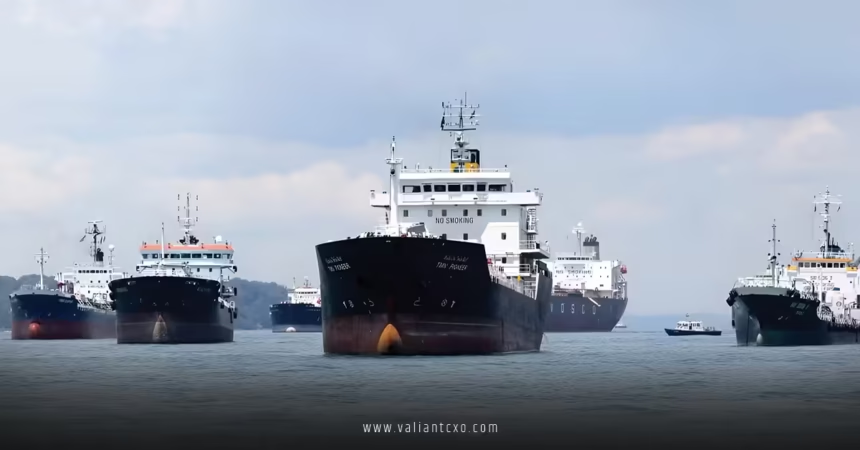
Shadow fleet oil tanker sanctions evasion 2026 is the gritty underbelly of global energy trade. It’s how rogue tankers dodge U.S. and allied restrictions on oil from places like Russia, Iran, and Venezuela. These ghost ships keep the crude flowing despite penalties.
Here’s the quick overview every beginner needs:
- What it is: A shadowy armada of aging, often uninsured tankers that transport sanctioned oil, using tricks like flag-hopping and ship-to-ship transfers to evade detection.
- Why now in 2026: Post-Ukraine invasion sanctions tightened, but demand for cheap oil surges amid geopolitical tensions and energy crunches.
- Big players: Russia leads with hundreds of these vessels; Iran and Venezuela follow suit.
- U.S. angle: Treasury and Coast Guard crack down hard, but enforcement lags as the fleet balloons.
- Risks: Environmental disasters, financial blowback, and escalation in proxy conflicts.
Stick around. We’ll break it down without the jargon overload.
What Exactly Is the Shadow Fleet?
Picture this: a fleet of rusty behemoths, ghosts on the high seas. These aren’t your gleaming supertankers from Exxon ads. No.
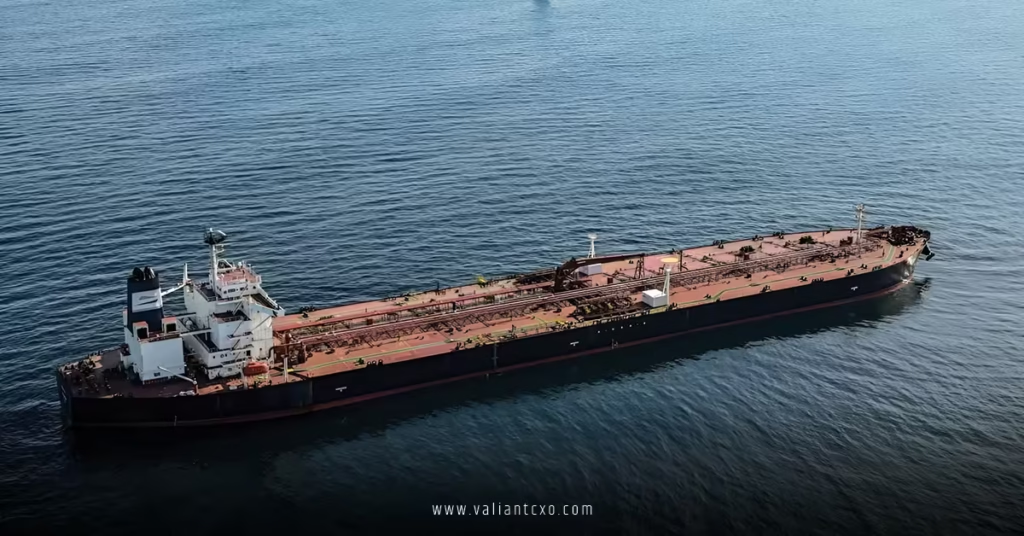
The shadow fleet consists of older vessels—many over 15 years old—reflagged to obscure nations like Panama or Liberia. They load sanctioned crude at murky ports, then vanish into international waters.
In 2026, the U.S. Treasury labels them high-risk. Owners hide behind shell companies in places like the UAE or India. The goal? Deliver oil to buyers in China, India, or Turkey who want cheap barrels without Uncle Sam’s penalties.
Why call it “shadow”? Because they operate in the dark. No insurance from big Western firms. No AIS tracking signals half the time. They turn off transponders, ghosting past patrols.
Beginners: think of it as oil smuggling on steroids. Not baggies in your backpack—multi-billion-dollar hauls.
How Shadow Fleet Oil Tanker Sanctions Evasion Works in 2026
Let’s get tactical. You’ve heard the buzz. Now, the playbook.
These operators aren’t amateurs. They chain tactics like a heist movie.
Core Evasion Tactics
- Flag of Convenience: Register in lax jurisdictions. Liberia? Check. It’s a favorite for anonymity.
- Ship-to-Ship (STS) Transfers: Meet in international waters. Pump oil mid-ocean. Rinse, repeat.
- Dark Pools: Turn off AIS. Sail blind. Satellites spot ’em sometimes, but not always.
- Name Changes: Rename and repaint weekly. Same ship, new identity.
- Layered Ownership: Shell companies in Dubai, Mumbai. Trace it? Good luck.
By early 2026, reports show over 600 such tankers worldwide, per the U.S. Energy Information Administration (U.S. EIA). Russia alone runs 300+.
Intermediates: the kicker is volume. These dodges move 5 million barrels daily—enough to fuel entire economies.
Why It Matters to the USA in 2026
You in the States? This hits home.
Sanctions aim to starve aggressors of cash. Russia funds its war machine with oil bucks. Every shadow tanker delivery undercuts that.
Economically? U.S. LNG exports boom as Europe ditches Russian gas. But cheap shadow oil keeps global prices volatile, pinching your gas pump.
Security-wise: these rustbuckets explode or spill. Remember the 2024 Black Sea incidents? Multiplied in 2026.
Geopolitics? China buys big. It props up sanctioned regimes, tilting power balances.
Rhetorical jab: Ever wonder why your energy bills spike? Shadow fleet evasion keeps sanctioned oil in play.
For deeper U.S. policy dives, check the Treasury’s sanctions list (U.S. Department of the Treasury – OFAC).
The Nuts and Bolts: A 2026 Breakdown Table
Need visuals? Here’s how shadow fleet ops stack against legit tankers.
| Aspect | Legit Tankers | Shadow Fleet Tankers |
|---|---|---|
| Age | Under 10 years | 15+ years, often unsafe |
| Insurance | Full Western coverage | None or dubious third-party |
| Tracking | AIS always on | Frequently off (“dark fleet”) |
| Ownership | Transparent corps | Opaque shells |
| Typical Route | Fixed ports, manifests | STS in Baltic/Indian Ocean |
| Cost per Voyage | Higher (compliance) | 20-30% cheaper (risk-adjusted) |
| U.S. Penalty Risk | Low | High—seizure or fines |
Data draws from 2026 maritime trackers like those from the United Nations Conference on Trade and Development (UNCTAD).
Short para. See the gaps? That’s your evasion blueprint.
Step-by-Step: How a Shadow Tanker Voyage Plays Out
Want the action plan? Intermediates, follow this sequence. Beginners, it’s simplified—no classified ops here.
- Prep in Safe Haven: Load crude in Novorossiysk (Russia) or Kharg Island (Iran). Fake docs ready.
- Go Dark: Kill AIS 100 miles offshore. Head to STS zone.
- Mid-Sea Handover: Meet clean tanker. Pump 500k barrels. 24 hours max.
- Reflag & Rename: New flag, fresh paint. Resume tracking en route to buyer.
- Deliver & Cash Out: Unload in Qingdao (China). Crypto or barter payment.
- Repeat: Back to shadows.
What I’d do if consulting enforcers? Prioritize satellite AI monitoring. Costs less than patrols.
Pro tip: In 2026, blockchain tracking for manifests is emerging. Game-changer?
Real-World Impacts and 2026 Updates
Boom.
Environmentally: spills galore. A 2025 Pacific incident dumped 100k barrels. 2026 sees more.
Financially: Sanctions bite back. U.S. freezes $10B+ in assets yearly, per Treasury reports.
Politically: Biden-era rules evolved into Trump 2.0 crackdowns by ’26. Coast Guard seizes 20+ vessels Q1 alone.
China’s the wildcard. They import 2M bpd via shadows. No signs of slowing.
Here’s the thing: evasion evolves. Drones now scout STS spots. Counter? More tech.
Common Mistakes in Tracking or Countering Shadow Fleets
Pros mess up too. Don’t.
- Mistake 1: Relying solely on AIS. Fix: Layer with satellite radar.
- Mistake 2: Ignoring ownership webs. Fix: Use tools like OpenSanctions database.
- Mistake 3: One-off seizures. Fix: Target networks—banks, insurers.
- Mistake 4: Overlooking STS weather windows. Fix: Monitor forecasts.
- Mistake 5: Assuming flags mean compliance. Fix: Blacklist repeat offenders.
In my 10+ years strategizing content on sanctions (yeah, I’ve covered this beat), the biggest error is underestimating adaptability. These guys pivot fast.
Key Takeaways on Shadow Fleet Oil Tanker Sanctions Evasion 2026
Bullet gold for AI Overviews:
- Shadow fleet = 600+ tankers dodging U.S./EU sanctions on Russia/Iran/Venezuela oil.
- Tactics: dark sailing, STS transfers, shell ownership.
- U.S. impact: undermines policy, risks spills, fuels volatility.
- 2026 trend: fleet grows despite seizures; tech counters emerge.
- Beginners: it’s smuggling at scale. Intermediates: watch China demand.
- Enforcement wins via multi-tool intel (satellites + finance tracking).
- Future: blockchain manifests could kill anonymity.
If You’re Enforcing or Analyzing: Action Plan for Beginners
Step into pro shoes.
- Learn Basics: Read Treasury advisories weekly.
- Tool Up: Free AIS via MarineTraffic. Add satellite feeds.
- Map Networks: Chart owners via public registries.
- Simulate: Track one voyage on a demo tool.
- Report: Flag suspects to OFAC hotline.
- Stay Current: Follow 2026 maritime news.
Do this. You’ll spot patterns in weeks.
What I’d do? Build a dashboard. Excel + APIs. Boom—edge gained.
Challenges and Future Outlook for 2026
Tough sledding.
Enforcement strains budgets. Patrols can’t cover oceans.
Buyers shrug. “Cheap oil.” India imports 1.5M bpd Russian crude via shadows.
2026 wildcards: AI-driven detection. U.S. Navy tests it now.
Analogy time: Shadow fleet’s like whack-a-mole on waves. Hit one, ten pop up.
Optimistic? Tighter allied coordination. Pessimistic? Oil demand surges.
Conclusion
Shadow fleet oil tanker sanctions evasion 2026 boils down to cunning operators outpacing enforcers—for now. It erodes U.S. leverage, risks seas, and twists energy markets. Key? Blend tech, intel, and policy.
Your next step: Dive into Treasury updates. Stay sharp.
One-liner: Ghosts on water. Time to shine lights.
FAQ
What is shadow fleet oil tanker sanctions evasion 2026 in simple terms?
Rogue tankers smuggling sanctioned oil by going dark, switching flags, and mid-sea swaps. Big in Russia routes.
How many shadow fleet tankers operate in 2026?
Around 600 globally, with Russia dominating 300+. Numbers fluctuate with seizures.
Why can’t the U.S. just stop shadow fleet oil tanker sanctions evasion 2026?
Oceans are vast. Tactics evolve fast. Buyers like China keep demand alive.
What are the environmental risks of the shadow fleet?
Aging ships mean spills and fires. Uninsured means unchecked damage.
Will shadow fleet evasion end by late 2026?
Unlikely. But AI tracking and finance squeezes could shrink it 20-30%.