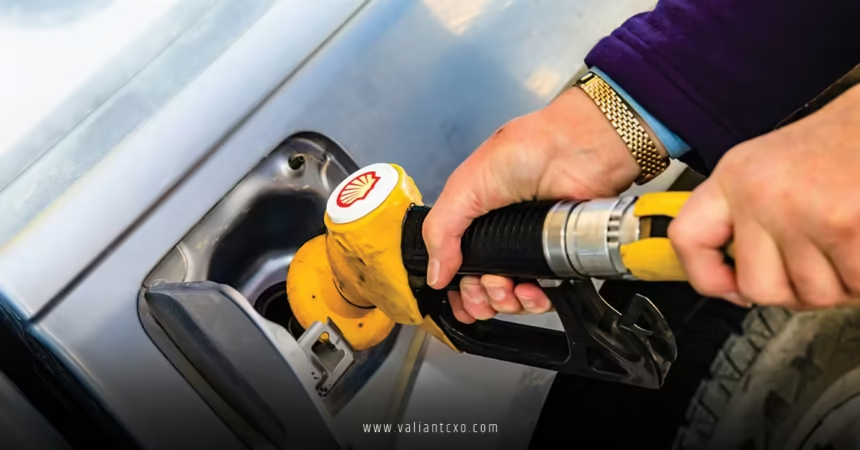
Gas prices increase due to Iran war 2026 has slammed American drivers hard. National averages climbed past $4 per gallon in recent weeks, with some states like California pushing $5–$6. This spike stems from the ongoing conflict disrupting key oil flows through the Strait of Hormuz.
Here’s what it means right now:
- Supply shock: Disruptions in the Persian Gulf cut global oil availability, sending crude prices soaring.
- Pump impact: Regular gasoline jumped roughly $1+ per gallon since late February 2026.
- Ripple effects: Higher diesel and jet fuel costs hit trucking, shipping, and air travel, feeding broader inflation.
- Duration: Even optimistic scenarios point to elevated prices through much of the year.
- Household hit: The average U.S. family has shelled out nearly $200 extra on fuel already.
That quick rundown captures the core pain. Now let’s break down exactly why this happened and what you can actually do about it.
Why Gas Prices Increase Due to Iran War 2026
The conflict escalated in late February 2026 between the U.S.-Israel coalition and Iran. Iran responded by restricting traffic through the Strait of Hormuz—the narrow chokepoint carrying about 20% of the world’s daily oil supply. Tankers faced threats, higher tolls, or outright halts. Insurance rates skyrocketed. Longer alternative routes added massive logistics costs.
Oil traders hate uncertainty. Brent crude surged over 50% at peaks, hitting near $120 per barrel before settling in elevated ranges. West Texas Intermediate followed. U.S. refiners pay global market prices regardless of domestic shale strength. The result? Wholesale gasoline costs climbed fast, and retailers passed them on at the pump.
Think of the global oil market like a massive, interconnected pipeline network. Block one major artery and pressure builds everywhere. The U.S. produces plenty of its own crude, yet it still feels the heat because refined products and benchmarks move together.
What usually happens is fear premiums hit first—traders bid up futures on worst-case scenarios—then actual supply shortfalls lock in the damage. Attacks on energy infrastructure in the region compounded the issue, with some Gulf producers cutting output or facing storage limits.
Current Gas Price Snapshot (as of late April 2026)
- National average for regular gasoline: Around $4.06–$4.18 per gallon.
- Diesel: Often exceeding $5.50, sometimes nearing $6 in tight markets.
- Regional extremes: California frequently above $5, with some reports hitting nearly $6; lower-cost states like Oklahoma closer to $3.50–$3.80.
- Year-over-year jump: Up more than 30–40% since pre-conflict levels near $3.
The Energy Information Administration (EIA) now forecasts 2026 retail gasoline averaging over $3.70 per gallon for the full year, with peaks near $4.30 in spring months. Diesel stays even tighter. These aren’t guesses—they reflect sustained disruption risks.
Here’s a quick comparison table of pre-war versus current/post-spike realities:
| Metric | Pre-War (Feb 2026) | Current (Late April 2026) | Increase |
|---|---|---|---|
| National Gas Average | ~$2.98–$3.10 | $4.06–$4.18 | +$1.00–$1.20 |
| Diesel Average | ~$3.80–$4.00 | $5.50–$5.80+ | +$1.50–$2.00 |
| Brent Crude (per barrel) | ~$72 | $100–$120 range | +40–55%+ |
| Est. Household Extra Fuel Cost | Baseline | ~$200 so far | Ongoing |
(Data drawn from AAA tracking and EIA outlooks; actuals vary by location and fuel grade.)
How the Strait of Hormuz Triggers U.S. Pain
You don’t need to import Iranian oil to get burned. The strait handles roughly 21 million barrels per day of crude and products. When flows get choked—whether by direct closure, naval tensions, or insurance blackouts—global supply tightens instantly.
U.S. strategic reserves and domestic production provide a buffer, but not immunity. Refineries on the Gulf Coast and elsewhere compete in the same pool as Europe and Asia. Higher input costs mean higher pump prices. Trucking firms face diesel surcharges. Grocery bills creep up as transport eats more margin.
In my experience covering energy shocks, the kicker is the lag. Crude jumps overnight. Pump prices follow within days to weeks, but they fall slower when supply eases. Refiners need time to adjust runs and inventories rebuild.
What Drives the Size of the Gas Prices Increase Due to Iran War 2026
Several factors amplify the move:
- Duration of disruption: Brief Hormuz hiccups cause spikes. Prolonged issues (weeks to months) embed higher baselines.
- Inventory levels: U.S. and global stocks were not overly fat heading in.
- OPEC+ response: Other producers ramping up helps, but spare capacity has limits.
- Speculative trading: Futures markets add volatility on every headline.
- Downstream effects: Jet fuel and petrochemical demand don’t vanish.
EIA analysts raised their 2026 Brent forecast significantly to around $96 per barrel, acknowledging the new reality. Worst-case models from various desks sketched even higher if key export terminals suffered damage.
Step-by-Step Action Plan for Drivers and Households
Beginners, don’t panic-buy or hoard. That worsens shortages. Follow this practical playbook instead:
- Track local prices daily: Use AAA’s gasprices.aaa.com or apps like GasBuddy to find the cheapest stations near you. Prices can vary 20–50 cents by zip code.
- Optimize driving habits: Combine errands. Maintain proper tire pressure. Avoid jackrabbit starts. These small moves can improve mileage 5–10% or more.
- Consider fuel-efficient alternatives: Carpool, use public transit where available, or switch to a hybrid/EV for longer-term savings if your budget allows. Calculate payback on a simple spreadsheet.
- Budget for the hit: Add the extra $50–$100 monthly per vehicle to your household spreadsheet now. Cut discretionary spending elsewhere to avoid credit card creep.
- Monitor news smartly: Watch EIA weekly petroleum status reports and Strait of Hormuz updates. Peace talks or reopened shipping lanes can ease prices faster than expected.
- Shop smarter for big purchases: Delay non-essential road trips. For fleet operators or businesses, negotiate fuel surcharges or hedge if possible.
What I’d do if filling up regularly? Fill at off-peak times (mid-week mornings), use rewards credit cards with gas cashback, and keep my tank above half-full to avoid panic stops at expensive stations.
Common Mistakes & How to Fix Them
Plenty of folks trip up during these shocks.
Mistake 1: Panic filling at any price.
Fix: Set a personal threshold (say $4.50) and shop around. Apps show real-time deals.
Mistake 2: Ignoring maintenance.
Dirty air filters or underinflated tires waste fuel. Fix: Get a quick tune-up. It pays back fast at current prices.
Mistake 3: Assuming prices will crash tomorrow.
Markets price in prolonged risk. Fix: Plan for $3.70–$4.50 averages through 2026 rather than hoping for sub-$3 returns quickly.
Mistake 4: Overlooking broader costs.
Gas isn’t isolated. Groceries and goods ride the same wave. Fix: Review your full monthly budget, not just the fuel line.
Mistake 5: Falling for unverified “tips” on social media.
Some claim secret additives or routes save huge sums. Fix: Stick to verifiable efficiency gains from sources like fueleconomy.gov.
Gas Prices Increase Due to Iran War 2026: Broader Economic Context
This isn’t just your commute. Higher energy costs act like a stealth tax. Businesses pass some along via higher prices for shipped goods. Inflation readings get pressured again after recent cooling. The Federal Reserve watches closely—rate decisions could shift.
Domestic U.S. production helps cushion compared to 1970s-style crises, but global linkage remains real. For deeper context on energy security, see the U.S. Energy Information Administration’s Strait of Hormuz analysis.
Another solid resource: AAA’s daily gas price tracking for localized data you can act on immediately.
Key Takeaways
- Gas prices increase due to Iran war 2026 primarily from Strait of Hormuz disruptions cutting 20% of global oil flows.
- National averages crossed $4 per gallon, with diesel climbing faster and regional highs much steeper.
- The shock adds hundreds in extra costs per household and feeds into wider inflation.
- Domestic U.S. output provides a partial buffer, yet global pricing still rules.
- Quick personal wins come from smarter shopping, better driving, and proactive budgeting.
- Recovery depends on conflict resolution and shipping lane normalization—expect months, not days.
- Monitor official sources like EIA rather than hype headlines for reliable signals.
- Long-term, diversifying transport options reduces vulnerability to future geopolitical swings.
The bottom line? These spikes test resilience but also highlight smart habits. Stay informed, adjust your routine, and you’ll navigate this without unnecessary damage. Check local prices today and lock in one efficiency tweak this week. Small moves compound when fuel costs bite this hard.
FAQs
How long will gas prices increase due to Iran war 2026 last?
It depends on how quickly shipping resumes through the Strait of Hormuz and whether infrastructure damage lingers. EIA scenarios suggest elevated prices ($3.70+ national average) could persist much of 2026 even if fighting de-escalates, as full supply restoration takes time.
Will U.S. domestic oil production protect against gas prices increase due to Iran war 2026?
Partially. America produces more than it consumes, but refineries and markets operate globally. Disruptions still raise benchmark prices that influence what you pay at the pump. Strategic reserves offer short-term relief options but aren’t a full shield.
Can I do anything to lower my costs during this gas prices increase due to Iran war 2026?
Yes. Hunt for cheapest local stations via apps, improve your vehicle’s efficiency, combine trips, and budget explicitly for higher fuel. Longer-term, evaluate hybrids or EVs if you drive a lot. Avoid panic reactions that waste money.