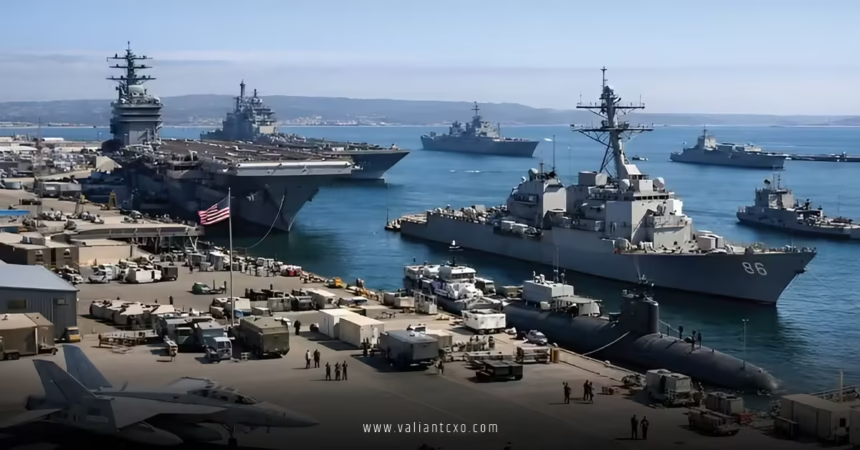
US Navy fleet size goals 2026 have shifted into high gear with the release of the May 2026 shipbuilding plan. The Navy currently sits at 291 battle force ships. It aims to hit a combined total naval vessel inventory of 450—manned warships plus unmanned platforms—by the early 2030s.
This marks the most aggressive expansion since the Cold War era. It blends traditional hulls with smart autonomous systems to counter growing threats, especially from China.
Quick breakdown of what matters most:
- Current battle force ships: 291 (well below the 355-ship legal requirement)
- Target: 450 total vessels (manned + unmanned) by early 2030s
- FY2027 projection: 395 total vessels
- FY2031 projection: 450 total vessels
- Unmanned platforms ramping from 39 to 83 in the near term
The plan isn’t just about numbers. It’s about creating a distributed fleet that can take punches and dish them out across vast oceans.
Evolution of US Navy Fleet Size Goals 2026
For years the Navy chased a 355-ship battle force goal set by law. Reality bit hard. Shipyard delays, ballooning costs, and retirements kept the fleet stuck around 290-300 ships despite bigger budgets.
Now the 2026 goals go bigger. They count everything—battle force ships, auxiliaries, and unmanned vessels. The result? A more realistic total force picture that reaches 450 platforms.
Think of it like this: old-school fleet goals were like counting only the starting lineup. Today’s version includes the entire bench and specialty players. That shift changes how planners measure strength.
Projected Growth Snapshot (Total Vessel Inventory):
| Fiscal Year | Battle Force Ships (Manned) | Unmanned Vessels | Total Inventory |
|---|---|---|---|
| FY2027 | ~356 | 39 | 395 |
| FY2028 | ~355 | 49 | 404 |
| FY2029 | ~356 | 59 | 415 |
| FY2030 | ~362 | 71 | 433 |
| FY2031 | ~367 | 83 | 450 |
Numbers draw from the official Department of the Navy’s May 2026 plan. Growth accelerates through multi-year procurements and industrial base pushes.
Why These Goals Matter in 2026
China’s navy already outnumbers the U.S. in hull count. Their fleet keeps expanding fast. The U.S. response? Stop playing catch-up and start building mass with quality.
The kicker is operational reality. Recent global deployments exposed thin margins in logistics and presence. More ships mean more options—persistent forward presence without wearing out crews and hulls.
Key drivers behind the 2026 goals:
- Deter aggression in the Indo-Pacific
- Support distributed maritime operations
- Integrate unmanned systems for high-risk missions
- Rebuild American shipbuilding muscle
Core Components Driving Fleet Growth
Submarines lead the charge. Columbia-class ballistic missile boats and Virginia-class attack subs get priority for stealth and striking power.
Surface combatants mix Arleigh Burke destroyers, new Constellation-class frigates, and headline-grabbing nuclear-powered battleships. Amphibious ships and logistics vessels round out the force for sustained operations far from home.
Unmanned vessels fill gaps. They handle surveillance, mine countermeasures, and resupply—jobs that don’t risk sailors unnecessarily.
Step-by-Step Guide to Understanding and Following US Navy Fleet Size Goals 2026
- Start with the baseline. Know the current 291 battle force ships and the 450 total target.
- Track the budget. Watch FY2027 appropriations. The request hits $65.8 billion for shipbuilding momentum.
- Break down ship types. Focus on submarines, large surface combatants, and logistics vessels. These deliver the biggest impact.
- Monitor industrial base health. New yards, worker training, and modular construction will decide success.
- Factor in unmanned integration. These platforms multiply force without linear cost increases.
- Stay updated on threats. Adjust expectations as geopolitical realities shift.
What I’d do if advising a defense analyst? Set calendar alerts for quarterly ship delivery reports and congressional hearings. Numbers on paper mean nothing without actual hulls in water.
Common Mistakes When Analyzing US Navy Fleet Size Goals 2026
Mistake 1: Focusing only on battle force ships.
Fix: Look at the full 450-vessel picture including unmanned and auxiliaries.
Mistake 2: Ignoring decommissioning schedules.
Fix: Net growth matters more than gross additions. Older ships leave as new ones arrive.
Mistake 3: Assuming linear progress.
Fix: Expect bumps from budget fights, technical delays, and yard capacity limits. Build in contingency thinking.
Mistake 4: Underestimating workforce issues.
Fix: Shipbuilding needs thousands of skilled tradespeople. Training pipelines must start yesterday.
Costs add pressure. A single new nuclear battleship runs around $17 billion. Total program expenses will stretch into hundreds of billions over the decade.
How the US Navy 2026 Shipbuilding Plan 450 Ship Fleet Expansion Ties Into Fleet Size Goals 2026
The shipbuilding plan serves as the engine for these fleet goals. It details procurement, timelines, and funding to reach that 450 mark. Without steady ship deliveries, the goals stay dreams on paper.
This connection shows in accelerated production schedules and emphasis on multi-yard construction.
For deeper reading:
- U.S. Navy Official 2026 Shipbuilding Plan from defense.gov
- USNI News coverage of the 2026 plan
- Congressional Research Service Navy Force Structure Reports
Key Takeaways
- US Navy fleet size goals 2026 target a 450 total vessel inventory by early 2030s from 291 battle force ships today.
- The plan integrates manned and unmanned platforms for distributed lethality.
- Submarines and logistics vessels form critical backbone elements.
- Success depends on fixing shipyard capacity and workforce shortages.
- Budget stability through multi-year contracts will make or break timelines.
- Nuclear-powered options add unmatched endurance to the force mix.
- These goals directly counter peer competitor naval expansion.
- Regular congressional oversight remains essential for delivery.
The U.S. gets serious about maritime power again. Stronger fleets mean better deterrence and faster crisis response.
Next step? Follow upcoming FY2027 budget debates closely and track shipyard output metrics. Real progress shows in delivered hulls, not just slide deck promises.
FAQs
What are the main US Navy fleet size goals 2026?
The goals aim for 450 total naval vessels—including manned battle force ships, auxiliaries, and unmanned platforms—by the early 2030s, growing from the current 291 battle force ships.
How do US Navy fleet size goals 2026 differ from previous targets?
Older goals focused strictly on 355 battle force ships. The 2026 approach uses a broader total inventory metric of 450 that includes significant unmanned systems for greater flexibility.
Does the US Navy 2026 shipbuilding plan 450 ship fleet expansion support the current fleet size goals?
Yes. It provides the detailed procurement roadmap, funding requests, and industrial strategy needed to achieve the 450-vessel target through accelerated construction and modernization.