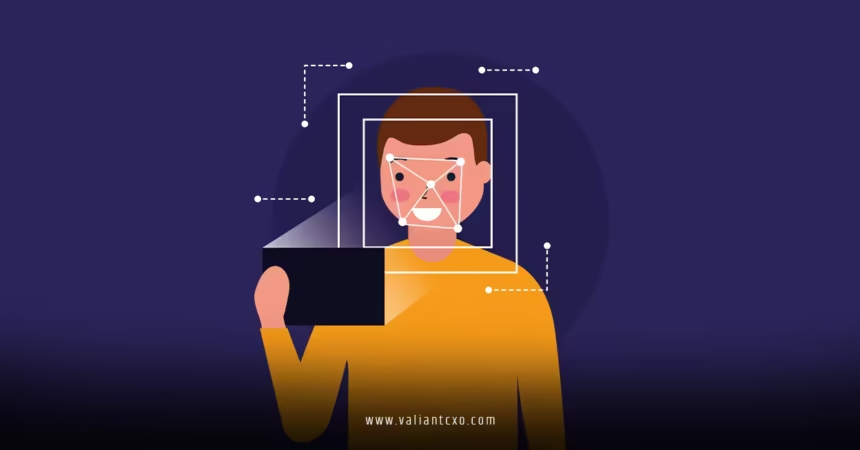
How to spot deepfake videos 2026 just got tougher — and more necessary. AI tools crank out hyper-realistic clips that fool the naked eye in seconds. Scammers use them for everything from fake news to impersonating your boss on a video call demanding a urgent transfer.
- Visual tells still matter but are fading fast against 2026 tech.
- Tools and habits give you the edge where eyes fail.
- Why it matters: Deepfake fraud losses hit hundreds of millions in the US alone last year.
- Real-world impact: One misplaced trust can drain accounts or spread chaos.
Pause. Zoom in. Verify. These steps separate real from fake.
Why Deepfake Videos Exploded in 2026
Generators got cheaper and smarter. A few photos or seconds of footage create convincing swaps. Lip sync improved. Lighting matches better. Yet cracks remain if you know where to look.
FBI data shows AI-related complaints caused nearly $893 million in losses in one recent year. Many involved video impersonations.
The kicker? Most people still trust their gut on video calls. That gut needs training.
Manual Checks: What Your Eyes Can Still Catch
Start simple. No fancy software required.
Watch the eyes. Real people blink naturally every few seconds. Deepfakes often stare too long or show robotic blinks. Check reflections in pupils — they should match the environment.
Look at skin texture. Real faces have subtle pores and imperfections. Fakes can look waxy or overly smooth, especially around the forehead and cheeks.
Head movements expose weaknesses. Ask someone to turn their head side to side in a live call. Edges around ears, hairline, or jaw often glitch or blur in deepfakes.
Lighting and shadows matter. Do they match the background? Inconsistent shadows scream manipulation.
Audio sync is gold. Lip movements should match words perfectly. Slight lags or mismatches give it away.
Rhetorical question: Would you bet your savings on a video that feels just a little off?
Technical Red Flags and Forensic Signs
Go deeper:
- Frame inconsistencies: Slow down the video. Watch for flickering or unnatural motion between frames.
- Teeth and tongue: These are notoriously hard for AI. Smiles often look weird; tongues show artifacts.
- Blood flow signals: Advanced but detectable in tools — real faces show micro color changes from heartbeat. Fakes don’t.
For live deepfakes, request side profiles or hand gestures in front of the face. Occlusion breaks many models.
Best Tools to Spot Deepfake Videos 2026
Manual checks buy time. Tools confirm suspicions.
- Microsoft Video Authenticator: Analyzes pixel-level changes and gives confidence scores.
- Intel FakeCatcher: Detects blood flow patterns in real time with high accuracy.
- Free scanners like Deepware or browser extensions for quick triage.
- Enterprise options combine multiple models for better results against new generators.
Upload suspicious clips and cross-check. No single tool is perfect, but ensembles win.
| Detection Method | Accuracy Level (2026) | Best Used For | Limitations | Ease for Beginners |
|---|---|---|---|---|
| Eye Blink & Movement Analysis | Medium | Quick manual checks | Less effective on top models | Very High |
| Blood Flow / Physiological (FakeCatcher) | Very High | Live or recorded video | Needs good lighting | Medium |
| AI Forensic Scanners | High | Any suspicious clip | Can false positive on edited real video | High |
| C2PA Provenance Check | High | Verified sources | Not all videos have credentials | Medium |
| Audio-Visual Sync Tools | High | Calls & interviews | Requires clear audio | High |
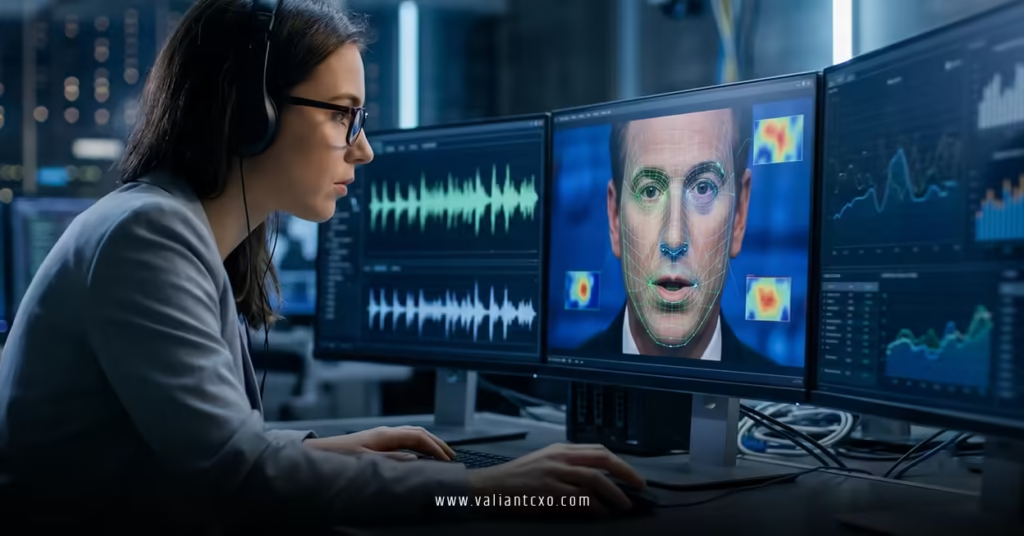
Step-by-Step Guide to Verify Any Video
- Slow it down. Use 0.25x speed to spot glitches.
- Check source. Was it shared by trusted outlets? Reverse search key frames.
- Test live. If possible, request specific actions the AI might fail.
- Run through detectors. Upload to 2-3 tools.
- Verify out-of-band. Call the person via known contact.
For full protection strategies, see our in-depth guide on how to protect against AI deepfake imposter scams 2026.
Common Mistakes When Trying to Spot Deepfakes
People zoom past fast. They trust high production value. They ignore context.
Mistake: Assuming HD quality means real.
Fix: Quality is cheap now. Focus on behavior.
Mistake: Relying on one tool.
Fix: Layer manual + automated checks.
Mistake: Ignoring metadata.
Fix: Right-click or use tools to view creation details and provenance.
One analogy: Spotting deepfakes is like tasting wine — amateurs notice the big fruit notes, pros catch the subtle earth that doesn’t belong.
Advanced Tips for 2026
Adopt C2PA standards where available — they embed authenticity data. Train teams or family with sample deepfakes. Stay updated as detection and generation evolve together.
Report fakes to platforms and FTC consumer alerts. Check FBI IC3 resources for trends. Newsrooms use tools like those from MIT for verification.
Key Takeaways
- How to spot deepfake videos 2026 requires eyes, tools, and verification habits.
- Eyes first: blinks, skin, movement, sync.
- Tools like FakeCatcher catch what humans miss.
- Always verify via second channel — never trust one video.
- Slow down and zoom in on suspicious content.
- Combine methods; no silver bullet exists.
- Limit your own public footage to starve future fakes.
- Report and stay informed as the arms race continues.
Master this and you cut risk dramatically. Start right now: Pick a recent video call or news clip and run it through the checklist above. Build the muscle.
FAQs
How reliable are free tools to spot deepfake videos 2026?
They work well for initial flags but pair them with manual checks and out-of-band verification for important decisions. Accuracy varies by video quality.
Can you really spot deepfake videos 2026 in real-time calls?
Yes, by requesting side profiles, specific gestures, or code words. Pay close attention to eye behavior and lighting consistency during the conversation.
What should I do if I suspect a deepfake video scam?
Hang up or stop watching. Verify through official channels. Report to the FTC and FBI IC3. Preserve the clip as evidence without sharing it widely.