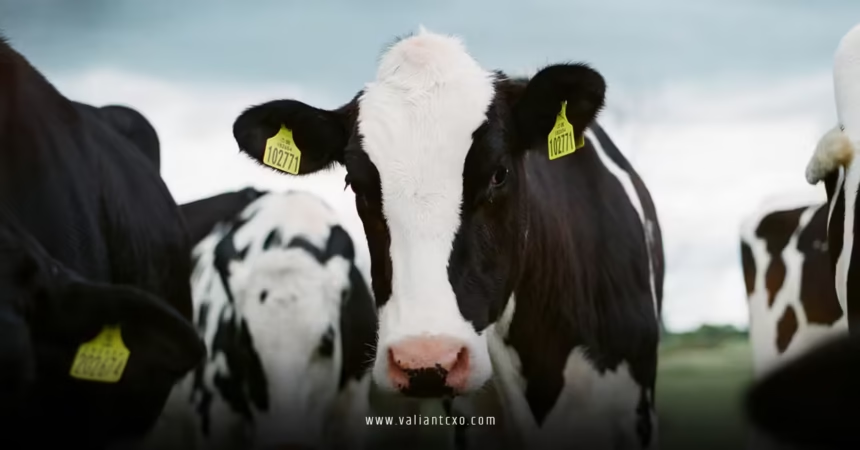
Cattle traceability best practices 2026 separate thriving operations from those risking everything on sloppy records.
With USDA’s electronic ID rules fully in force and global markets demanding tighter chains, getting this right isn’t optional anymore. One bad move can lock animals out of slaughter channels or slaughter premiums. Just look at what happened across the pond.
Falkland Estate Fife 271 cattle slaughtered traceability breach inspection still echoes as a brutal reminder. A Scottish farm lost 271 head after inspectors found them unidentifiable and untraceable. No food chain access. Permanent restrictions. Massive financial pain. Don’t let that story become yours.
- Core goal: Know exactly where every animal has been, fast.
- 2026 reality: Electronic tags are the standard for interstate movement.
- Payoff: Faster disease response, better market access, fewer headaches.
- Risk of skipping: Quarantines, lost payments, or total animal loss.
Here’s how to nail it on your operation this year.
Why Cattle Traceability Matters More in 2026
Disease moves quicker than ever. Trade partners want proof. Consumers demand transparency.
USDA’s Animal Disease Traceability framework focuses on rapid tracing during outbreaks. Electronic identification makes that possible. Tags applied after November 5, 2024, must be both visual and RFID-readable for covered classes of cattle.
The kicker is speed. In an outbreak, minutes matter. Strong records protect your neighbors’ herds too.
Key Requirements Under Current USDA Rules
Sexually intact cattle 18 months and older, dairy cattle, and exhibition animals need official ID for interstate moves.
Free 840 EID tags are available through your State Veterinarian. Get a premises ID number (PIN) first.
Record every movement. Keep documents for at least five years.
What I’d do if scaling up today: Treat tagging day like vaccination day—non-negotiable and scheduled.
Top Cattle Traceability Best Practices 2026
Start simple. Build systems that stick.
1. Tag early and right. Apply official 840 RFID tags at birth or before any interstate move. Double-check placement in the left ear for best read rates.
2. Digitalize everything. Ditch the notebook. Use farm management software that syncs with state databases and generates reports instantly.
3. Log movements same day. Sales, pasture shifts, shows—record it immediately with dates, destinations, and tag numbers.
4. Audit quarterly. Walk the herd. Scan tags. Fix missing or damaged ones before problems compound.
5. Train the whole crew. Everyone who touches cattle needs to know the basics. Make it part of onboarding.
6. Leverage free resources. USDA provides tags and guidance. Extension services offer templates.
7. Plan for emergencies. Keep backup power for scanners. Have printed records accessible.
This isn’t bureaucracy. It’s insurance.
EID vs Traditional Tags Comparison
| Practice | Traditional Visual Tags | 2026 EID RFID Tags | Best Use Case |
|---|---|---|---|
| Readability | Eye only | Visual + electronic scan | High-volume handling |
| Speed During Outbreak | Slow manual checks | Instant database pulls | Disease tracing |
| Cost | Lower upfront | Free options available | Interstate cattle |
| Retention | Variable | 99%+ on quality tags | Long-term herds |
| Compliance Risk | Higher in 2026 | Meets current USDA rules | Market access |
Step-by-Step Action Plan for Beginners
New to this? Follow these steps and you’ll build momentum fast.
- Get your premises ID. Contact your State Veterinarian office this week.
- Order free EID tags. Specify your needs—calf or adult sizes.
- Tag every qualifying animal. Start with the oldest or those most likely to move.
- Set up digital records. Choose software with mobile scanning.
- Create movement templates. Simple forms or app entries that take under a minute.
- Schedule your first audit. Mark it on the calendar now.
- Review after every sale. Double-check records before trucks roll.
Do this consistently and compliance becomes automatic.
Common Mistakes & How to Fix Them
Even experienced producers slip up.
Mistake 1: Tagging late.
Fix: Tag at branding or weaning. Never wait until loading day.
Mistake 2: Ignoring tag loss.
Fix: Scan regularly. Retag immediately and update records. Use higher-retention tags on valuable stock.
Mistake 3: Poor record storage.
Fix: Cloud backups plus local copies. Test retrieval monthly.
Mistake 4: Assuming small herds are exempt.
Fix: Rules apply based on movement and class, not size. The Falkland Estate Fife 271 cattle slaughtered traceability breach inspection proved even established operations get caught.
Mistake 5: Skipping updates.
Fix: Subscribe to USDA and state alerts. Review rules annually.
Advanced Tips for 2026 and Beyond
Integrate traceability with other data. Link tags to weight gains, health events, and genetics. This unlocks premium markets and “Product of USA” verification.
Consider blockchain pilots if you sell direct-to-consumer. Some buyers pay more for verifiable stories.
Watch for evolving FDA food traceability rules that may touch certain products downstream.
For deeper official guidance, visit the USDA Animal Disease Traceability page.
Ranchers serious about genetics should check Extension.org beef resources.
Key Takeaways
- Cattle traceability best practices 2026 center on electronic 840 tags and instant records.
- Early tagging and daily logging prevent disasters like the Falkland case.
- Free resources from USDA make compliance affordable.
- Regular audits catch small issues before they explode.
- Digital tools save time and reduce errors dramatically.
- Training everyone involved is non-negotiable.
- Strong traceability protects markets, payments, and your reputation.
- Start small today—momentum compounds fast.
Strong traceability doesn’t just keep regulators happy. It gives you control and options when markets shift or problems hit.
Next step: Contact your State Veterinarian this week about free tags and your premises ID. One call can save thousands later.
FAQs
How do cattle traceability best practices 2026 differ from previous years?
The big shift is mandatory electronic readability for tags on covered cattle moving interstate. Visual-only tags applied after November 2024 no longer qualify.
What should I do if I see risks similar to the Falkland Estate Fife 271 cattle slaughtered traceability breach inspection on my farm?
Audit immediately. Retag and update records. Reach out to your state vet for guidance before inspectors show up.
Are electronic tags expensive for small operations?
Many states provide them free through USDA programs. The real cost is in the time to implement good habits, which pays back through avoided losses.