GMP Firearms Policy Explained boils down to one core rule: protect life with minimum force. Greater Manchester Police arms officers only when intelligence points to genuine risk. They train hard. They shoot rarely. And every bullet fired faces tough scrutiny.
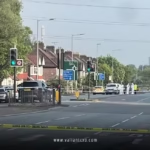
This matters because incidents like the Greater Manchester Police Whitefield Bury firearm discharge charges May 2026 put the policy under the microscope. A driver allegedly aimed his car at officers. One shot followed. Questions about justification, training, and accountability came fast.
- Strict selection: Not every cop carries a gun. Only specially picked and trained Authorised Firearms Officers (AFOs).
- Last resort principle: Firearms deployed to stop immediate threats to life.
- Heavy oversight: Automatic IOPC investigation for any discharge.
- Training intensity: Regular, realistic scenarios to build split-second judgment.
- Public impact: Builds confidence when done right, sparks debate when it hits the news.
Here’s the no-nonsense guide to how GMP handles armed operations in 2026.
Core Principles Behind GMP Firearms Policy Explained
Greater Manchester Police follows national College of Policing standards with local tweaks for urban threats like county lines and firearms-enabled crime.
Officers carry Glock pistols or other approved weapons only after rigorous vetting. The policy screams restraint. Armed deployments happen, but actual shots? Extremely rare.
The thing is, GMP has around 225 armed officers. That’s solid for a big force, yet they represent a tiny fraction of total police. Every deployment gets logged, risk-assessed, and commanded by a trained tactical lead.
When Can GMP Officers Legally Discharge a Firearm?
Simple answer: only when there’s reasonable belief of imminent death or serious injury.
National guidelines say a “critical shot” needs clear justification. Officers must consider:
- Is there a threat to life right now?
- Have less lethal options been tried or ruled out?
- Will firing prevent greater harm?
In the Whitefield Bury case, officers faced a vehicle driving straight at them. Policy allows defensive action in such scenarios. One round hit the driver. Another stopped the car. No officers injured.
Have you ever wondered how officers decide in three chaotic seconds? Training drills exactly that pressure.
Training and Selection for GMP Armed Officers
Becoming an AFO isn’t a quick course. It demands physical fitness, mental sharpness, and strong decision-making.
- Initial training: Multi-week program covering weapons handling, tactics, law, and ethics.
- Ongoing quals: Regular shooting tests, scenario-based exercises, and legal refreshers.
- Psychological checks: Officers face continuous evaluation for fitness to carry.
What I’d do if managing a team? Prioritize realistic vehicle threat drills. Real streets don’t give do-overs.
GMP aligns with national best practices while focusing on local risks like drug-related guns in Bury, Oldham, and Manchester hotspots.
Step-by-Step: How a Typical GMP Armed Operation Unfolds
- Intelligence trigger: Spot suspicious activity or credible threat.
- Risk assessment: Tactical commander evaluates need for armed support.
- Deployment: AFOs move in with clear commands and bodycams rolling.
- De-escalation attempts: Verbal warnings first. Containment where possible.
- Force decision: Only if life hangs in the balance.
- Post-incident: Secure scene, medical aid, evidence preservation, and mandatory referral to IOPC.
This structure keeps things controlled. Most operations end without a single round fired.
Comparison of Force Options in GMP Policy
| Option | Description | When Used | Lethality |
|---|---|---|---|
| Verbal Commands & Presence | Officers on scene issuing clear instructions | Routine stops, low threat | None |
| Less Lethal Tools (e.g., Tasers, batons) | Conducted energy devices or physical restraint | Escalating but non-firearm threats | Low |
| Firearm Discharge | Targeted shots to stop immediate danger | Imminent threat to life | High |
| Vehicle Tactics | Tyre deflation or containment | Pursuits or ramming attempts | Variable |
This table shows the graduated response GMP prefers. Guns sit at the top for a reason.

Common Mistakes in Understanding GMP Firearms Policy Explained
- Mistake 1: Thinking every officer is armed. Fix: Remember – only trained specialists carry on specific ops.
- Mistake 2: Assuming shots mean excessive force. Fix: Wait for IOPC findings. Context rules.
- Mistake 3: Believing policy is too loose. Fix: Review the actual College of Policing guidelines. They’re strict.
- Mistake 4: Ignoring community role. Fix: Report suspicious activity early. Prevention reduces armed callouts.
Rushing to social media hot takes often misses the full picture.
Link Between Policy and Real Incidents
Take the Greater Manchester Police Whitefield Bury firearm discharge charges May 2026. One discharge during a vehicle stop. Swift evidence recovery followed. The policy worked as designed: threat met with measured response, followed by full investigation.
These cases test the system. They also reinforce why rigorous training exists. Officers face vehicles, knives, and guns. Policy gives them legal cover when they get it right.
Key Takeaways
- GMP Firearms Policy Explained centers on necessity, accountability, and minimum force.
- Only highly trained AFOs carry weapons in Greater Manchester.
- Discharges trigger automatic independent probes by the IOPC.
- Training emphasizes de-escalation before any shot.
- Real incidents like Whitefield Bury show policy in action under pressure.
- Public understanding reduces misinformation after events.
- Graduated response options help avoid unnecessary escalation.
- Strong oversight protects both officers and the community.
GMP Firearms Policy Explained exists to keep streets safer while protecting rights. It balances tough enforcement with strict rules.
Next step: Stay informed via official channels. If you’re concerned about local crime, engage with your neighbourhood policing team. Awareness plus smart policy beats fear.
FAQs
How does GMP Firearms Policy Explained apply to vehicle incidents like Whitefield Bury?
Officers can fire if a vehicle becomes a weapon aimed at them. Policy prioritizes stopping the threat while minimizing harm.
Who oversees GMP officers after a firearm discharge?
The Independent Office for Police Conduct (IOPC) launches an independent investigation immediately for serious incidents.
Is GMP Firearms Policy Explained stricter than other UK forces?
It follows national College of Policing standards but adapts to Greater Manchester’s specific crime patterns, with heavy emphasis on accountability.
text