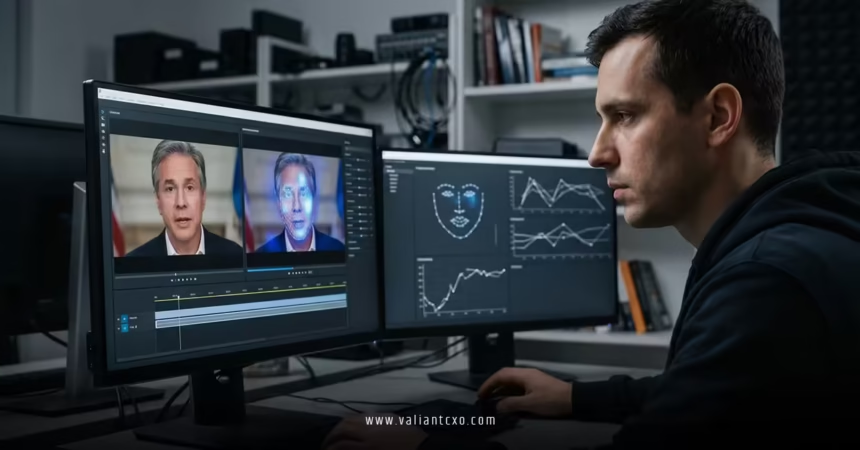
Latest phishing statistics 2026 AI deepfakes paint a brutal picture. Attackers now crank out hyper-realistic emails, voice clones, and video impersonations at scale. What used to take skilled hackers days now happens in minutes. And the results? Billions lost, with success rates that rival or beat human-crafted scams.
- 3.4 billion phishing emails slam inboxes daily, with 82.6% now AI-generated.
- AI-powered phishing features in 37% of breaches (IBM 2025).
- Deepfake incidents exploded, with organizations reporting major spikes in voice and video impersonation attacks.
- US losses from deepfake fraud hit hundreds of millions in early 2025 alone, with projections climbing higher.
This isn’t sci-fi. It’s happening right now in the USA. Here’s exactly what the data shows and what you can actually do about it.
Why AI Deepfakes Supercharged Phishing in 2025-2026
Attackers love AI for one simple reason: speed and scale. Tools spit out convincing copy, clone voices, and swap faces faster than you can refresh your inbox.
The kicker? These attacks bypass old-school filters that still hunt for bad spelling or obvious links. AI content reads human. It sounds human. And it works.
Hoxhunt tracked a 14x surge in AI-generated phishing around late 2025 into 2026. What started as a small slice of attacks ballooned to over half in some periods.
Deepfakes take it further. Voice cloning for vishing (voice phishing) jumped dramatically. Video deepfakes impersonating executives closed massive wire transfers. One infamous case in Hong Kong showed how quickly real money moves when the “CEO” appears on screen.
Here’s the thing: Your employees aren’t dumb. They’re just facing weapons-grade persuasion tools that adapt in real time.
Latest Phishing Statistics 2026 AI Deepfakes: The Hard Numbers
Let’s cut through the noise with clear data from trusted sources.
| Metric | Statistic | Source | Impact |
|---|---|---|---|
| Daily Phishing Emails | 3.4 billion | Keepnet/VIPRE | Overwhelms inboxes nationwide |
| % AI-Generated | 82.6% | Keepnet Labs (Sep 2024-Feb 2025 data) | Makes detection much harder |
| Breaches Involving AI Phishing | 37% | IBM 2025 | Direct link to data loss |
| AI Phishing Click Rate | Up to 54% | Multiple reports (comparable to human) | Matches or beats traditional attacks |
| Deepfake Incidents (Organizations) | 62% faced one in past year | Gartner 2025 | Widespread enterprise exposure |
| Vishing Surge | +442% | CrowdStrike | Voice deepfakes exploding |
These aren’t projections. They’re tracking real attacks hitting US businesses and individuals right now.
FBI IC3 data reinforces the pain. Phishing/spoofing remains a top complaint category, with AI-related fraud complaints topping 22,000 and losses nearing $900 million in recent reporting.
How AI Deepfakes Work in Modern Phishing Attacks
Picture this: An attacker grabs your CEO’s LinkedIn photo and recent earnings call audio. Minutes later, they generate a video call or voicemail demanding an urgent transfer. The voice matches. The face matches. The urgency feels real.
Or a spear-phishing email arrives tailored to your exact role, referencing a project from last week’s internal meeting (thanks to public data leaks or prior breaches). No typos. Perfect tone.
The metaphor that sticks: Think of traditional phishing as a cheap knockoff watch. AI deepfake phishing is a near-perfect counterfeit that even experts struggle to spot under pressure.
Common vectors in 2026:
- Email with AI-polished lures
- Voice calls (vishing) using cloned audio
- Video deepfakes for high-value BEC (Business Email Compromise)
- SMS or app messages with personalized deepfake elements
Latest Phishing Statistics 2026 AI Deepfakes: Who Gets Hit Hardest?
Finance, healthcare, and tech take the biggest punches. Why? High-value transactions and sensitive data. But small businesses aren’t safe—attackers love spraying wide nets then zooming in on responders.
Government employees and everyday consumers face rising risks too, especially around tax season or major events where urgency spikes.
Step-by-Step Action Plan for Beginners and Teams
Don’t panic. You can fight back without a massive budget.
- Train like your job depends on it. Run regular simulations that include AI-generated examples. Focus on verifying requests through secondary channels.
- Lock down verification. Never trust voice or video alone for money moves. Use pre-agreed code words or callback numbers you control.
- Tool up smartly. Deploy email filters that score for AI patterns. Enable MFA everywhere (preferably phishing-resistant options like passkeys).
- Monitor and report. Teach teams to flag suspicious stuff immediately. Report to FBI IC3—it helps everyone.
- Review access weekly. Limit who can authorize big transfers. Use just-in-time permissions.
What I’d do if I were securing a mid-sized US company tomorrow: Start with a quick audit of current phishing simulation results, then layer in deepfake awareness training within two weeks. Small wins compound fast.
Common Mistakes & How to Fix Them
- Mistake: Relying only on “spot the bad grammar.”
Fix: Train for emotional manipulation and urgency. AI nails grammar. - Mistake: Ignoring voice/video.
Fix: Establish “out-of-band” verification rules. Hang up and call back using a known good number. - Mistake: One-and-done training.
Fix: Make it ongoing, with real attack examples from the latest phishing statistics 2026 AI deepfakes. - Mistake: No reporting culture.
Fix: Reward quick reports. Treat every flagged email as intel gold.
Latest Phishing Statistics 2026 AI Deepfakes: Detection Challenges
Human eyes catch only about 24.5% of high-quality deepfakes in some tests. That’s why tech + training beats either alone.
Look for subtle tells: lighting inconsistencies, unnatural eye movement, slight audio lag, or requests that feel slightly off-script. But don’t bet your company on it.
For more on evolving threats, check resources from FBI Internet Crime Complaint Center.
Key Takeaways
- AI now powers the majority of phishing volume with terrifying effectiveness.
- Deepfakes amplify trust exploitation across email, voice, and video.
- Success rates remain high because humans are the weakest link under pressure.
- Losses are climbing into billions—prevention beats reaction every time.
- Basic hygiene plus verification protocols still stop most attacks.
- Regular training with current examples makes a measurable difference.
- Reporting helps the whole ecosystem fight back.
- Staying informed on the latest phishing statistics 2026 AI deepfakes is non-negotiable.
The main benefit? You don’t need to become a cybersecurity expert overnight. You need consistent, practical habits that account for these new tools.
Next step: Run one phishing simulation this week that includes AI and deepfake elements. Measure clicks. Adjust. Repeat.
FAQs on Latest Phishing Statistics 2026 AI Deepfakes
How do I spot an AI deepfake phishing attempt?
Look beyond surface details. Verify through independent channels. Watch for unnatural mannerisms, pressure tactics, or requests that bypass normal processes. Tools can help flag email anomalies, but human vigilance plus policy remains key.
Are small businesses safe from AI deepfake phishing?
No. Attackers target them precisely because they often lack enterprise defenses. The latest phishing statistics 2026 AI deepfakes show broad spraying followed by focused exploitation works on organizations of all sizes.
What should I do if I suspect a deepfake scam?
Stop. Don’t engage. Verify using known contact methods. Report to your security team and the FBI IC3. Preserve evidence like screenshots or recordings without clicking anything.