Food recall safety tips aren’t optional knowledge anymore — they’re a survival skill for anyone who eats packaged food in the United States. And if you’re reading this after hearing about the Power Plate Meals USDA recall soy incident, you’re already ahead of most people who find out too late.
Here’s the thing: food recalls happen constantly. The USDA FSIS and the FDA together issue dozens of recall notices every single month. But most Americans have zero system for catching them — until someone in their household gets sick.
That changes today.
Quick-Answer Summary: Food Recall Safety Tips at a Glance
Before we go deep, here’s what you need locked in from the start:
- 🔴 Act fast — the moment a recall is announced, check your fridge, freezer, and pantry immediately
- 📦 Match every detail — brand name, product size, lot code, establishment number, and “use by” date must all match before you react
- 🚫 Don’t eat it, don’t share it, don’t donate it — not to humans, not to pets
- 📸 Document before discarding — photograph the label for potential refunds or illness reports
- 📲 Get ahead of recalls — subscribe to government alerts so you hear about them before the news does
Why Food Recall Safety Tips Matter More Than Ever
The U.S. food supply is enormous. Millions of packaged products move through the supply chain daily — and every single one of them depends on a label to communicate what’s inside.
When that label fails, people get hurt.
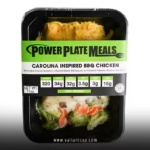
The recent Power Plate Meals USDA recall soy case is a textbook example. Nearly 5,800 pounds of frozen meatloaf went to market with soy — a major federal allergen — completely absent from the ingredient list. A state inspector caught it. But by then, the product had been in production and distribution for almost a full year.
Recalls like that aren’t outliers. Undeclared allergens, bacterial contamination, foreign material — these triggers show up week after week on the USDA FSIS official recall database. The question isn’t whether a recall will affect a product in your kitchen. It’s when — and whether you’ll be ready.
The Two Types of Food Recalls You’ll Encounter
Not all recalls carry the same urgency. Understanding the difference helps you triage fast.
| Recall Type | USDA/FDA Classification | Risk Level | Common Triggers | Typical Response Window |
|---|---|---|---|---|
| Class I | Highest severity | Probable serious harm or death | Undeclared allergens, Listeria, E. coli, Salmonella | Immediate — act within hours |
| Class II | Moderate severity | Remote probability of harm | Mislabeling, minor contamination | Act within 24–48 hours |
| Class III | Low severity | Unlikely to cause harm | Labeling errors, minor deviations | Monitor and follow instructions |
| Market Withdrawal | Not a formal recall | Minor defect or quality issue | Off-flavor, packaging damage | Voluntary return, no urgency |
| Public Health Alert | Warning without recall | Product no longer available | Same triggers, product exhausted | Awareness only |
The Power Plate Meals soy recall sits squarely in Class I territory. That’s the tier where “check your freezer” isn’t a suggestion — it’s an instruction.
Step-by-Step Action Plan: What to Do When a Recall Hits
Whether you’re brand-new to navigating food recalls or just want a bulletproof system, follow these steps every single time.
Step 1: Verify you actually have the product. Don’t rely on memory. Walk to your pantry, fridge, or freezer and physically check. Match the brand name, product description, package size, and any listed date codes or establishment numbers exactly. Per USDA public affairs guidance: recalls are very specific — all information must match for a product to be considered affected.
Step 2: Stop eating it immediately. Even if you’ve eaten from the same package before without issue. Even if it looks and smells fine. This matters especially with allergen-based recalls — there’s no sensory warning for undeclared soy, milk, or wheat.
Step 3: Don’t pass it on. No gifting it. No donating to a food bank. No feeding it to pets. Animals can experience food poisoning and allergic reactions too. The product is hazardous — treat it that way.
Step 4: Photograph everything before disposal. Pull out your phone and snap the label, the establishment number, the use-by date, and the packaging front. You’ll need these images if you seek a refund, file an illness report, or need to consult a doctor.
Step 5: Dispose of it properly. According to the CDC’s food recall guidance, double-bag the product in sealed bags before placing it in a secure trash container that others — including children and animals — cannot access.
Step 6: Sanitize your kitchen. This step gets skipped constantly. If the recalled product touched surfaces, utensils, or fridge shelves, clean them thoroughly. Use hot, soapy water first, then sanitize with one tablespoon of unscented liquid bleach per gallon of water. Let surfaces air-dry.
Step 7: Monitor for symptoms. If you’ve already consumed the product:
- For allergen-based recalls: watch for hives, throat swelling, difficulty breathing, vomiting, or dizziness — symptoms of anaphylaxis can appear within minutes
- For pathogen-based recalls (Listeria, Salmonella): symptoms may take 30 minutes to several days to appear
- Seek emergency care immediately if breathing is affected or symptoms are severe
Step 8: Claim your refund. Return the product — or your photos of it — to the store where you purchased it. Most major retailers process full refunds for recalled items, no receipt required.
Food Recall Safety Tips: How to Stay Ahead of the Next One
Reacting to recalls is necessary. Getting ahead of them is smarter.
Think of your recall alert system like smoke detectors — you set them up once, and they do the work passively until you need them. Here’s how to build that system in under 10 minutes.
Set Up Your Alert System Right Now
- USDA FSIS email alerts — Subscribe at USDA FSIS Recalls & Alerts for direct government notifications covering all meat, poultry, and processed egg products
- FDA recall alerts — Sign up for commodity-specific notifications at FDA.gov for all other food products (produce, dairy, packaged goods)
- FoodSafety.gov — Aggregates USDA and FDA recalls in one place; bookmark it and check it weekly
- Store loyalty card enrollment — Retailers like Kroger, Safeway, and Target use your purchase history to proactively notify you when something you’ve bought gets recalled
- FoodKeeper App (USDA) — Free app with storage guidance and real-time recall alerts integrated
Document Your Freezer & Pantry
One habit that pays off immediately: take a quick photo of your freezer and pantry shelves every month. When a recall drops, you can scan the image rather than physically dig through everything. It sounds obvious. Almost nobody does it.
Common Mistakes & How to Fix Them
Here’s where most people stumble — and how to course-correct before it costs you.
❌ Mistake 1: Only Acting If You “Think” You Have Allergies
The fix: Allergen reactions can develop at any age, even to foods you’ve safely consumed for years. The Power Plate Meals USDA recall soy situation is a prime example — soy was present with zero warning on the label. Treat all undeclared allergen recalls as relevant to every person in your household, not just those with known diagnoses.
❌ Mistake 2: Waiting for Symptoms Before Taking Action
The fix: By the time symptoms appear, the damage is done. The right trigger to act is the recall notice itself — not nausea, not hives. Speed matters most with Class I recalls.
❌ Mistake 3: Assuming “No Reports of Illness” Means You’re Safe
The fix: This phrase appears in nearly every recall announcement. It means no confirmed, attributed cases at the time of announcement — not that zero people were affected. Underreporting in food safety is a well-documented issue. Act on the recall, not the absence of reported cases.
❌ Mistake 4: Throwing Away the Package Before Documenting It
The fix: Without a photo of the label, you may lose your refund eligibility and won’t be able to report a potential illness accurately. Take 20 seconds to photograph the package before it goes in the bin.
❌ Mistake 5: Forgetting to Clean Contact Surfaces
The fix: If you stored the recalled product in your fridge, the shelves and drawer surfaces need sanitizing. Bacteria and allergen residue don’t vanish when you remove the product. Follow the CDC bleach-solution protocol outlined above.
❌ Mistake 6: Relying Solely on the News to Hear About Recalls
The fix: Media coverage of food recalls is inconsistent. High-profile cases get headlines; smaller regional recalls — like the Power Plate Meals event affecting just three states — often don’t. Government email alerts are the only reliable source. Use them.
Who Actually Issues Food Recalls in the USA?
Two agencies share jurisdiction, and knowing which one covers what matters when you’re looking up a recall.
- USDA FSIS — Governs meat, poultry, and processed egg products. Issues recall notices and public health alerts for these categories. The Power Plate Meals USDA recall soy case was an FSIS action.
- FDA — Governs everything else: produce, dairy, packaged snacks, seafood, bottled water, dietary supplements. Issues separate Class I/II/III recall classifications.
When in doubt, check both databases. Some products — think frozen burritos with meat filling and packaged vegetables — can fall under both agencies depending on their primary ingredient.
Key Takeaways
- 🔴 Food recall safety tips start with one non-negotiable: always verify the recall against the exact product in your possession before acting — or panicking
- 📦 Class I recalls signal the highest risk of serious harm or death; treat them with immediate urgency
- 🚫 Never eat, share, donate, or feed recalled products to pets — double-bag and secure-trash everything
- 📸 Always photograph the label before disposal for refunds and potential illness reports
- 🧹 Sanitize every surface the recalled product touched — shelves, cutting boards, utensils
- 📲 Subscribe to USDA FSIS and FDA recall alerts now, before the next recall affects your household
- 🛒 Register your loyalty cards with major retailers so they can alert you directly when something you’ve purchased is recalled
- 🏥 Seek emergency care immediately for anaphylaxis symptoms — throat swelling, difficulty breathing, severe dizziness
The next food recall isn’t a matter of if. It’s when. The households that respond within hours — rather than days — are the ones with alert subscriptions, a habit of photographing their pantry, and a clear action plan already in place. Set yours up today, and the next alert becomes a five-minute task instead of a crisis.
Frequently Asked Questions
Q1: What should I do first when I hear about a food recall — especially one involving allergens like the Power Plate Meals USDA recall soy case?
Go straight to your freezer or pantry and physically check the product. Match every detail: brand name, product name, package size, “use by” date, and the establishment number printed inside the USDA mark of inspection. If all details align, stop consumption immediately, photograph the label, and then dispose of or return the product. Don’t rely on memory — check in person every time.
Q2: Can I get a refund without a receipt for a recalled food product?
Yes, in most cases. Major retailers typically process full refunds for recalled items using photos of the product label as proof of purchase. If you have a loyalty card or store account, your purchase history often serves as documentation. Contact the retailer’s customer service desk directly, and bring your product or its photos.
Q3: How do I know if a food recall affects products I’ve already eaten?
Cross-reference the recall notice details with your purchase records or photos. If you confirm a match and you have a known allergy or experienced unusual symptoms after eating the product, contact your healthcare provider immediately. If the recall involves a pathogen like Salmonella or Listeria, monitor for symptoms for up to a week and seek care if they develop. You can also call the USDA Meat and Poultry Hotline at 1-888-674-6854 to report concerns or get guidance.