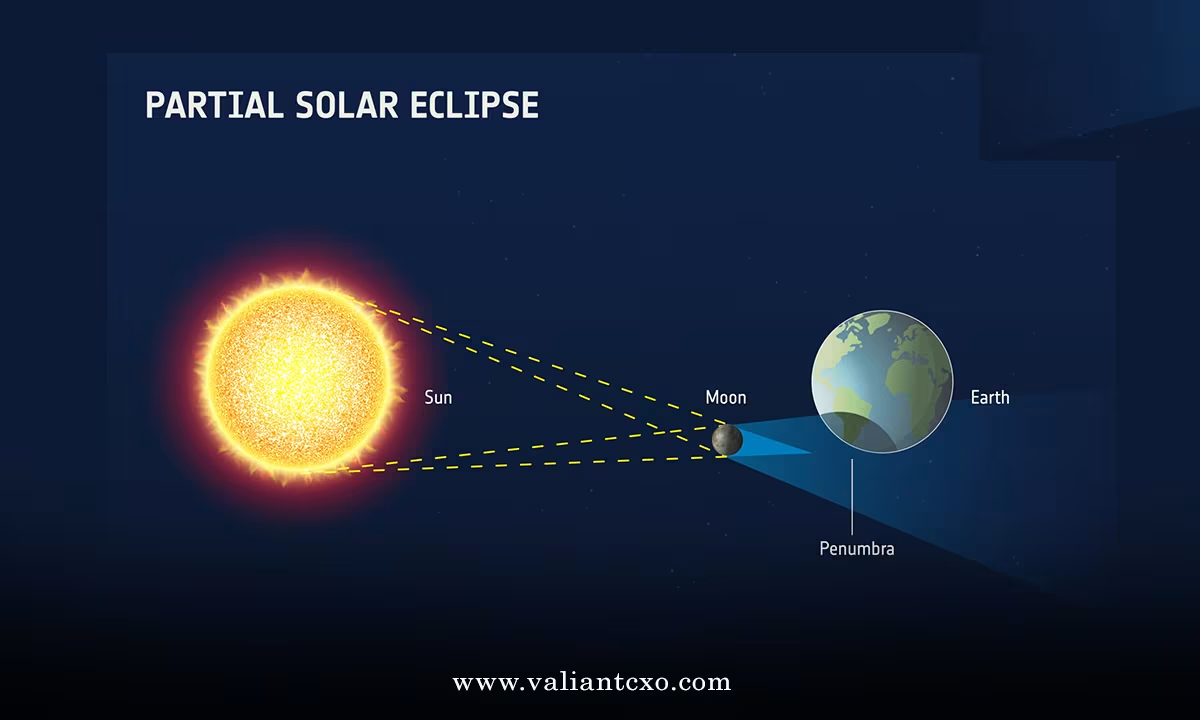
Solar Eclipse Safety Tips matter because a solar eclipse is one of those events that can pull attention fast, and the wrong viewing habit can damage eyesight in seconds. If you are planning to watch, post about it, or share guidance with your team or customers, you need simple, reliable advice that keeps everyone safe. In this article, we’re going to be taking a look at Solar Eclipse Safety Tips, and how you can protect your eyes while still making the most of the moment. If you would like to find out more, feel free to read on.
Pic – CC0 License
Solar Eclipse Safety Tips for direct viewing
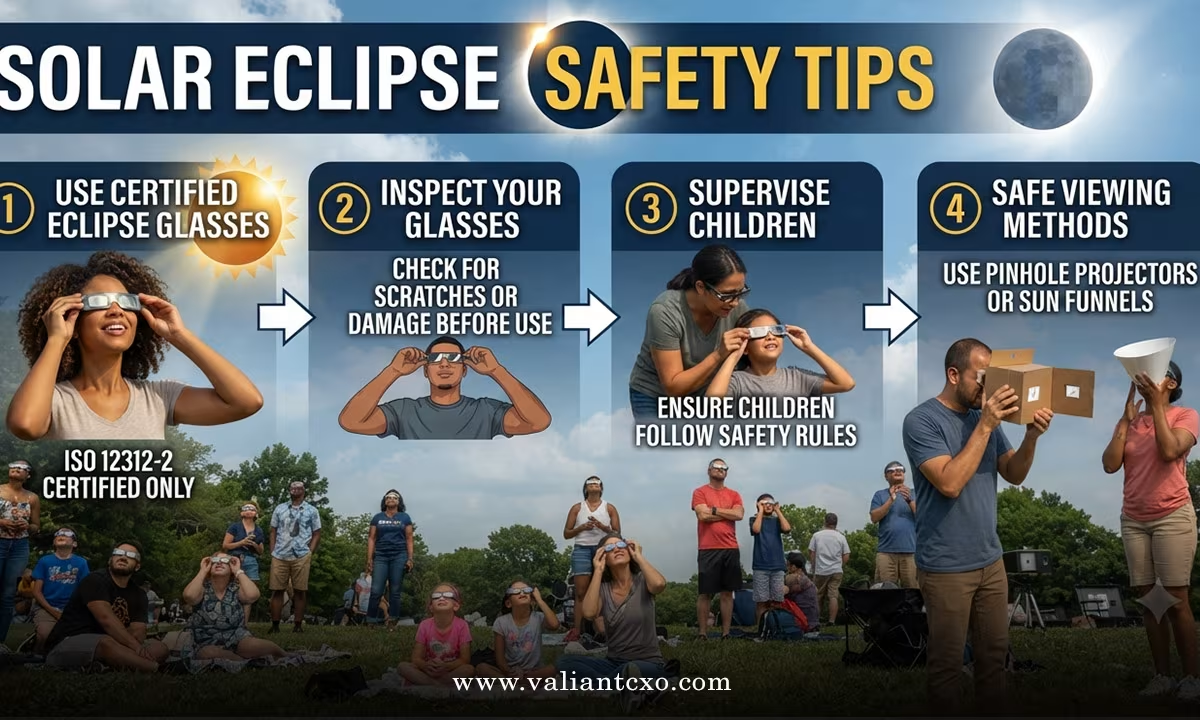
The first rule is simple: never look directly at a partial or annular solar eclipse without proper eye protection.[1] NASA says the only safe way to view the Sun directly during these phases is with certified eclipse glasses or a safe handheld solar viewer.[1] Ordinary sunglasses are not enough, and neither are makeshift filters.[1][4]
If you are sharing this advice with staff or customers, keep the wording plain. Say that eclipse glasses must be worn before looking up and kept on until the viewer looks away again.[4] The American Academy of Ophthalmology also warns that the Sun should never be viewed through unfiltered cameras, binoculars, or telescopes.[4]
Solar Eclipse Safety Tips for businesses and teams
If your business is outdoors during the eclipse, plan ahead instead of reacting at the last minute. Make sure employees know that eclipse viewing is not the same as looking at a cloudy sky, and that direct viewing without protection can injure the retina.[1][4] If you run a retail space, café, site office, or event, a short safety note in advance can prevent confusion.
For team-based viewing, assign one person to check that everyone has the right glasses or viewer before the eclipse starts.[4] That is especially useful if you are hosting customers, children, or a mixed group of guests. The goal is not to make the event dull; it is to make it safe and easy to enjoy.[1][4]
Solar Eclipse Safety Tips for kids and families
Children need extra supervision because they may not understand why a bright Sun can still be dangerous.[4][11] If kids are involved, make sure an adult checks the glasses for damage and watches the viewing process closely.[4] The safest approach is to explain the rule in one sentence: if the glasses are off, the child should not look at the Sun.[4]
You can also turn safety into a simple family activity. Tools like a pinhole projector, colander, or similar indirect viewer let people see the eclipse without looking at the Sun itself.[1][8][11] NASA specifically recommends indirect viewing methods when eclipse glasses or a handheld viewer are not available.[1]
Solar Eclipse Safety Tips for cameras, binoculars, and telescopes
Never use eclipse glasses with binoculars, telescopes, or a camera lens unless the optical device has a proper solar filter designed for that purpose.[1][4] NASA warns that concentrated sunlight can burn through a filter and cause serious eye injury.[1] That is a common mistake, so it is worth repeating in any public-facing post or staff briefing.
If your business uses photography or live content, assign the job to someone who understands solar filters and safe setup. A quick mistake with a lens can undo the value of a whole safety plan.[1][12] If you are unsure about the equipment, skip the optical device and use indirect viewing instead.[1][8]
Solar Eclipse Safety Tips for indirect viewing
Indirect viewing is the easiest backup plan if you do not have eclipse glasses.[1] A pinhole projector can be made with a simple card or piece of paper, and the image is viewed on a nearby surface rather than through the hole itself.[1][8] NASA is clear on one point: do not look through the pinhole at the Sun.[1]
This option works well for office teams, schools, shops, and family groups because it is cheap and easy to explain. It is also a good choice if you want to share the eclipse with people who may not have approved viewing glasses. For many businesses, that makes it the most practical safety message to promote.[1][8]
Solar Eclipse Safety Tips and timing by location
If you are planning content or a customer message around the event, timing matters by city. That is where a keyword link such as Partial solar eclipse August 12 2026 times by city / location becomes useful, because people want the local start, peak, and end times, not a general headline. Use that kind of location-based detail alongside your safety guidance so readers can act on it quickly.[1][2]
This is especially helpful if your audience is spread across different regions or time zones. A city-specific eclipse time guide makes your safety advice more relevant and easier to trust. It also helps you avoid posting generic information that does not match the reader’s local experience.[1][2]
Solar Eclipse Safety Tips for outdoor comfort
Safety is not only about eye protection. Mayo Clinic advises wearing sunscreen, a broad-brimmed hat, protective clothing, and staying hydrated if you will be outside during the event.[2] That matters for entrepreneurs hosting outdoor gatherings, pop-ups, delivery operations, or team events.
If your team will be outside for a while, shade is your friend. Keep water nearby, avoid overlong exposure, and remind people that the Sun can still be intense even during a partial eclipse.[2] A little planning makes the experience more comfortable and keeps the focus on the event, not the heat.
We hope that you have found this article enlightening in some way, and that these Solar Eclipse Safety Tips give you a clear, practical way to protect your eyes and your team. If you are building a local plan, pair these tips with Partial solar eclipse August 12 2026 times by city / location so you know exactly when the eclipse will happen where you are.