food safety compliance checklist should not feel like paperwork for the sake of it. It should feel like a practical tool that helps you protect customers, avoid costly mistakes, and keep your operation steady when pressure is high.
For entrepreneurs, the real challenge is not knowing that food safety matters. The challenge is building a routine your team can follow every day, even when things get busy. A good checklist gives you structure, helps you spot gaps early, and makes inspections far less stressful. It also supports traceability, which matters when you are thinking about food recalls affecting Walmart Kroger Publix Target and the lessons those events create for suppliers, retailers, and food brands alike.
In this article, we’re going to be taking a look at food safety compliance checklist, and how you can use it to keep your business safer, more organised, and better prepared. If you would like to find out more, feel free to read on.
Pic – CC0 License
What a food safety compliance checklist does
A food safety compliance checklist is a simple way to make sure the basics are being done right, every day. It turns food safety from a vague idea into a clear set of actions that your staff can check, record, and repeat.
That matters because food safety problems often begin with small misses. A missed handwash, a broken temperature log, a damaged package, or a poor supplier check can create bigger issues later. Checklists help you catch those problems before they reach customers.
The UK Food Standards Agency provides inspection guidance and food safety tools that show how structured checks support safer operations.[1] ServSafe’s evaluation checklist takes the same approach: if a practice is missing, it marks a gap that can be fixed.[2]
food safety compliance checklist basics you should never skip
The strongest food safety compliance checklist starts with the basics. These are the areas that should be checked consistently, not occasionally.
- Handwashing stations are stocked and easy to use.
- Staff wash hands properly and at the right times.
- Raw food is stored below ready-to-eat food.
- Refrigerators and freezers are holding safe temperatures.
- Food is bought from approved or reputable suppliers.
- Deliveries are checked for damage, contamination, and expiry dates.
- Food is labelled, dated, and rotated correctly.
- Cleaning and sanitising tasks are completed and recorded.
These are not fancy controls. They are the day-to-day habits that protect your operation. Guidance from inspection checklists used in food service and manufacturing repeatedly highlights the same points: storage, hygiene, temperature control, and recordkeeping.[5][8][20]
food safety compliance checklist for receiving and storage
A lot of food safety risk starts before the product even reaches the kitchen or shelf. That is why receiving and storage should be a major part of your food safety compliance checklist.
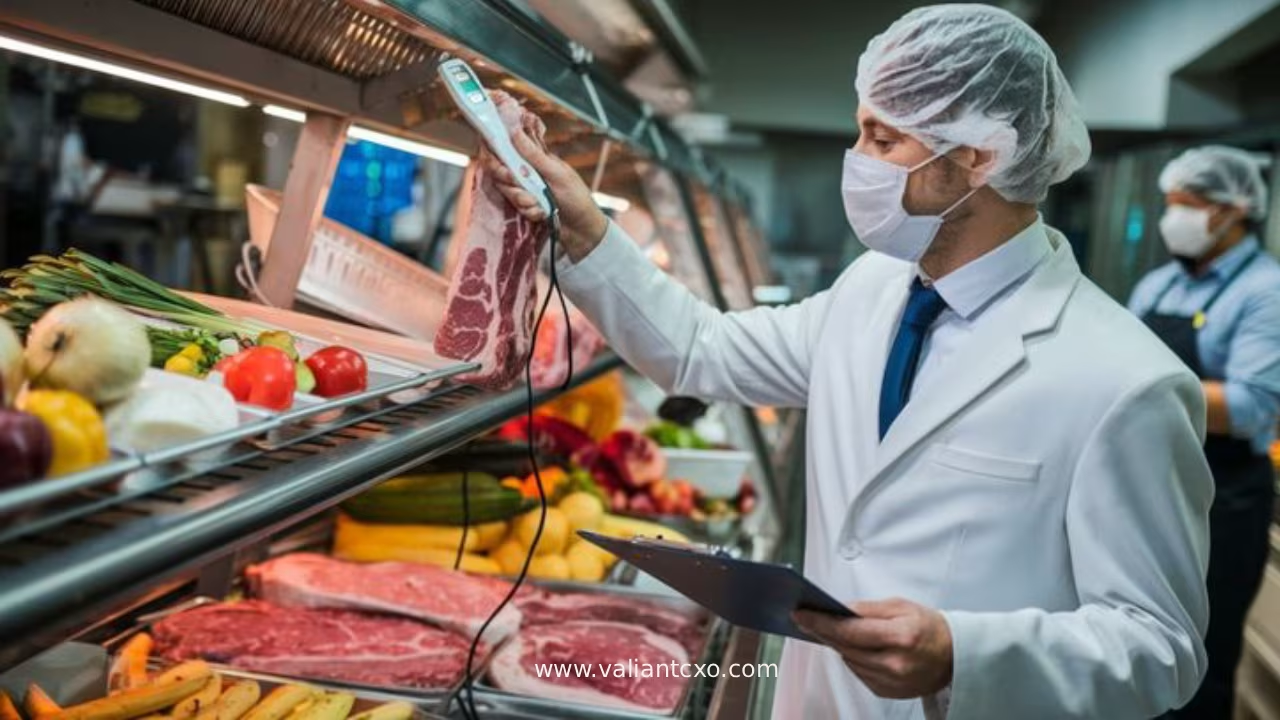
When deliveries arrive, check the condition of the packaging, the temperature of chilled or frozen items, and the expiry date. If anything looks wrong, do not accept the delivery without proper review. If you cannot trace the batch, you cannot control the risk later.
Storage is just as important. Keep food off the floor, separate raw and cooked items, and use clear labels so stock moves in the right order. The University of California food facility checklist, for example, stresses approved sourcing, contamination checks, proper storage, and labelled containers.[8] Similar storage and purchasing checks appear in other food safety guidance used across the sector.[14]
food safety compliance checklist for staff and training
Your checklist will only work if your people know how to use it. That means training matters just as much as the form itself.
Train staff on hand hygiene, cross-contamination, allergen awareness, illness reporting, and cleaning routines. Make sure new starters do not learn by guessing. Give them short instructions, demonstrate the right way to do each task, and check that they can repeat it correctly.
This is where businesses often slip. They assume a policy is enough, but a policy without training is just a document. Food safety tools from OSHA-style inspection checklists and commercial audit templates consistently place employee hygiene, safe handling, and training near the top of the list.[10][11]
food safety compliance checklist for cleaning and records
Cleaning is not complete unless it is documented. A solid food safety compliance checklist should include what was cleaned, when it was cleaned, who did it, and what product or method was used.
That same rule applies to temperature logs, delivery checks, pest control records, and corrective actions. If an inspector asks what happened yesterday, your records should tell the story clearly. If a customer complaint turns into a traceability issue, those records become even more valuable.
This is also where lessons from food recalls affecting Walmart Kroger Publix Target become useful for smaller operators. When a recall happens, the businesses that respond best are usually the ones with clean records, fast traceability, and a clear paper trail. The FDA states that recalls are often tied to contamination, mislabelling, or undeclared allergens, which makes recordkeeping and traceability a key part of prevention and response.[3]
food safety compliance checklist and recall readiness
You do not need to wait for a crisis to think about recall readiness. A strong food safety compliance checklist should include a simple action plan for what happens if a product problem is found.
Your plan should answer a few direct questions. Who gets alerted first? How do you identify affected stock? How do you stop sales quickly? How do you communicate with customers or suppliers? If your team can answer those questions in minutes instead of hours, you are in a much stronger position.
That is one reason the keyword food recalls affecting Walmart Kroger Publix Target matters to business owners. It is not only a search phrase; it is a reminder that even major retailers can face supply-chain problems, and smaller businesses need systems that are just as disciplined.
food safety compliance checklist: the practical takeaway
A good food safety compliance checklist is simple, repeatable, and built around real-world risk. It helps you protect customers, support staff, and keep your business organised under pressure.
We hope that you have found this article enlightening in some way, because the main lesson is easy to act on: start with the basics, check them often, and keep your records clean. If you do that, you are not only improving compliance, you are making your business safer and more dependable every day.