
Starship Flight 13 Results and Lessons :
Starship Flight 13 delivered the cleanest upper-stage performance of the entire test campaign. On July 24, 2026, Booster 20 and Ship 40 lifted off from Starbase Pad 2 at 5:51 p.m. CT after two earlier scrubs. The mission checked nearly every box SpaceX needed before attempting true orbit.
Here’s what actually happened and why the data still shapes everything that followed—including the SpaceX Starship first orbital flight test date 2026 update targeted for September 28.
Flight 13 at a glance
- All 33 Raptor 3 engines on the Super Heavy lit and performed through ascent.
- Hot-staging and stage separation were nominal.
- Ship 40 completed a full-duration ascent burn on all six Raptors.
- 20 operational Starlink V3 satellites deployed successfully; every satellite established radio and laser contact with the constellation before reentering as planned ~20 minutes later.
- Single-engine Raptor relight in space executed cleanly—the critical prerequisite for orbital insertion and deorbit burns.
- Ship reentered, performed a dynamic banking maneuver that simulated a return-to-launch-site trajectory, flipped, and executed a soft splashdown in the Indian Ocean.
- Ship 40 remained intact and floating after tip-over, giving engineers the first prolonged, high-quality views of a complete heat shield post-reentry.
- Booster completed a full 33-engine boostback burn (first for a V3 vehicle) but only a subset of engines relit for the landing burn, resulting in a hard splashdown in the Gulf.
Liftoff-to-splashdown for the Ship ran just over 65 minutes. The booster’s hard landing was the only major shortfall.
What worked exceptionally well
Ship 40 was essentially flawless from separation onward. The Pez-style dispenser released all 20 V3 satellites on the planned trajectory. Six of those satellites carried cameras that imaged the Ship’s heat shield in space—mirroring the old Shuttle RPM inspection. Telemetry came down cleanly via Starlink links.
The in-space relight mattered most. Future missions cannot risk entering orbit unless the vehicle can later perform a controlled deorbit burn. Flight 13 proved that capability under real conditions.
Reentry and landing produced the softest Ship splashdown to date. Previous vehicles usually broke up or exploded after tip-over. Ship 40 stayed whole long enough for drone inspections and eventual recovery. That single outcome handed the heat-shield team weeks of high-value imagery and physical samples instead of wreckage reconstruction.
The booster’s hard landing and the fixes it drove
Booster 20 aced the high-thrust portion of boostback—all 33 engines for the first time on a V3—but ice clogging in the three center engines cut the burn short. On the landing burn only a partial set of the planned 13 engines ignited; the count dropped further. The booster hit the water with excess velocity and was lost.
SpaceX responded with hardware filtering upgrades and software changes to improve relight reliability. Those modifications flew on the next vehicle. In iterative development this is normal: the booster still delivered the Ship to the right energy state, and the data closed a specific failure mode before the orbital attempt.
Heat-shield lessons that carried forward
Post-flight drone footage and recovered samples showed the thermal protection system did its primary job. The Ship survived peak heating and dynamic pressure with far less visible damage than earlier flights. Load-sensing tiles and experimental attachment methods provided quantitative data.
Some experts later noted white streaks at certain tile boundaries and a few cracked or chipped edges—possible signs of plasma intrusion. Those observations drove the next round of improvements: additional retention features in high-risk zones, curved tiles designed to reduce gap heating, and the first reuse of two tiles recovered from Ship 40 itself. Flight 13 did not prove rapid reuse, but it gave the team the clearest post-reentry baseline yet.
Why Flight 13 cleared the path to orbit
Before July 24 the program still needed three concrete demonstrations: reliable payload deployment of real satellites, an in-space engine relight, and a Ship that could survive reentry intact enough for meaningful inspection. Flight 13 delivered all three on a single suborbital trajectory.
That combination is exactly why SpaceX could schedule the SpaceX Starship first orbital flight test date 2026 update for September 28. The orbital mission builds directly on these results: 26 Starlink V3 satellites (this time into sustained orbit), a longer coast, an insertion burn only after deorbit redundancy is confirmed, and the same heat-shield upgrades refined from Ship 40’s data.
In practical terms, Flight 13 moved Starship from “can it fly and come back?” to “can it deliver a useful payload and still come back in inspectable condition?” The answer was yes on the Ship side. The booster issues were isolated and addressed before the next stack rolled out.
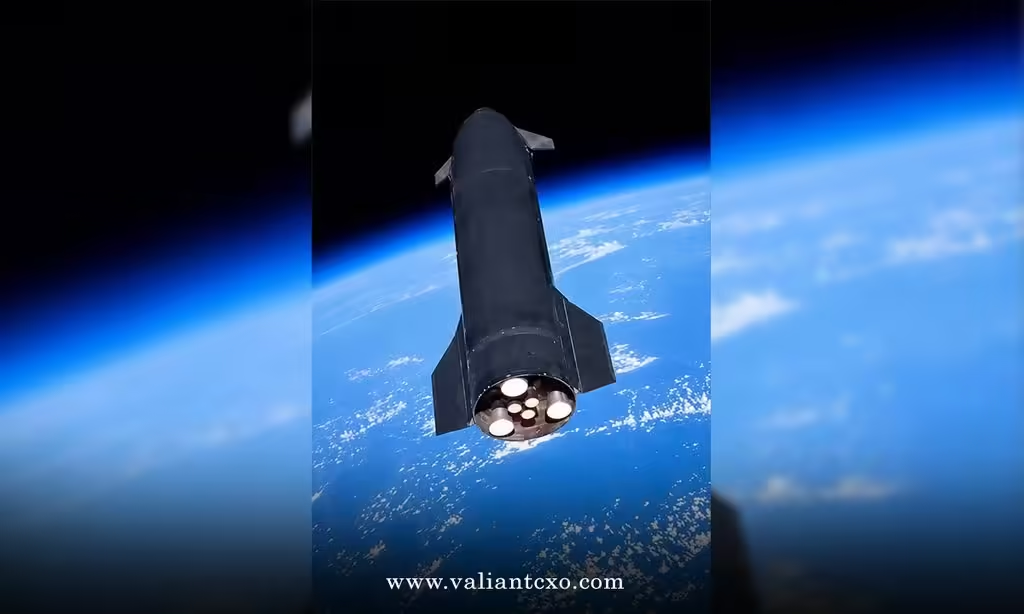
Key lessons that still apply
- Soft splashdowns produce better data than hard ones. An intact vehicle is worth more than a spectacular RUD when you are iterating a heat shield.
- Engine relight reliability under vacuum and after long coasts is non-negotiable for orbital operations. One successful demonstration is necessary but not sufficient; repeatability is the real goal.
- Suborbital payload tests with real hardware (not mass simulators) de-risk the dispenser and communications chain before committing satellites to orbit.
- Booster landing burns remain the higher-risk phase on early V3 vehicles. Filtering and software changes are the expected response, not a redesign of the entire stage.
- Public safety trajectories still constrain the energy state. Flight 13 stayed deliberately short of orbit so any anomaly ended over open ocean.
Looking ahead from Flight 13 data
The recovery of Ship 40—eventually lifted by a heavy-lift vessel and returned to Starbase—gave teams physical tiles, flap hardware, and engine-bay inspections that no previous flight provided. Those physical assets, combined with the telemetry and imagery, directly informed the configuration that attempted orbit two months later.
If you are tracking the program, Flight 13 is the reference point. Everything after it—orbital insertion, longer-duration coasts, tower catches, and eventual rapid reuse—rests on the data this mission returned. The soft splashdown in the Indian Ocean was not just a nice visual. It was the moment the test campaign started looking like an operational system.
Key takeaways
- Ship 40 met every primary objective and survived intact—first time in the program.
- 20 Starlink V3 satellites deployed and contacted the constellation before planned demise.
- In-space Raptor relight succeeded, unlocking orbital flight profiles.
- Booster boostback improved but landing burn still needs work; fixes flew on subsequent vehicles.
- Heat-shield data from an intact vehicle drove the next round of tile and retention upgrades.
- These results directly enabled the first orbital attempt scheduled for late September 2026.
Flight 13 was the last pure development hop. The lessons it produced are already flying on the next vehicles.
3 FAQs for “Starship Flight 13 Results and Lessons”
1. What were the main successes of Starship Flight 13?
Ship 40 completed a full-duration ascent, deployed all 20 Starlink V3 satellites (which made contact with the constellation), successfully relit a Raptor engine in space, survived reentry, and achieved the softest splashdown of the program in the Indian Ocean—remaining intact and floating for the first time. These results directly cleared the path for the later SpaceX Starship first orbital flight test date 2026 update.
2. Why did the Super Heavy booster have a hard splashdown on Flight 13?
Booster 20 completed a full 33-engine boostback burn (a first for the V3 design) but experienced ice clogging that cut the burn short. Only a partial set of the planned engines relit for the landing burn, causing excess velocity at water impact. SpaceX addressed this with hardware filtering upgrades and software changes that flew on the next vehicle.
3. How did Flight 13 data improve the heat shield for future missions?
The intact Ship 40 provided the first prolonged post-reentry views and physical samples of a complete heat shield. Engineers identified areas for better tile retention, tested curved tiles to reduce plasma flow in gaps, and later reused two recovered tiles. These upgrades were incorporated into the vehicle that attempted the first orbital flight.