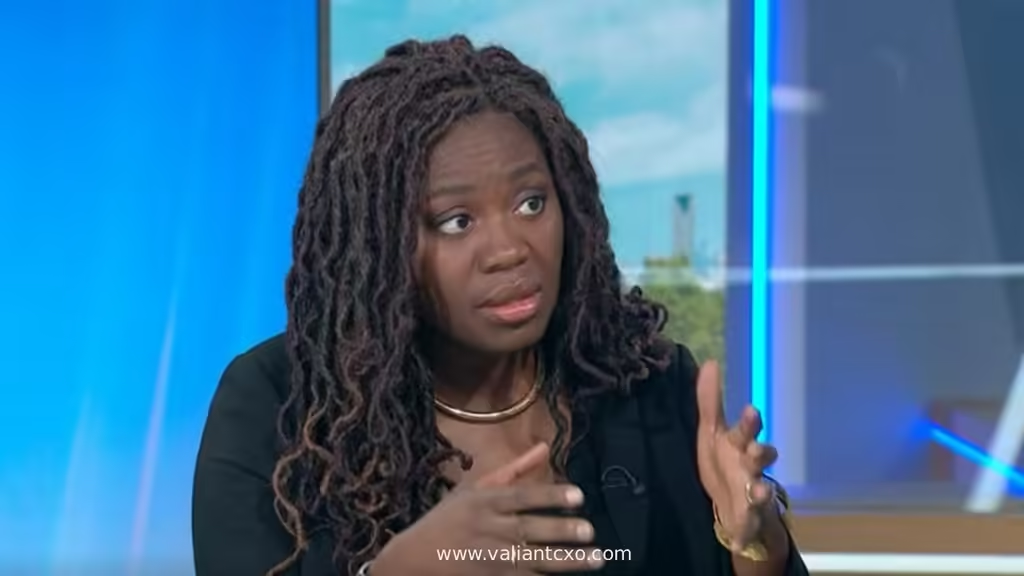
Miatta Fahnbulleh Energy Secretary Jackdaw approval landed on October 21, 2026, and it immediately reframed the UK’s energy security conversation. Production from the long-delayed North Sea gas field can begin supplying British homes and businesses by the end of this month.
Here’s the quick read for anyone trying to cut through the noise:
- Energy Secretary Miatta Fahnbulleh green-lit consent for the already-licensed Jackdaw field after fresh environmental reviews.
- The project is expected to lift domestic gas output by around 6% at peak and run for up to 11 years.
- It protects hundreds of North Sea jobs and is projected to add roughly £2.9 billion to the UK economy.
- Tax revenues will feed a new Energy Wealth Fund aimed at low-carbon projects.
- Officials are clear: this will not cut household bills this winter.
For Americans watching from the other side of the Atlantic, the decision offers a real-time case study in balancing domestic production, climate targets, and short-term energy needs.
Why Miatta Fahnbulleh Energy Secretary Jackdaw Approval Matters Now
Jackdaw sits about 150 miles east of Aberdeen. Operator Adura—a joint venture of Shell and Equinor—had the field nearly ready. Construction was effectively complete. What stopped it was the 2024 Supreme Court Finch ruling. That decision forced operators to account for the full downstream emissions from burning the gas, not just the extraction itself.
Previous Conservative approvals got quashed. Fresh public consultations closed in August 2026. Fahnbulleh, who took the Energy Security and Net Zero brief in July under Prime Minister Andy Burnham, then made the call. She described it as the product of careful consideration of energy security, jobs, climate law, and the preference for lower-emission domestic gas over higher-emission imports.
The timing is no accident. Global gas markets remain twitchy. Conflict in the Middle East has kept prices elevated. UK households still feel the aftershocks of earlier spikes. Homegrown supply that can reach the grid this winter carries weight, even if the volume is modest relative to total demand.
What the Numbers Actually Show
At peak, Jackdaw should deliver the energy equivalent of heating more than 1.4 million homes. It creates 27 new direct jobs and safeguards 273 existing ones that would otherwise disappear. Emissions intensity is projected below the UK North Sea average because the project ties into existing infrastructure.
Fahnbulleh has been blunt in interviews: the gas will be in homes and businesses this month, but it will not lower bills this winter. Wholesale prices are set internationally. One additional field does not rewrite that equation overnight.
What it does change is the revenue stream. Chancellor John Healey announced a new Energy Wealth Fund with an initial £2 billion down payment. Future North Sea tax receipts will flow into it for renewables, nuclear, and other low-carbon work. Think of it as a deliberate attempt to turn a finite resource into long-term transition capital—something Norway has done more systematically for decades.
Comparing the Trade-Offs
| Factor | Domestic Jackdaw Gas | Higher-Emission Imports | Full Immediate Phase-Out |
|---|---|---|---|
| Energy Security Impact | Reduces exposure to global shocks | Increases import dependence | Heightens short-term vulnerability |
| Jobs | Protects/creates ~300 North Sea roles | Limited domestic employment | Risk of accelerated job losses |
| Climate Accounting | Full downstream emissions assessed | Often higher lifecycle emissions | Lowest new emissions |
| Bill Impact This Winter | None direct | Can amplify price spikes | None, but supply risk rises |
| Transition Funding | Feeds Energy Wealth Fund | No domestic revenue capture | Relies on other tax sources |
The table makes the government’s stated logic plain. It is not claiming Jackdaw solves climate change or household affordability. It is arguing that, given existing licences and infrastructure already built, the pragmatic path is to run the field while ring-fencing the proceeds for cleaner power.
How Miatta Fahnbulleh Energy Secretary Jackdaw Approval Fits the Broader Policy
Labour’s 2024 manifesto barred new exploration licences. Jackdaw and the still-pending Rosebank oil field sit outside that ban because their licences predated the election. Fahnbulleh has repeatedly stressed the government remains committed to ending new licensing and hitting net zero by 2050.
Her own earlier writings had been more absolute about new fields. The shift illustrates the difference between opposition rhetoric and governing under real-world constraints—energy security crises, industrial jobs in Scotland, and legal processes that had already delayed the project for years.
For U.S. observers, the parallel is familiar. Domestic production debates in the Gulf of Mexico or Alaska often hinge on the same tension: climate targets versus reliability and regional economies. The UK’s experiment with an Energy Wealth Fund may be worth watching as a model for capturing resource rents and directing them explicitly toward transition infrastructure.
Step-by-Step Action Plan for Beginners Tracking This Decision
If you want to follow the implications without getting lost in daily headlines, start here:
- Bookmark the North Sea Transition Authority and UK Department for Energy Security and Net Zero sites for primary documents rather than secondary spin.
- Track the Energy Wealth Fund announcements in the upcoming Budget for actual allocation details.
- Watch the separate Rosebank decision timeline—Fahnbulleh has signaled it will take longer.
- Compare UK wholesale gas prices against the new domestic volumes once Jackdaw is online; the data will show whether the security claim holds.
- For Americans, map the same logic onto U.S. policy debates: which domestic projects carry similar “already licensed, infrastructure ready” characteristics, and how revenues are currently treated.
Common Mistakes & How to Fix Them
Miatta Fahnbulleh Energy Secretary Jackdaw approval People routinely overstate what one field can do.
Mistake one: claiming Jackdaw will slash bills. Fix: separate security of supply from price formation. Global markets still dominate.
Mistake two: treating the approval as a wholesale reversal of net-zero policy. Fix: note the continued ban on new licences and the explicit revenue-to-transition mechanism.
Mistake three: ignoring the legal history. The Finch ruling changed the rules mid-stream. Any fair assessment has to account for that forced re-evaluation.
Mistake four: focusing only on emissions from the field itself while overlooking the alternative of higher-emission LNG imports. Lifecycle comparisons matter.
In my experience watching these debates for more than a decade, the loudest voices on both sides often skip the intermediate options. The real work sits in the messy middle—maximizing value from assets already in the ground while accelerating the build-out of what replaces them.
Key Takeaways
- Miatta Fahnbulleh Energy Secretary Jackdaw approval prioritizes near-term domestic gas supply and jobs under existing licences.
- Production can begin this month and is expected to contribute roughly 6% of UK Continental Shelf gas at peak.
- No direct reduction in household energy bills is promised or expected this winter.
- A new Energy Wealth Fund will channel North Sea tax revenues into low-carbon projects, starting with £2 billion.
- The decision does not reopen the door to new exploration licences.
- Rosebank remains under separate consideration with a longer timeline.
- For U.S. policymakers and energy analysts, the episode highlights practical tools for managing the production-to-transition handoff.
Miatta Fahnbulleh Energy Secretary Jackdaw approval The Jackdaw decision will not transform the UK energy system overnight. It does, however, buy breathing room and create a dedicated funding channel for the next phase of the transition. Americans watching their own domestic production debates can treat it as a live experiment in how a government tries to square energy security, industrial base, and climate law without pretending the trade-offs disappear.
Stay focused on the primary documents and the actual production data once the field is online. That is where the real story will show up.
FAQs
What exactly did the Miatta Fahnbulleh Energy Secretary Jackdaw approval authorize?
It authorized the North Sea Transition Authority to grant production consent for the already-licensed Jackdaw gas field, allowing operations to start this winter.
Will the Miatta Fahnbulleh Energy Secretary Jackdaw approval lower UK energy bills immediately?
No. Officials have stated clearly that the additional gas will not reduce household bills this winter because prices are set on international markets.
How does the Miatta Fahnbulleh Energy Secretary Jackdaw approval affect the UK’s net-zero timeline?
The government maintains the decision is compatible with legally binding climate commitments and continues the ban on new oil and gas licences while directing revenues into transition projects.