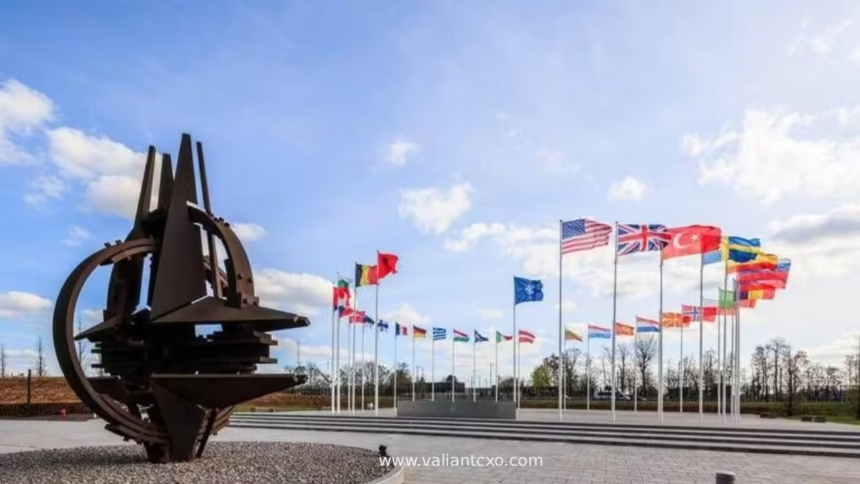
NATO defence spending targets 2026 mark the first full year of Allies operating under the ambitious 5% framework agreed at the 2025 Hague Summit.
NATO defence spending targets 2026 put every Alliance member on a clear path toward investing 5% of GDP in defence and security by 2035. The old 2% goal, set in Wales in 2014, is now largely met. The new standard splits the commitment into at least 3.5% for core military requirements and up to 1.5% for broader defence-related investments such as infrastructure, cyber resilience and industrial capacity.
Here’s the snapshot that matters:
- By 2026 nearly every Ally (all except Slovenia in current estimates) has cleared the previous 2% threshold.
- European Allies and Canada are projected to spend roughly 2.53% of GDP on core defence this year, with total defence-and-security spending higher when the 1.5% category is included.
- Front-line states — Estonia, Lithuania, Latvia and Poland — already operate at or near the 3.5–5% range on hard defence.
- The United States remains the largest absolute spender while European and Canadian budgets continue rising in real terms.
- Financing tools and industrial capacity, not just political will, will decide whether the 2035 target is reachable.
The shift is real. Money is moving. The question is whether the industrial base and political consensus can keep pace.
What the 5% Hague Commitment Actually Requires
NATO defence spending targets 2026 At The Hague in June 2025, Allies formalised a two-part pledge. Core defence spending (troops, weapons, operations, R&D under NATO’s established definition) must reach at least 3.5% of GDP by 2035. Allies must submit annual plans showing a credible, incremental path. An additional category of up to 1.5% covers critical infrastructure protection, network defence, civil preparedness, innovation and strengthening the defence industrial base.
This structure was designed to secure consensus. It also creates measurement complexity. Countries can claim progress through dual-use projects that sit in the second bucket. That flexibility helps politically. It does not automatically deliver combat power.
Official NATO guidance confirms the framework and the requirement for annual national plans. You can review the details on the NATO defence investment page.
Who Is Leading and Who Is Lagging in 2026
| Category | Examples (2026 projections) | Core Defence % of GDP (approx.) | Notes |
|---|---|---|---|
| Top performers | Estonia, Lithuania | 5%+ | Already at or above full target range on hard defence |
| Fast-track | Latvia, Poland, Denmark, Greece | 3.5–5% | Aiming to hit 3.5% well before 2035 |
| Baseline progress | Germany, Netherlands, Sweden, UK, Canada | 2.5–3% | Steady increases, industrial and fiscal constraints remain |
| Stressed / slower | France, Italy, Belgium, Spain | ~2.0–2.3% | Higher debt, competing priorities, slower trajectory |
| United States | — | ~3.2% | Largest absolute spender; expects greater European burden-sharing |
Front-line Allies closest to Russia continue to set the pace. Larger Western European economies face tougher fiscal arithmetic and domestic political pushback. Canada has cleared the old 2% bar and committed to intermediate steps toward 5%, but the gap to 3.5% core remains substantial.
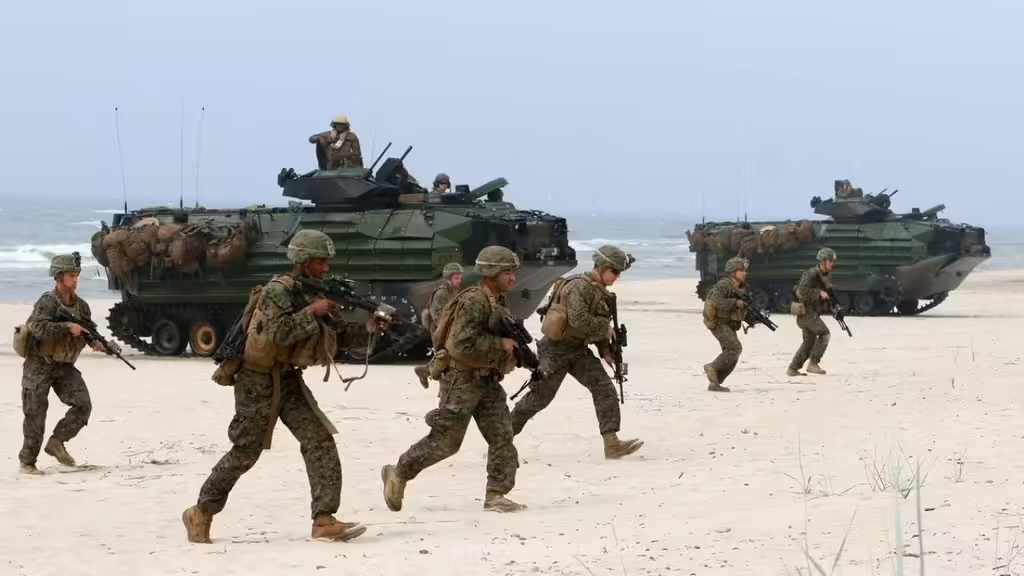
Financing the Jump: Parallel Tools and National Choices
Higher targets create an immediate funding problem. Traditional budgets alone will not close the gap fast enough. That is why Allies are experimenting with new financing vehicles.
One clear example is the recent decision that Britain will not join Canada Defence Security and Resilience Bank. The two countries chose separate but complementary institutions — Canada’s DSRB focused on low-cost capital and the UK’s Multilateral Defence Mechanism prioritising joint procurement. Both are responses to the same pressure: how to mobilise capital and industrial capacity at the scale the 5% target demands. Parallel national and multilateral tools are becoming the norm rather than the exception.
In my experience, what usually happens is that countries protect control over procurement and industrial policy even while talking cooperation. The result is a patchwork of instruments. That can still work if the instruments actually talk to each other and avoid pure duplication.
Step-by-Step Action Plan for Tracking Progress
NATO defence spending targets 2026 If you need a practical way to monitor whether NATO defence spending targets 2026 are turning into real capability, follow this sequence:
- Check the annual NATO defence expenditure data release (usually mid-year) for official percentages and the core vs related split.
- Read each Ally’s national plan when published. Look for the year they project hitting 3.5% core.
- Watch equipment spending share. The old 20% equipment guideline still matters; high percentages of personnel costs signal slower modernisation.
- Track industrial capacity announcements — new factories, multi-year contracts, and co-production deals — more than headline budget numbers.
- Note any formal cooperation frameworks between national financing tools. These will show whether parallel mechanisms reinforce or compete.
- Compare projected 2029 mid-point reviews against actual capability delivery, not just money spent.
Stay focused on outputs, not just inputs.
Common Mistakes & How to Fix Them
Mistake one: treating the 5% headline as the only number that matters. The split between 3.5% core and 1.5% related spending is the real story. Fix: always ask which category a claimed percentage falls into.
Mistake two: assuming every percentage point produces the same combat power. A euro spent on dual-use infrastructure is not the same as a euro spent on artillery shells or air defence. Fix: cross-reference spending data with NATO Capability Targets.
Mistake three: ignoring fiscal and political constraints in larger economies. Debt rules, recruitment shortfalls and public opinion still limit speed. Fix: separate stated ambition from executable timelines.
Mistake four: viewing national financing experiments as pure fragmentation. They can expand total capital available if coordination works. Fix: track whether tools like the DSRB and MDM actually share priorities or remain siloed.
Key Takeaways
- NATO defence spending targets 2026 operate under the new 5% Hague framework with a 3.5% core / 1.5% related split due by 2035.
- Almost all Allies have now cleared the old 2% bar; the harder climb to 3.5% core is underway.
- Baltic states and Poland lead; several larger Western European economies remain closer to 2%.
- European and Canadian spending continues rising in real terms, improving burden-sharing metrics.
- New financing vehicles are proliferating because traditional budgets alone cannot close the gap fast enough.
- The decision that Britain will not join Canada Defence Security and Resilience Bank illustrates the preference for parallel, specialised tools.
- Success will be measured by delivered capability and industrial output, not just budget lines.
- The 2029 review will be the first major checkpoint on whether trajectories remain credible.
The numbers are moving in the right direction. The industrial base and political stamina still have to prove they can match the political ambition. Watch the annual data, the national plans, and the actual contracts being signed. Those will tell you whether NATO defence spending targets 2026 are producing stronger deterrence or just larger spreadsheets.
FAQs
What exactly do NATO defence spending targets 2026 require?
Allies are expected to continue increasing spending on a path toward 5% of GDP by 2035, with at least 3.5% devoted to core defence requirements defined by NATO and up to 1.5% for broader security-related investments.
Which countries are closest to the new targets already?
Estonia, Lithuania, Latvia, Poland and Greece lead on core defence percentages in 2026 projections. Several others have published accelerated timelines for the mid-2030s.
How does the decision that Britain will not join Canada Defence Security and Resilience Bank relate to these targets?
It shows Allies developing specialised financing and procurement instruments to help fund the higher spending levels. Parallel tools can expand capacity provided they coordinate rather than duplicate effort.