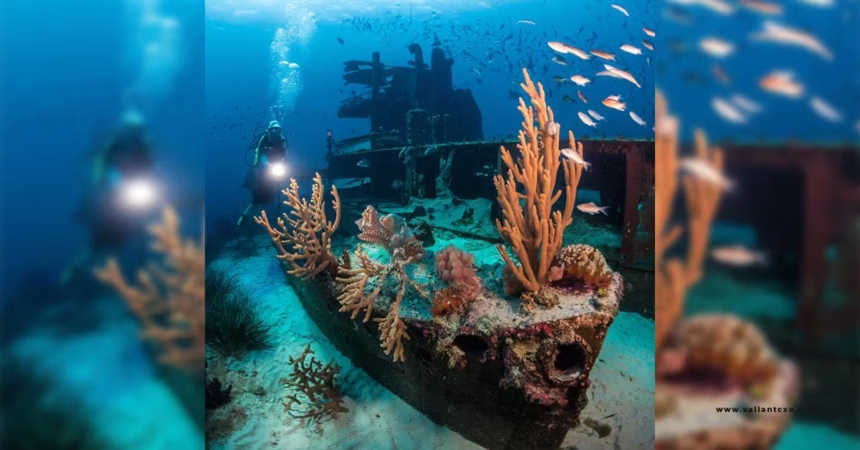
The HMCS Spitfire shipwreck discovery Great Barrier Reef story broke in November 2026, and if you love maritime history, this one’s a gut-punch of good news. Australian maritime archaeologists found the long-lost wreck of the nation’s first homegrown warship almost exactly 128 years to the day after it sank. That’s not a nice round number someone picked for a headline. That’s just how it happened.
Here’s the quick rundown before we go deep:
- What was found: The wreck of ex-HMCS Spitfire, Australia’s first purpose-built warship, located off Far North Queensland near Cape York.
- When: Discovered August 21, 2026 — 128 years to the day after it sank on August 20, 1898.
- Who found it: Australian National Maritime Museum archaeologists, Queensland heritage officials, and the crew of HMAS Diamantina.
- Why it matters: Spitfire is considered the genesis vessel of the modern Royal Australian Navy, built entirely from Australian timber.
- Current status: The site is now legally protected and largely still buried under the seabed.
Let’s unpack why a 16-metre wooden boat has naval historians this excited.
Why the HMCS Spitfire Shipwreck Discovery Great Barrier Reef Matters So Much
Think about it this way: every navy has an origin story. For Australia, Spitfire is practically chapter one.
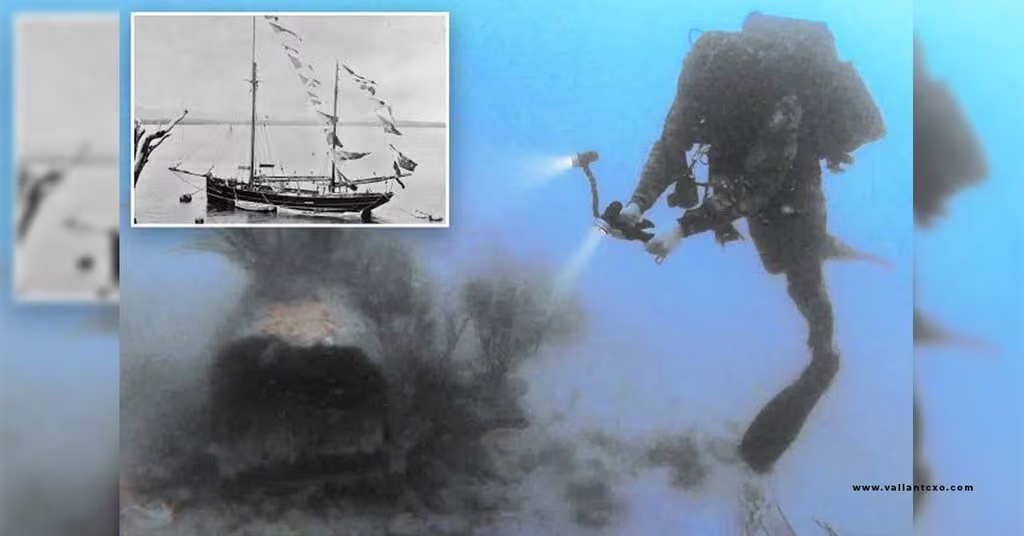
Launched in 1855 at John Cuthbert’s shipyard on Sydney’s Darling Harbour, Spitfire was the first warship ever built on Australian soil, using Australian timber. The New South Wales colonial government commissioned it during a jittery period — the Crimean War had Britain and Imperial Russia at each other’s throats, and colonial officials feared Russian raiders might show up off Sydney Heads.
That gun they planned to install? Never happened. Spitfire spent its career patrolling the NSW coast and ferrying supplies to lighthouses instead of firing a shot in anger.
Eventually it moved north to the fledgling Queensland colony, working as a pilot vessel and buoy tender in Moreton Bay. By 1885, the government sold it off. It became a private fishing boat, crewed largely by Aboriginal, Torres Strait Islander, and Pacific Islander mariners working the bêche-de-mer trade.
That’s a wild career arc for a little wooden ship — warship, lighthouse courier, fishing vessel.
The Night Spitfire Went Down
Forty-plus years is ancient for a 19th-century wooden hull. On August 20, 1898, a gale caught Spitfire off Lockhart River, near Cape York. The old planking couldn’t take it.
“It opened up some of the seams between the planks and it started to sink,” said Dr. James Hunter of the Australian National Maritime Museum.
The crew abandoned ship fast — too fast, actually, which matters later. They made it to a nearby island and were rescued by a passing Japanese steamship, the Omi Maru. Nobody died. Everybody survived. The ship, though, vanished into the Coral Sea and stayed lost for 128 years.
How Archaeologists Finally Pulled Off the HMCS Spitfire Shipwreck Discovery Great Barrier Reef
Here’s the thing about hunting old shipwrecks: historical records lie to you, or at least they’re vague enough to feel like lies. Different accounts placed Spitfire’s sinking in different spots, which made the search area enormous.
Celeste Jordan from Queensland’s Department of Environment, Tourism, Science and Innovation put it bluntly: “It is a needle in a haystack. I can’t express to you how easy it is to lose a ship and to lose an aircraft”.
The team had one advantage, though — the reef itself. Coral growth and calm, shallow lagoon conditions in parts of the Great Barrier Reef can actually protect old wrecks from being smashed apart by weather over the decades. The flip side? That same marine growth camouflages wrecks under a thick coat of coral and sponge, making them nearly invisible to the naked eye.
So how do you spot a 170-year-old hull wearing a reef as a disguise? You look for geometry nature doesn’t make.
“You just look for straight lines and very round things because straight lines and round things don’t appear in nature,” Jordan explained.
HMAS Diamantina, a Huon-class minehunter, ran sonar sweeps during a month-long expedition. Its sonar crew flagged an acoustic anomaly. Navy clearance divers went down to check it out — and on August 21, 2026, they confirmed it. Spitfire, found at last.
Spitfire by the Numbers: A Quick-Reference Snapshot
| Detail | Fact |
|---|---|
| Launched | 1855, Darling Harbour, Sydney |
| Builder | John Cuthbert’s shipyard |
| Length | Approx. 16 metres |
| Original purpose | Coastal patrol warship for NSW colonial government |
| Later roles | Lighthouse supply vessel, pilot boat, buoy tender, fishing boat |
| Sank | August 20, 1898, near Lockhart River, Cape York |
| Cause | Gale split hull seams; no casualties |
| Rediscovered | August 21, 2026, by ANMM, Qld DETSI, and HMAS Diamantina |
| Current status | Protected heritage site, mostly buried, further surveys planned for 2027 |
What Beginners Should Do If This Story Grabbed You
You don’t need a marine biology degree to follow along with discoveries like this. If this is your first deep dive into shipwreck archaeology, here’s a simple path forward.
- Start with the official record. Read the Department of Defence release and the Australian National Maritime Museum’s updates before chasing secondhand summaries — primary sources keep you accurate.
- Learn the protection rules. The wreck sits under the Underwater Cultural Heritage Act 2018, meaning it’s illegal to disturb, dive on without authorization, or remove artifacts from the site.
- Follow the museum, not just the news cycle. The Australian National Maritime Museum will likely publish research updates as the 2027 return expedition progresses.
- Understand the naming convention. “HMCS” here stands for Her Majesty’s Colonial Ship — not to be confused with the modern “HMAS” (Her Majesty’s/His Majesty’s Australian Ship) prefix used today.
- Respect the human story. Remember the crew — largely Aboriginal, Torres Strait Islander, and Pacific Islander mariners — this wasn’t just a naval curiosity, it was someone’s workplace and near-tragedy.
What I’d tell a student just getting into maritime history: don’t just memorize the dates. Follow the “why” behind the find — the sonar work, the archival sleuthing, the sheer luck of timing. That’s the actual craft of archaeology.
Common Mistakes & How to Fix Them
Even history buffs stumble on a few predictable things with this story. Let’s clear them up.
Mistake: Assuming “Great Barrier Reef” means divers can just go explore it. Fix: The site is protected under federal heritage law. Unauthorized diving or artifact removal carries real legal penalties. Treat it like the Smithsonian treats its archives — look, don’t touch.
Mistake: Confusing Spitfire with a combat casualty. Fix: Spitfire never fired its intended gun and sank decades later as a civilian fishing vessel, not in battle. The “warship” label refers to its original design and commission, not its final voyage.
Mistake: Thinking the wreck is fully excavated and documented already. Fix: Archaeologists have only measured exposed features like the stem post and a small boiler. Most of the hull remains buried. A return expedition is planned for 2027 to learn more.
Mistake: Overlooking the crew’s identity and story. Fix: The final crew were largely Aboriginal, Torres Strait Islander, and South Pacific Islander mariners — a detail that connects this wreck to broader Australian labor and maritime history, not just naval lore.
Key Takeaways
- The HMCS Spitfire shipwreck discovery Great Barrier Reef solves a 128-year historical mystery almost to the exact day.
- Spitfire was Australia’s first homegrown warship, built in Sydney in 1855 from Australian timber.
- It never saw combat — its career was patrol duty, lighthouse supply runs, and eventually private fishing work.
- The ship sank in a 1898 gale near Lockhart River, Cape York, with zero loss of life.
- HMAS Diamantina’s sonar team and Navy divers, working with the Australian National Maritime Museum and Queensland heritage officials, located the wreck in August 2026.
- The site is legally protected under the Underwater Cultural Heritage Act 2018.
- Much of the wreck remains buried, with a dedicated survey expedition planned for 2027.
- The crew’s Aboriginal, Torres Strait Islander, and Pacific Islander heritage adds a human layer often missing from “warship” headlines.
This wasn’t a lucky metal-detector sweep on a beach. It was month-long, methodical sonar work paired with old-fashioned archival digging — and it paid off in a way that even seasoned archaeologists called remarkable luck. If you’re tracking Australian maritime history, bookmark the Australian National Maritime Museum’s updates now, because the real story — what’s actually sitting under that reef sediment — is still being written.
FAQs
Is the HMCS Spitfire shipwreck discovery Great Barrier Reef site open to the public for diving?
No. The wreck is protected under the Underwater Cultural Heritage Act 2018, and unauthorized diving, salvage, or disturbance of the site is prohibited by Australian law.
Why did it take 128 years to find the Spitfire wreck?
Historical records gave conflicting accounts of where the ship sank, and heavy coral growth on the Great Barrier Reef disguised the wreck’s man-made shapes, making visual and even sonar detection extremely difficult until the 2026 expedition.
Was anyone killed when HMCS Spitfire sank?
No. The crew abandoned ship quickly after a gale opened seams in the aging hull, made it to a nearby island, and were rescued by the Japanese steamship Omi Maru — no fatalities were recorded.