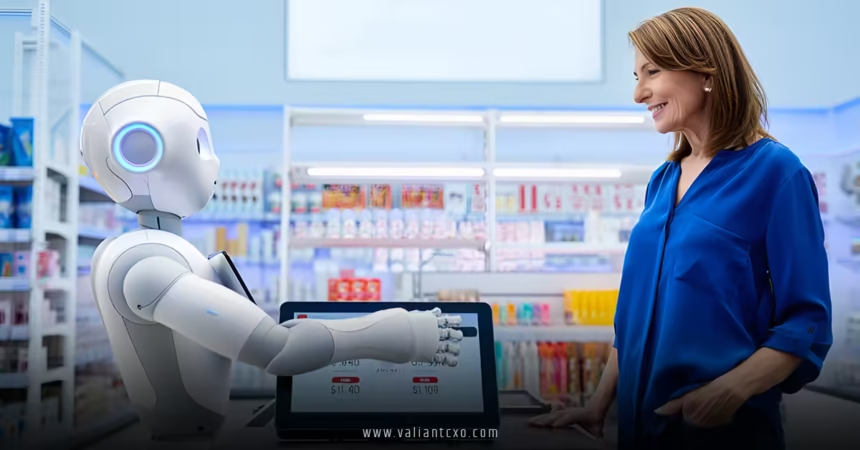
Automation in Retail & Hospitality: The New Era of Robotic Service and Cashierless Transactions is transforming how we shop, dine, and experience service. Imagine walking into a store, grabbing what you need, and walking out without ever pulling out your wallet. Or picture a robot serving your coffee with precision while you relax in a hotel lobby. This isn’t sci-fi—it’s happening now, and it’s reshaping industries at lightning speed. From robotic baristas to cashierless checkouts, automation is redefining efficiency and customer experience. Let’s dive into this exciting new world, exploring what it means, how it works, and why it’s here to stay.
What Is Automation in Retail & Hospitality?
Automation in Retail & Hospitality: The New Era of Robotic Service and Cashierless Transactions refers to the integration of advanced technologies like robotics, artificial intelligence (AI), and machine learning to streamline operations and enhance customer interactions. Think of it like a well-oiled machine: tasks once done by humans—stocking shelves, taking orders, or processing payments—are now handled by smart systems or robots. These innovations cut costs, reduce errors, and create seamless experiences for customers.
Retail automation might include self-checkout kiosks or Amazon’s Just Walk Out technology, while hospitality sees robotic concierges or automated food prep in fast-casual restaurants. The goal? To make businesses faster, smarter, and more customer-focused. But how did we get here, and what’s driving this shift?
The Evolution of Automation in Retail & Hospitality
The roots of Automation in Retail & Hospitality: The New Era of Robotic Service and Cashierless Transactions trace back to early self-service models, like vending machines or ATMs. Fast forward to the 21st century, and technologies like AI, IoT (Internet of Things), and cloud computing have supercharged these systems. Retail giants like Walmart and Amazon have pioneered cashierless stores, while hotels like Hilton experiment with robotic staff to handle repetitive tasks.
Why the surge? Consumers crave convenience, and businesses want efficiency. The global pandemic also played a role, pushing contactless solutions to the forefront. According to McKinsey & Company, automation adoption in retail grew by 20% from 2020 to 2022, driven by labor shortages and rising costs. This is no passing trend—it’s a revolution.
How Does Automation Work in Retail?
Automation in Retail & Hospitality: The New Era of Robotic Service and Cashierless Transactions relies on a cocktail of cutting-edge tech. Let’s break it down with a focus on retail.
Cashierless Transactions: The Game-Changer
Ever walked into a store and wished you could skip the checkout line? Cashierless systems make that dream a reality. Technologies like Amazon’s Just Walk Out use cameras, sensors, and AI to track what you pick up. Your account is charged automatically when you leave—no scanning, no lines. It’s like magic, but it’s really just clever tech.
Here’s how it works: Sensors detect items removed from shelves, AI algorithms identify them, and cloud-based systems link purchases to your account. Retailers like Amazon Go have rolled this out in dozens of stores, with competitors like Zippin and Grabango following suit. The result? Faster shopping and happier customers.
Robotic Service in Retail
Robots aren’t just for factories anymore. In retail, they’re stocking shelves, guiding customers, and even cleaning floors. Take Walmart’s Bossa Nova robots, which roam aisles to check inventory levels. These bots use cameras and AI to spot empty shelves or misplaced items, freeing up human staff for more complex tasks. It’s like having a super-efficient assistant who never takes a coffee break.
Retail robots also enhance customer service. Imagine a robot greeting you at a store, answering questions, or guiding you to the exact aisle for your favorite cereal. Chains like Lowe’s have tested such bots, boosting both efficiency and customer satisfaction.
Automation in Hospitality: A New Guest Experience
Automation in Retail & Hospitality: The New Era of Robotic Service and Cashierless Transactions isn’t just for stores—it’s making waves in hotels, restaurants, and cafes. Let’s explore how.
Robotic Service in Hotels
Picture checking into a hotel and being greeted by a sleek robot concierge. Hotels like the Henn-na Hotel in Japan have embraced robotic staff for check-ins, luggage handling, and even room service. These robots use AI to understand guest requests, offering a futuristic yet practical experience.
Automation also streamlines back-end operations. Automated systems manage bookings, room assignments, and even energy usage, cutting costs and improving efficiency. For guests, this means faster service and fewer hiccups. Who wouldn’t want a hassle-free hotel stay?
Automated Food Service
Restaurants are jumping on the automation bandwagon too. Fast-casual chains like Sweetgreen use robotic kitchens to prep salads with precision, while cafes deploy robotic baristas for consistent coffee pours. These systems reduce wait times and ensure every order is spot-on. Ever wonder why your latte tastes perfect every time at an automated cafe? That’s the power of Automation in Retail & Hospitality: The New Era of Robotic Service and Cashierless Transactions.
Cashierless transactions are also popping up in restaurants. Apps like Starbucks’ mobile order system let you pay and pick up without interacting with a cashier. It’s quick, contactless, and oh-so-convenient.
Benefits of Automation in Retail & Hospitality
Why is Automation in Retail & Hospitality: The New Era of Robotic Service and Cashierless Transactions taking off? The benefits are hard to ignore.
Efficiency and Cost Savings
Automation slashes labor costs by reducing the need for human staff in repetitive roles. Robots don’t need breaks, and cashierless systems eliminate long queues. A Forbes article notes that retailers adopting automation can cut operational costs by up to 15%. That’s money back in the business to invest in growth or better customer experiences.
Enhanced Customer Experience
Customers love speed and convenience. Automation delivers both. Whether it’s a robot delivering room service or a cashierless checkout, these systems make interactions smoother. Plus, they reduce human error—your order is less likely to get messed up when a machine’s in charge.
Scalability and Adaptability
Automated systems are built to scale. A single AI platform can manage multiple stores or hotels, adapting to demand spikes or new locations. This flexibility is a game-changer for businesses looking to expand without breaking the bank.
Challenges of Automation in Retail & Hospitality
No revolution comes without hurdles. Automation in Retail & Hospitality: The New Era of Robotic Service and Cashierless Transactions faces a few.
High Initial Costs
Setting up robotic systems or cashierless tech isn’t cheap. Sensors, cameras, and AI software require significant investment. Small businesses, in particular, may struggle to afford the upfront costs, even if the long-term savings are substantial.
Job Displacement Concerns
What happens to cashiers or hotel staff when robots take over? Job displacement is a real concern. While automation creates new roles (like tech maintenance), it can disrupt traditional jobs. Businesses must balance efficiency with social responsibility, perhaps by retraining workers for new roles.
Technical Glitches and Privacy Issues
Tech isn’t perfect. A glitch in a cashierless system could overcharge customers, and robots can malfunction. Privacy is another worry—cameras tracking your every move in a store can feel invasive. Companies must prioritize robust systems and transparent data policies to build trust.
The Future of Automation in Retail & Hospitality
Where is Automation in Retail & Hospitality: The New Era of Robotic Service and Cashierless Transactions headed? The future looks bright—and a little futuristic.
AI-Driven Personalization
AI is getting smarter, enabling hyper-personalized experiences. Imagine a store that suggests products based on your shopping history or a hotel that adjusts room settings to your preferences. Automation will make every interaction feel tailor-made.
Wider Adoption Across Industries
As costs drop, smaller businesses will embrace automation. From corner stores to boutique hotels, expect to see more robots and cashierless systems. The tech is becoming more accessible, leveling the playing field.
Integration with Other Technologies
Automation doesn’t work alone. It’s teaming up with augmented reality (AR), virtual reality (VR), and blockchain for even cooler applications. Picture trying on clothes virtually in a cashierless store or using blockchain for secure, automated hotel bookings.
Conclusion
Automation in Retail & Hospitality: The New Era of Robotic Service and Cashierless Transactions is more than a trend—it’s a transformation. From cashierless checkouts to robotic concierges, these technologies are making businesses faster, smarter, and more customer-friendly. Sure, there are challenges, like high costs and job concerns, but the benefits—efficiency, scalability, and enhanced experiences—are undeniable. As AI and robotics evolve, this new era will only get more exciting. So, next time you grab a coffee from a robotic barista or breeze through a cashierless store, take a moment to appreciate the tech making it happen. The future is here—embrace it!
FAQs
1. What is Automation in Retail & Hospitality: The New Era of Robotic Service and Cashierless Transactions?
It’s the use of robotics, AI, and other tech to streamline tasks like checkouts, inventory management, and customer service in retail and hospitality, creating faster and more efficient experiences.
2. How do cashierless transactions work in retail?
Cashierless systems use cameras, sensors, and AI to track items you pick up in a store. When you leave, your account is automatically charged, eliminating the need for traditional checkouts.
3. Are robots replacing human workers in hospitality?
Not entirely. Automation in Retail & Hospitality: The New Era of Robotic Service and Cashierless Transactions handles repetitive tasks, but humans are still crucial for complex roles. Retraining can help workers adapt.
4. What are the main benefits of automation in these industries?
Automation boosts efficiency, cuts costs, and enhances customer experiences by reducing wait times and errors. It also allows businesses to scale operations easily.
5. Is Automation in Retail & Hospitality: The New Era of Robotic Service and Cashierless Transactions secure?
While generally secure, these systems must address privacy concerns, like data collection from cameras. Trusted companies use encryption and transparent policies to protect customers.
Read More:valiantcxo.com