AI-powered virtual power plants 2026 are stepping up as one of the smartest, fastest ways to keep the lights on amid exploding energy demands. Picture this: thousands of home solar panels, backyard batteries, electric cars, and even smart thermostats teaming up like a digital orchestra—no giant smokestack required. They act as one massive, flexible power source that utilities can tap into instantly. In 2026, with AI data centers and EVs pushing grids to their limits, these AI-powered virtual power plants 2026 aren’t just nice-to-have; they’re becoming essential for affordable, reliable electricity.
Hey, if you’ve noticed your power bill creeping up or heard about blackouts during heatwaves, you’re not alone. Traditional grids struggle with unpredictable renewables and sudden spikes. That’s where AI-powered virtual power plants 2026 shine—they use artificial intelligence to predict, coordinate, and optimize distributed energy resources (DERs) in real time. This year marks a real inflection point, as scaling VPPs helps bridge the gap between soaring demand and slow infrastructure builds.
Understanding AI-Powered Virtual Power Plants in 2026
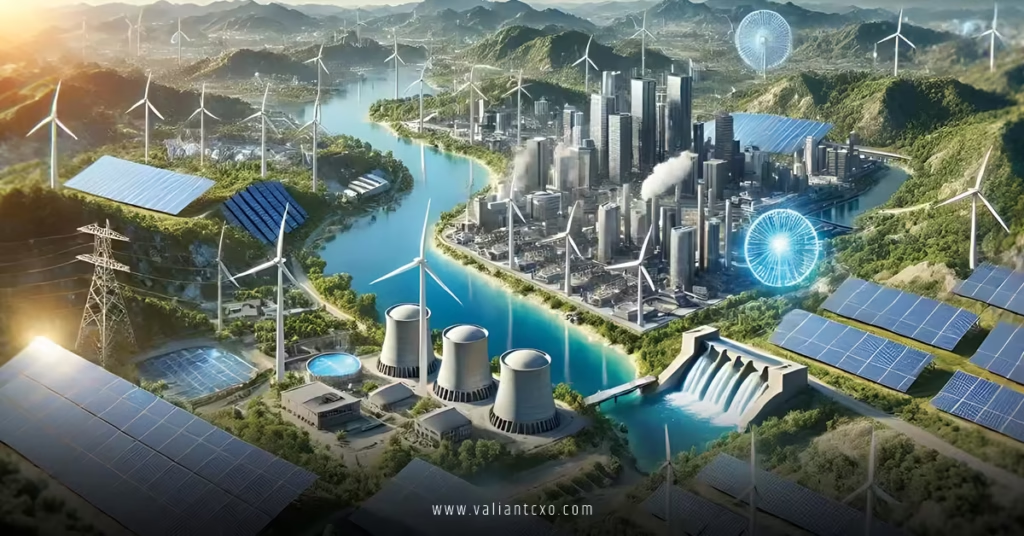
So, what exactly makes a VPP “AI-powered” in 2026? At its heart, a virtual power plant aggregates scattered resources—rooftop solar, home batteries like Tesla Powerwalls, EV chargers, smart appliances—into a unified, dispatchable asset. AI takes it to the next level by adding brains to the operation.
Machine learning algorithms forecast solar output based on weather, predict household demand patterns, and even anticipate grid stress. Reinforcement learning lets the system “learn” optimal dispatch strategies through simulations, rewarding actions that stabilize frequency or cut costs. Deep learning handles massive datasets from sensors, enabling precise, millisecond-level decisions.
In 2026, platforms like Lunar Energy’s Gridshare or similar AI-driven tools manage hundreds of megawatts across states, turning everyday devices into grid heroes. It’s like upgrading from a basic remote control to a fully autonomous drone swarm—coordinated, adaptive, and incredibly efficient.
Why 2026 Is the Breakthrough Year for AI-Powered Virtual Power Plants
This isn’t hype; 2026 feels decisive. AI-driven data centers are gobbling electricity—projections show demand doubling or more by 2030. Utilities face pressure to connect these loads quickly without endless transmission lines.
AI-powered virtual power plants 2026 offer a shortcut: unlock hidden capacity in existing homes and businesses. Reports highlight VPPs scaling to hundreds of MW, with companies raising big funding rounds to expand. States roll out incentives—rebates for VPP participation—and regulators push for faster DER aggregation in wholesale markets.
The result? VPPs shift from pilots to utility-scale reality, cushioning customers from price spikes and deferring costly new plants. It’s the fastest, lowest-risk fix when grids can’t wait years for hardware.
Core Technologies Driving AI-Powered Virtual Power Plants 2026
Several breakthroughs fuel this surge.
Advanced Forecasting and Optimization
AI crunches weather, historical usage, and real-time IoT data for hyper-accurate predictions. This minimizes imbalances and maximizes renewable use—critical when solar drops suddenly.
Real-Time Aggregation and Dispatch
Software platforms use edge computing and cloud AI to orchestrate thousands of devices. During peaks, the VPP curbs EV charging or discharges batteries autonomously, acting like a giant peaker plant without emissions.
Market Participation and Bidding
AI handles complex energy markets—bidding into day-ahead or ancillary services. Reinforcement learning optimizes revenue, turning participant batteries into income sources.
Integration with Broader Grid Intelligence
Here’s a key link: many AI-powered virtual power plants 2026 feed into larger systems like AI-driven autonomous power grid predictive control 2026. VPPs provide the distributed flexibility that predictive grid controls need to balance supply and demand proactively, creating a smarter, self-healing network.
Real-World Benefits of AI-Powered Virtual Power Plants 2026
The payoffs are tangible and exciting.
- Grid Resilience — During storms or heat domes, VPPs reroute power locally, reducing outage risks.
- Cost Savings — Utilities avoid expensive peakers; participants earn from demand response. One analysis shows VPPs could save billions in infrastructure.
- Renewable Integration — AI maximizes solar and wind by storing excess and releasing when needed.
- Customer Empowerment — Homeowners monetize batteries or EVs, lowering bills while supporting the community.
- Sustainability Boost — More clean energy without new fossil plants.
In places like California or New England, VPPs already deliver MW-scale flexibility, proving the model works at scale.
Challenges Facing AI-Powered Virtual Power Plants 2026
Nothing’s perfect. Cybersecurity remains a concern—hacking a VPP could disrupt thousands. Data privacy worries participants sharing usage info.
Regulatory hurdles slow things: not all markets fully compensate VPPs, and interconnection rules lag. Scaling requires massive coordination—utilities, aggregators, and customers aligning.
Yet, progress is rapid. Investments in DERMS (distributed energy resource management systems) and policy pushes address these, paving smoother paths.
The Future of AI-Powered Virtual Power Plants Beyond 2026
Looking ahead, expect even more autonomy. VPPs could evolve into fully agentic systems, negotiating energy trades peer-to-peer. Private VPPs sponsored by data centers might emerge, accelerating connections.
Market forecasts show explosive growth—some predict the sector jumping from billions today to tens of billions by the mid-2030s, driven by AI enhancements.
Tied closely to AI-driven autonomous power grid predictive control 2026, these VPPs form the flexible foundation for predictive, self-optimizing grids. Together, they promise cheaper, greener, more reliable power.
Conclusion
AI-powered virtual power plants 2026 represent a thrilling shift—turning passive consumers into active grid partners. By harnessing AI to aggregate and optimize DERs, they tackle rising demand, integrate renewables, and keep costs down. No longer experimental, VPPs are scaling fast, offering immediate value in a strained energy world.
Whether you’re a homeowner eyeing a battery rebate or a utility planner facing load growth, this tech delivers real solutions. The grid of tomorrow is distributed, intelligent, and powered by communities. Dive in—the future’s already plugging in.
Here are some quick FAQs to wrap things up.
For deeper reading, explore these trusted sources:
- U.S. Department of Energy on Virtual Power Plants
- RMI Report: How Virtual Power Plants Can Help Win the AI Race
- Utility Dive on VPP Scaling in 2026
FAQs
What exactly are AI-powered virtual power plants 2026?
They’re networks of distributed resources like solar, batteries, and EVs, coordinated by AI to function as a single, flexible power plant for grid support and optimization.
How do AI-powered virtual power plants 2026 help with rising electricity demand from AI data centers?
They unlock quick, flexible capacity to shave peaks, defer infrastructure, and provide affordable power without long construction timelines.
What role does AI play in virtual power plants in 2026?
AI handles forecasting, real-time dispatch, market bidding, and optimization, making VPPs reliable and profitable at scale.
Can homeowners participate in AI-powered virtual power plants 2026?
Yes—many programs reward solar-plus-storage owners or EV users for allowing grid control during events, often with bill credits or payments.
How do AI-powered virtual power plants 2026 connect to AI-driven autonomous power grid predictive control 2026?
VPPs supply the distributed flexibility that predictive controls use to anticipate and balance grid needs autonomously for greater stability.