
Airline-Style Crisis Playbook for Business Owners :
If you run a business, you already know one hard truth: problems do not ask for permission before showing up. A supplier misses a deadline, a product breaks, a key team member is unavailable, or a customer issue starts spreading online. When that happens, the businesses that stay calm and communicate clearly usually recover faster.
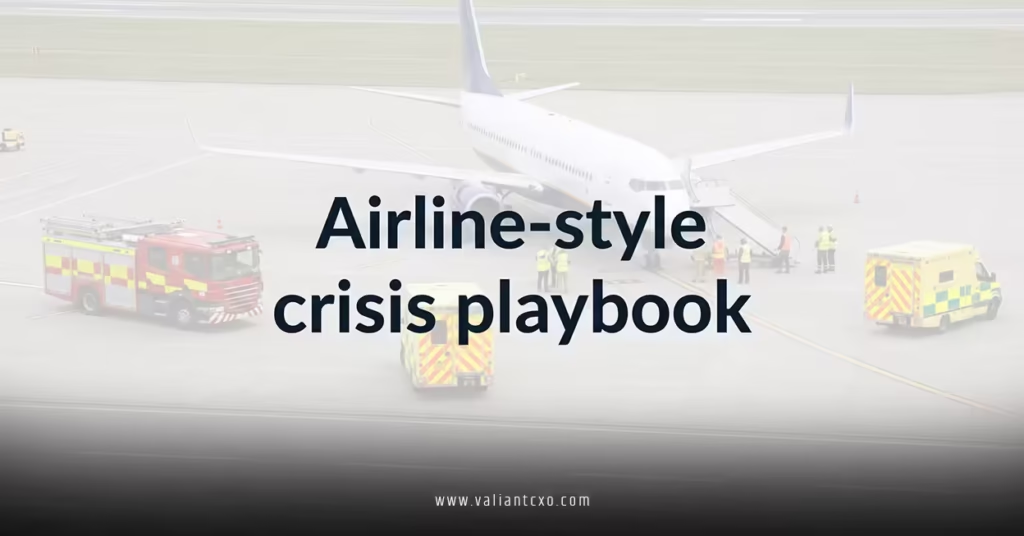
That is exactly why an airline-style crisis playbook is so useful. Airlines have to make fast decisions, keep people informed, and protect trust under pressure. We can learn a lot from that mindset, especially when looking at events like Virgin Atlantic VS135 Heathrow to Orlando turned back July 13 2026, where safety, communication, and response all matter at once.
What an airline-style crisis playbook really means
An airline-style crisis playbook is a simple set of steps your business follows when something goes wrong. It is not about sounding dramatic. It is about being ready.
Airlines do not wait until a problem becomes a disaster before they act. They have checklists, clear roles, and backup plans. That same thinking helps your business handle customer complaints, service outages, delivery failures, and reputational issues without panic.
For entrepreneurs, the goal is straightforward: reduce confusion, protect trust, and get back to normal as quickly as possible.
Why every business needs one
Most small and mid-sized businesses think crisis planning is only for big brands. That is a mistake. Smaller businesses often feel disruption more sharply because they have fewer staff, less spare capacity, and tighter margins.
A good crisis playbook helps you:
- respond faster
- avoid mixed messages
- protect your reputation
- support your team under pressure
- keep customers from feeling ignored
If you have ever watched a brand stumble through a public issue because nobody knew who should speak or what should be said, you already know the cost of not planning ahead.
The core parts of a strong crisis playbook
A useful playbook does not need to be complicated. It just needs to be clear and usable when people are stressed.
1. Define what counts as a crisis
Not every issue needs an emergency response. But some situations do. Decide in advance what triggers your playbook.
That might include:
- a major service outage
- a product safety issue
- a data breach
- a public complaint going viral
- a serious operational failure
When you define the triggers early, your team will not waste time debating whether the issue is serious enough.
2. Assign clear roles
In a crisis, confusion is expensive. Everyone should know who leads, who speaks to customers, who handles internal updates, and who monitors the situation.
A simple structure may include:
- one decision-maker
- one customer communication lead
- one operations lead
- one person tracking media or social response
This avoids crossed wires and keeps the response moving.
3. Prepare your message templates
You do not want to write from scratch when pressure is high. Prepare short message templates for email, social media, internal updates, and customer support.
Good crisis messages usually include:
- what happened
- what you know so far
- what you are doing now
- when the next update will come
The tone should be calm, honest, and human. People forgive problems faster than they forgive silence.
4. Build a decision timeline
Every crisis needs timing. You may not know every answer immediately, but you should know when the next decision point comes.
For example:
- first internal alert within minutes
- customer update within the hour
- leadership review within the day
- follow-up communication after the fix
This keeps your response moving and stops issues from dragging on.
What entrepreneurs can learn from airlines
Airlines are built around planning, repetition, and discipline. They train for the unexpected because they know surprises are part of the job. That is a mindset business owners can borrow.
When we look at Virgin Atlantic VS135 Heathrow to Orlando turned back July 13 2026, the important lesson is not the event itself. It is the reminder that tough calls must be made quickly, and communication must stay clear.
Your business may not carry passengers through the sky, but you still carry expectations. If a project fails or a service is interrupted, people want to know three things: what happened, what you are doing, and what happens next.
How to use this playbook in your own business
You do not need a large team to get started. Begin with a simple one-page document and make it part of your routine.
A practical first version could include:
- your crisis trigger list
- who is responsible for what
- draft customer and staff messages
- your approval chain
- your backup contact list
- your escalation steps
Then test it. Walk through a fake scenario with your team. See where people hesitate. Fix the gaps before a real issue happens.
This is one of the easiest ways to build resilience without spending a lot of money.
Final thought
An airline-style crisis playbook is really about discipline, not drama. It helps you act quickly, speak clearly, and protect trust when the pressure is on. That is valuable whether you run an airline, a startup, a retail brand, or a service business.
If you want your business to handle stress like a strong airline team, start planning now. The best time to build your playbook is before you need it.