
Business travel can be one of the most valuable parts of growing your company—but it can also be one of the most unpredictable and expensive. Flights get delayed, hotels get overbooked, meetings move, and suddenly your travel costs and stress levels are both climbing.
That’s where a clear business travel policy template becomes your best friend. Instead of handling every trip and every problem on the fly, you give your team a simple set of rules: what’s allowed, what’s reimbursed, and how to handle surprises. You protect your cash flow, your time, and your people—all at once.
In this article, we’re going to be taking a look at how to build and use a business travel policy template, and how you can keep your travel costs under control without killing flexibility. If you would like to find out more, feel free to read on.
Pic – CC0 License
Why Your Business Needs a Travel Policy
If you only travel once or twice a year, you can probably “wing it.” But once you or your team are flying regularly for meetings, conferences, or site visits, the risks and costs go up quickly.
Without a business travel policy template, you’ll often see:
- People booking last‑minute, expensive flights.
- Confusion over hotel standards, transport options, and what’s reimbursable.
- Missed opportunities to claim refunds or compensation after disruption.
- Stress when something goes wrong and nobody knows the process.
A simple policy isn’t about control for control’s sake. It’s about making sure your team knows how to travel on behalf of the business, with clarity and confidence.
What Your Business Travel Policy Template Should Cover
A good business travel policy template doesn’t need to be fancy. It just needs to be clear and easy to follow. At a minimum, you’ll want sections that cover:
Booking Rules
Set guidelines for:
- When to book (e.g., aim for at least 14–21 days in advance to get better fares).
- Preferred booking channels (internal admin, approved agency, or company travel platform).
- Class of travel (economy, premium economy, or business class, and when each is allowed).
This helps you manage costs and avoid surprise bills.
Accommodation Standards
Spell out:
- Typical nightly budget ranges by city or region.
- Approved hotel types (business hotels vs. luxury stays).
- Rules for extras like room service, laundry, and mini‑bar.
Your business travel policy template should make it clear what’s considered reasonable and what won’t be reimbursed.
Transport and Ground Travel
Give simple rules for:
- When to use taxis, ride‑sharing, or public transport.
- When car rental is allowed, and what level of car is acceptable.
- How to handle airport transfers and local travel at the destination.
This keeps everyone travelling safely and sensibly without guesswork.
Expenses and Reimbursement
This part is key for both your team and your finance function. Include:
- What counts as approved expenses (meals, Wi‑Fi, work‑related calls, etc.).
- Daily meal limits or per‑diem rates.
- The process for submitting receipts and claims—where, when, and in what format.
The goal is to reduce friction and disputes. When the rules are clear, people feel more comfortable spending what’s needed and not more.
Travel Safety and Duty of Care
As a business owner, you have a responsibility to your people when they travel.
Your business travel policy template should address:
- Emergency contacts and who to reach out to if something goes wrong.
- Rules for high‑risk destinations or late‑night arrivals.
- Whether you provide travel insurance and what it covers.
- Guidelines on health, including any required vaccinations or basic precautions.
You don’t need a legal textbook here, just clear, practical steps that show your team you’ve thought about their wellbeing, not just costs.
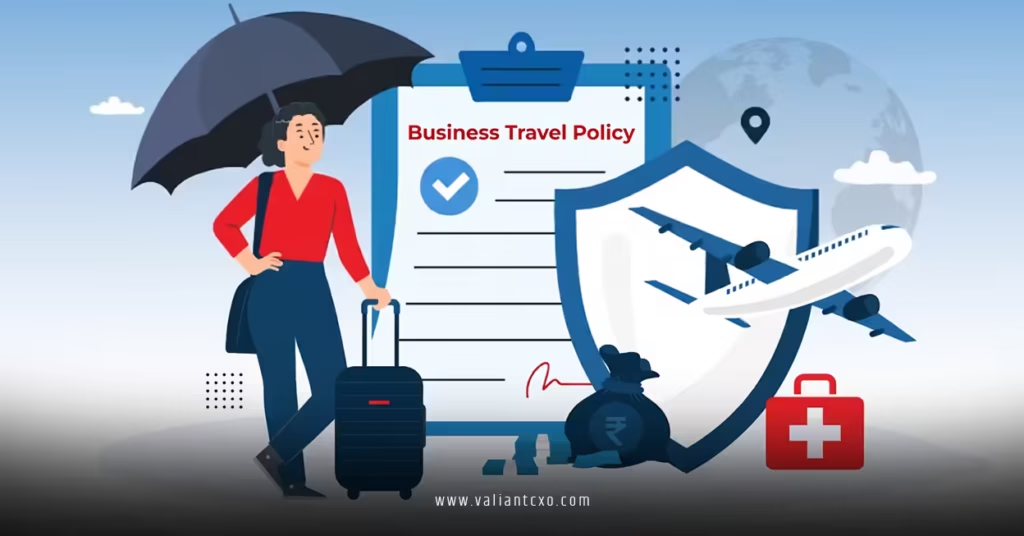
Handling Flight Delays, Cancellations, and Changes
Travel disruption is a fact of life. The smart move is to plan for it.
Add a simple section to your business travel policy template that explains:
- What to do if a flight is cancelled (who to call, refund vs rebook, approved hotel budget).
- How to handle long delays (meal allowances, working from the airport, rescheduling meetings).
- The process for claiming airline compensation or refunds, with a note that:
- In places like the UK and EU, there may be strong rights to compensation.
- In the USA, Australia, Singapore, and Dubai, rules depend more on airline policies and local law.
You don’t need to list every country’s law, but you should set a standard: document what happened, keep receipts, and report disruptions so your business can follow up.
Setting Approval and Decision Rules
To avoid bottlenecks and confusion, your business travel policy template should make it clear:
- Who approves travel (founder, manager, or operations).
- When self‑booking is allowed and what limits apply.
- When exceptions can be made—for example, last‑minute business class on a red‑eye flight after a full day of meetings.
The idea is not to micromanage, but to create a simple chain of decisions that keeps everyone aligned.
Rolling Out Your Business Travel Policy Template
Once you’ve designed your business travel policy template, you need to bring it to life.
Here’s a simple way to do that:
- Keep it short and readable
Aim for a one‑ to three‑page document. No dense legal talk. - Share it with your team
Walk through it in a short meeting or Loom recording. Explain the “why,” not just the “rules.” - Embed it in your travel tools
If you use a booking tool or agency, give them the policy so they can help keep trips within the guidelines. - Review it once a year
Travel costs change. Your business evolves. Revisit the policy annually and tweak what no longer makes sense.
By treating your business travel policy template as a living document, you keep it useful instead of letting it gather dust.
How This Helps Your Bottom Line
A lot of founders assume a travel policy will just add admin and slow things down. In reality, it usually does the opposite.
With a clear business travel policy template:
- Your team spends less time asking “Is this okay?” and more time focusing on the actual trip.
- You get more predictable travel costs, which helps with budgeting and cash flow.
- You reduce last‑minute panic and avoid paying premium prices where you don’t need to.
- You’re better positioned to recover refunds and compensation when flights or bookings go wrong.
In short, you turn travel from a messy cost centre into a managed investment in growth.
Bringing It All Together
We hope that you have found this article enlightening in some way, and that you now see a business travel policy template as a simple, practical tool—not paperwork for the sake of it. As your company grows, having clear rules around flights, hotels, expenses, and safety will save you time, money, and stress.
The next step is easy: take 30–60 minutes to draft your own basic business travel policy template, share it with your team, and commit to updating it as you learn. Treat business travel like any other part of your operation: give it a structure, keep it lean, and let it support your growth instead of holding you back.