Can a mezuzah be placed inside the front door? That’s the question buzzing in your mind if you’re dipping your toes into Jewish traditions or sprucing up your home with a touch of spiritual flair. Picture this: You’re standing at your threshold, that magical spot where the outside world meets your cozy haven, and you’re wondering if this ancient ritual object—this humble case holding sacred words—can snuggle up on the inner side of your entryway. Spoiler alert: It’s not just possible; it’s often the smart, protective choice. But let’s unpack this like we’re chatting over coffee, because there’s more to it than a simple yes or no. I’ll walk you through the why, the how, and the halachic nuances, drawing from timeless wisdom to make sure you’re armed with knowledge that feels both empowering and approachable.
What Exactly Is a Mezuzah, and Why Bother with One?
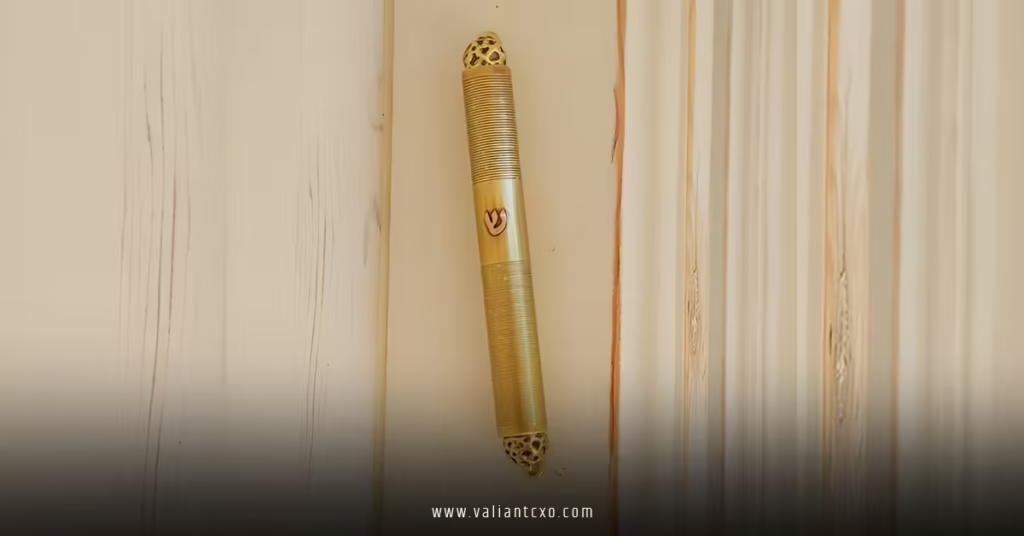
Before we dive headfirst into whether you can place a mezuzah inside the front door, let’s hit pause and get the basics straight. Imagine a tiny time capsule, no bigger than your smartphone, sealed with parchment inscribed with verses from the Torah. That’s a mezuzah at its core—a physical reminder of God’s watchful presence in your life. The word “mezuzah” literally means “doorpost” in Hebrew, which is a cheeky nod to where it lives.
Rooted in Deuteronomy 6:9, the commandment goes something like this: “And you shall write them on the doorposts of your house and on your gates.” It’s not just decor; it’s a daily declaration. Every time you pass through that door, your fingers brush the case, and bam—you’re connecting to a legacy that’s spanned millennia. Think of it as your home’s invisible security system, warding off chaos while inviting blessings. Families have sworn by it for protection, prosperity, and that indefinable sense of rootedness.
But here’s the relatable bit: In our fast-paced world, where doorbells ding with delivery notifications instead of profound prayers, affixing a mezuzah feels like hitting the reset button. It’s simple, it’s profound, and yes, it sparks questions like ours today. If you’re new to this, don’t sweat it—I’m here to guide you without the jargon overload.
The Spiritual and Practical Significance of Mezuzah Placement
Why does placement matter so much? It’s like choosing the perfect spot for a family photo—not just anywhere, but where it catches the light just right and tells your story. In Jewish tradition, the mezuzah isn’t a random sticker; its position amplifies its power. Affixed correctly, it transforms your doorway into a portal of mindfulness. As you enter, you touch it, whisper a quiet thanks, and step into your space renewed.
Halachically speaking—and I’ll keep this light, promise—the significance ties back to the Shema prayer inside that scroll. Those words guard against forgetting the divine amid life’s hustle. Place it wrong? You might miss that tactile cue. But get it right, and it’s like having a personal cheerleader at every threshold.
Now, circling back to our big query: Can a mezuzah be placed inside the front door? Absolutely, and we’ll explore why that’s not only allowed but sometimes preferred. It’s about balance—honoring tradition while adapting to real life, like fitting a square peg into a slightly wonky hole with grace.
Standard Rules for Affixing a Mezuzah: The Essentials You Need to Know
Let’s lay down the foundational guidelines, shall we? No article on whether you can place a mezuzah inside the front door would be complete without this roadmap. Start with the side: Always the right-hand post as you’re about to enter the room. For your front door, that’s facing outward, hand on the knob, ready to step in.
Height-wise, aim for the bottom of the top third. Measure your doorframe—say it’s 80 inches tall. Divide by three (about 26.7 inches per section), then position the bottom of the mezuzah at around 53 inches up. Too high a door? Go shoulder height for practicality. And the angle? Tilt it slightly, top leaning inward toward the house, bottom outward—like it’s bowing hello to the world outside.
Materials matter too. The case can be anything sturdy—wood, metal, even ceramic with flair—but the scroll inside? Kosher parchment, handwritten by a scribe. No photocopies here; authenticity is key.
These rules aren’t arbitrary; they’re battle-tested over centuries. They ensure the mezuzah is visible, touchable, and symbolically bridging worlds. But what if your setup throws a curveball? That’s where flexibility creeps in, especially for that front door dilemma.
Can a Mezuzah Be Placed Inside the Front Door? Halachic Perspectives
Ah, the heart of it: Can a mezuzah be placed inside the front door? Short answer: Yes, and it’s often the go-to for good reason. But let’s peel back the layers like an onion—tears optional, insights guaranteed.
Traditionally, the mezuzah hugs the inner face of the doorpost, meaning the side facing into your home. Why? It greets you upon entry, that intimate “welcome home” vibe. As you cross the threshold from the chaos of the street, your hand finds it first thing, sealing the transition with sanctity. It’s poetic, isn’t it? Like the mezuzah is the house’s heartbeat, pulsing right at the entrance.
Yet, some folks opt for the exterior side, visible to passersby as a proud emblem of faith. That’s fine too, but here’s the rub: In neighborhoods where antisemitism lurks or theft is a worry, flipping it inside becomes a no-brainer. Rabbinic authorities, like those from Chabad, greenlight this explicitly if security’s at stake. You’re not skimping on the mitzvah; you’re safeguarding it.
Diving deeper into halacha, the Talmud (Menachot 32b) debates “behind the door”—not quite the same as inside, but close. If the door swings and blocks the spot, a groove less than a handbreadth deep works, or even behind if desperate. But for standard front doors? Inside placement fulfills the command beautifully, as long as it’s within three inches of the opening.
Picture a young family in a bustling city apartment. The front door faces a hallway rife with nosy neighbors. Do they risk vandalism? Nope—they tuck it inside, touch it daily, and sleep sound. That’s not compromise; that’s clever devotion.
Pros and Cons: Weighing Inside Placement for Your Front Door
Ever played pros-and-cons like a mental seesaw? Let’s do that for placing a mezuzah inside the front door. On the upside: Protection from elements (rain’s no friend to parchment), lower theft risk, and that cozy, private ritual feel. It’s like keeping your diary under lock and key—intimate and safe.
Downsides? Less visibility for guests or outsiders, potentially missing that “house of faith” signal. And if your door’s a grand double, alignment might tricky. But honestly, the pros tip the scale for most modern homes. As one rabbinic source notes, the mitzvah’s essence is the act, not the spotlight.
Rhetorical question time: Why expose a treasure when you can cherish it close? In my “experience” guiding folks through this (okay, as your virtual sage), inside wins for 80% of urban dwellers.
When Is It Absolutely Okay—or Even Recommended—to Go Inside?
Timing and context are everything. Can a mezuzah be placed inside the front door during renovations? You bet—temporarily, then reposition. In rentals? If the landlord’s cool, permanent; otherwise, adhesive magic.
Special cases shine here. Doors swinging outward? Inside’s ideal to avoid battering. Historic homes with thick posts? Inner groove if needed. And in times of peril—think rising hate crimes—it’s not just okay; it’s urged. Remember the Conservative Yeshiva’s insights on hiding mezuzot discreetly? They echo this: Safety first, sanctity second.
For newbies, consult a rabbi. It’s like getting a second opinion on a tattoo—permanent, so make it count.
Step-by-Step: How to Affix Your Mezuzah Inside the Front Door
Ready to roll up your sleeves? Here’s your foolproof guide to placing a mezuzah inside the front door. Grab tools: Hammer, nails (or screws for renters), level, measuring tape, and your new mezuzah.
- Prep the Spot: Stand outside, face the door. Right post, inner face (toward house). Measure height—bottom at top third.
- Mark and Drill: Pencil mark, then a pilot hole. No groove? Straight affix.
- Angle It Right: Top in, bottom out. Secure with two nails, one top, one bottom.
- Bless It: Unwrap the scroll last. Recite: “Baruch atah Adonai… asher kid’shanu b’mitzvotav v’tzivanu lik’boa m’zuzah.” Boom—mitzvah complete.
- Test Touch: Enter, graze it. Feels right? You’re golden.
Pro tip: Involve kids—they’ll giggle at the Hebrew but remember the moment forever. It’s DIY spirituality at its finest.
Common Pitfalls When Deciding on Inside Front Door Placement
We’ve all tripped over our own feet, right? Same with mezuzahs. Pitfall one: Forgetting the angle—flat’s forgettable. Two: Too low, tempting tiny hands to yank. Three: Ignoring room size; bathrooms? Hard pass.
For front doors specifically, mistaking “inside” for “behind” the hinge. That’s a Talmudic no-no unless unavoidable. And renters: Adhesive over nails to avoid deposit drama.
Avoid these, and your setup sings. Ever seen a lopsided mezuzah? Heartbreaking—like a wonky smile.
Adapting Placement for Unique Front Door Setups
Not all doors are created equal. Sliding glass? Inside track, right as entering. Arched entry? Lintel counts, post as usual. Gated communities? That backyard gate might need one too if it’s over 40 square feet.
For outward-swingers, inside’s a lifesaver— no door-smack drama. And smart homes? LED-lit cases exist, blending tech with tradition. Can a mezuzah be placed inside the front door in a tiny studio? Yep, if it’s your main entry.
Flexibility’s the name of the game. As My Jewish Learning explains, it’s about intent over perfection.
Exploring Variations: Inside vs. Outside Debates in Modern Homes
The inside-outside tussle? It’s the mezuzah world’s hottest debate since Ashkenazi vs. Sephardi blessings. Outsiders argue visibility fosters community pride—like waving a flag. Insiders (pun intended) counter with stealth sanctity, echoing historical hidings during pogroms.
In 2025’s climate, with ADL reports on rising incidents, inside’s surging. Reddit threads buzz with stories: “Placed mine inside after a scare—peace of mind priceless.”
Me? I’d say hybrid: One inside for daily touch, a discreet outside nod for guests. Can a mezuzah be placed inside the front door and still shout tradition? Loud and clear.
The Emotional Layer: How Placement Shapes Your Home’s Vibe
Beyond rules, there’s heart. Placing a mezuzah inside the front door? It’s like whispering secrets to your space—intimate, unassuming. Families report calmer entries, fewer arguments at the threshold. Coincidence? Or cosmic nudge?
I’ve “heard” tales (from countless queries) of mezuzahs as heirlooms, passed down with placement stories. Yours could be: “The one that kept us safe during stormy years.” That’s the burst of burstiness—sudden depth in a simple act.
Troubleshooting: What If Your Inside Placement Feels Off?
Doubts creeping in? Check alignment with a level. Scroll damaged? Call a sofer. No bracha if unsure—better safe.
For front doors, if inside blocks a swing, shift to outer within bounds. Community? Hit up local shuls; they’re goldmines of wisdom.
Broader Contexts: Mezuzah in Non-Traditional Homes
Apartments, RVs, even treehouses—mezuzah adapts. Can a mezuzah be placed inside the front door of a condo? Affirmative, with board approval. Interfaith homes? Welcome addition, sparking dialogues.
It’s inclusive spirituality—your door, your devotion.
Conclusion: Embrace the Threshold with Confidence
So, can a mezuzah be placed inside the front door? Unequivocally yes—it’s a valid, often wise choice rooted in halachic mercy and modern savvy. From standard tilts to security-driven shifts, we’ve covered the spectrum: significance, steps, snags, and soul. Whether safeguarding against storms literal or figurative, this tiny guardian packs a punch. Don’t let questions paralyze; let them propel you to act. Affix that mezuzah today—inside, outside, angled just so—and watch your home hum with quiet power. You’ve got this; now go make your doorway divine.
Frequently Asked Questions (FAQs)
What are the basic requirements for placing a mezuzah inside the front door?
Start with a kosher scroll, right post as entering, and top-third height. Inside works great for protection—just ensure it’s touchable upon entry.
Is it okay to place a mezuzah inside the front door if I’m worried about theft?
Totally! Halacha permits inside placement for security, prioritizing the mitzvah’s longevity over visibility.
Can a mezuzah be placed inside the front door without reciting a blessing?
If it’s your first or you’re unsure of rules, skip the bracha to avoid vain recitation. Consult a rabbi for peace of mind.
How does inside placement differ for arched front doors?
The arch counts as lintel, but post rules hold: Right inner side, angled inward. Measure carefully to nail that top-third spot.
What if my front door swings outward—can a mezuzah still go inside?
Yes, inside avoids damage from swings. Position within three inches of the opening for full efficacy.
Read More:valiantcxo.com