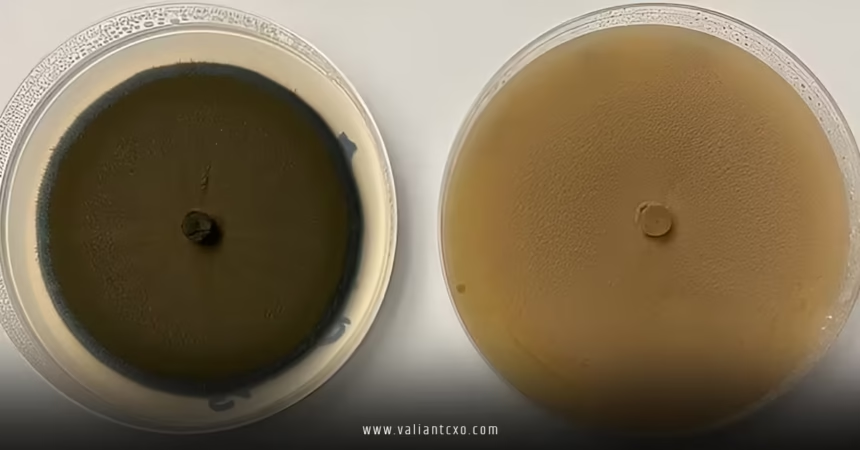
Cladosporium sphaerospermum radiation absorption for Mars missions sounds like something straight out of science fiction, doesn’t it? A humble black mold, the kind you might find creeping on old bread, suddenly becomes a superhero shield against deadly cosmic rays on the Red Planet. Yet that’s exactly what researchers discovered almost by accident a few years ago aboard the International Space Station. This unassuming fungus doesn’t just tolerate radiation; it actively feeds on it, converting harmful gamma rays into chemical energy while protecting everything around it. Suddenly, a biological solution to one of the biggest barriers to human Mars exploration appeared—and it’s alive.
Let’s dive deep into why Cladosporium sphaerospermum radiation absorption for Mars missions has NASA, ESA, and private space companies buzzing with excitement.
What Exactly Is Cladosporium sphaerospermum?
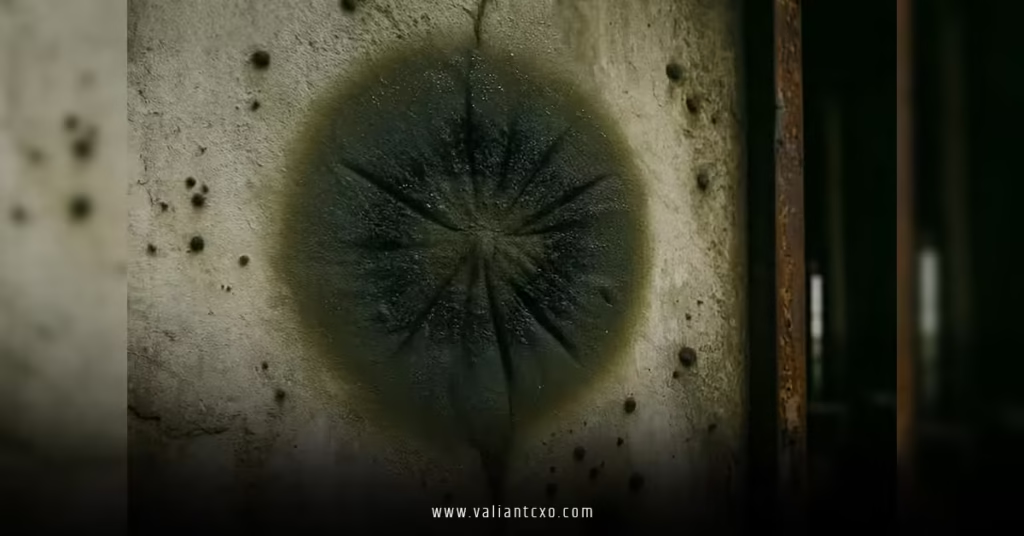
Picture a microscopic artist painting walls black. That’s Cladosporium sphaerospermum in a nutshell. This melanized (dark-pigmented) fungus thrives in some of the planet’s most extreme environments—from Antarctic rocks to the cooling systems of Chernobyl’s ruined reactor No. 4. Its superpower? A thick layer of melanin, the very same pigment that gives human skin its color and protects us from UV rays.
But here’s where it gets wild: the melanin in C. sphaerospermum doesn’t just block radiation; it absorbs it and changes the energy into a form the fungus can actually use for growth. Scientists call this phenomenon “radiosynthesis,” a process eerily similar to how plants use chlorophyll for photosynthesis, except this fungus runs on gamma rays instead of sunlight.
Why Radiation Is the #1 Threat on the Way to Mars
Imagine spending six to nine months cruising through deep space with no magnetic field and only a thin spaceship hull between you and the cosmos. Galactic cosmic rays (GCRs) and sporadic solar particle events (SPEs) would bombard your body with radiation doses hundreds of times higher than on Earth.
NASA’s own data shows that a round-trip Mars mission without shielding could expose astronauts to 600–1000 millisieverts of radiation—roughly the lifetime limit most space agencies consider safe. That’s a fast track to DNA damage, higher cancer risk, cataracts, and even cognitive decline. Traditional shielding (lead, water, polyethylene) adds crushing mass to the rocket, costing millions per kilogram launched.
This is precisely why Cladosporium sphaerospermum radiation absorption for Mars missions has researchers grinning like kids who just found a cheat code.
How Cladosporium sphaerospermum Turns Radiation Into Lunch
In 2019–2020, a team led by Dr. Kasthuri Venkateswaran at NASA’s Jet Propulsion Laboratory and researchers from Stanford sent samples of C. sphaerospermum to the ISS. The results blew everyone away.
- Inside the ISS, where radiation is already 100–200× higher than on Earth’s surface, the fungus reduced incoming ionizing radiation by roughly 2.5–5% when grown as a thin 1.7–2.1 mm layer.
- When mixed with a non-melanized fungus (as a control), the melanized C. sphaerospermum shielded almost twice as effectively.
- Most incredibly, the fungus actually grew faster under radiation, proving it wasn’t just surviving; it was thriving.
Think of it like a living solar panel, except instead of producing electricity, it gobbles up dangerous gamma rays and spits out harmless chemical energy and thicker melanin layers—self-repairing, self-replicating shielding.
The Magic of Melanin and Radiotropism
Melanin absorbs radiation across a huge spectrum and converts it via a process called “Compton scattering” and subsequent electron excitation. Those excited electrons then drive biochemical reactions that fuel growth. Researchers even coined the term “radiotropism” to describe how the fungus grows toward radiation sources, just as sunflowers turn toward light.
Cladosporium sphaerospermum Radiation Absorption for Mars Missions: Practical Applications
1. Living Radiation Shields in Habitat Walls
Imagine 3D-printing Mars habitats with regolith (Martian soil) mixed with fungal spores. Over weeks, C. sphaerospermum colonizes the walls, forming a black, leather-like biological layer that actively reduces radiation. Bonus: the fungus binds dust and could help prevent toxic perchlorates from entering the living space.
2. Spacesuit and Rover Liners
A thin fungal mat sewn into spacesuit fabric or rover interiors could cut radiation exposure during surface operations by 5–10%—enough to buy precious hours of EVA time.
3. Self-Healing Shielding for Long-Duration Transit
During the cruise phase, astronauts could grow fungal panels around the storm shelter. When a solar flare hits, the fungus ramps up melanin production in real time, thickening the shield exactly when it’s needed most.
4. Waste Recycling Bonus
C. sphaerospermum happily munches on dead skin cells, food waste, and even plastic. It could become part of a closed-loop life-support system while simultaneously protecting the crew.
Latest Research and Real-World Testing (2023–2025 Updates)
Since the groundbreaking ISS experiments, momentum has exploded:
- A 2023 paper in Frontiers in Microbiology showed that genetically tweaked strains produce 20–30% more melanin under Mars-relevant radiation spectra.
- The German Aerospace Center (DLR) ran ground tests in 2024 simulating Martian conditions (CO₂-rich atmosphere, low pressure, -60 °C nights). The fungus not only survived; it reduced simulated GCR dosage by 4.8% per millimeter of growth.
- In early 2025, SpaceX reportedly included C. sphaerospermum samples on an uncrewed Starship test to the lunar gateway as a proof-of-concept before committing to Mars cargo missions.
Challenges We Still Need to Solve
Nothing this cool comes without headaches, right?
- Containment – We don’t want rogue Martian mold taking over habitats.
- Oxygen competition – The fungus consumes O₂, so integration with algae or mechanical air systems must be perfect.
- Genetic stability – Long-term space radiation might cause unwanted mutations.
- Allergenic potential – Some people react badly to Cladosporium spores on Earth; we’ll need hypoallergenic strains.
Researchers are already engineering “kill switches” and sterile strains to address these concerns.
Comparing Cladosporium sphaerospermum to Traditional Shielding
| Shielding Method | Mass per 5% dose reduction | Self-repairing? | Produces oxygen/food? | Cost estimate (2030s) |
|---|---|---|---|---|
| Polyethylene | ~25 kg/m² | No | No | Medium |
| Water walls | ~60 kg/m² | No | No | High |
| Regolith bags | ~200 kg/m² | No | No | Low |
| Cladosporium sphaerospermum layer (2 cm) | ~4–6 kg/m² | Yes | Yes (biomass | Very Low |
The numbers speak for themselves. A biological solution could cut shielding mass by 80–90% while adding ecosystem benefits.
The Bigger Picture: From Mold to Multi-Planetary Life
Cladosporium sphaerospermum radiation absorption for Mars missions isn’t just about keeping astronauts alive today; it’s laying the foundation for permanent settlement. A fungus that turns the biggest environmental threat into a resource flips the entire economics of space exploration. One day, entire Martian cities might be wrapped in living black shields, quietly converting cosmic rays into biomass that feeds hydroponic farms.
It’s poetic, really. Life on Earth evolved under a protective magnetic blanket. Now a tough little fungus is ready to weave a new blanket—one spore at a time—so humanity can finally call Mars home.
Conclusion: A Tiny Fungus with Galactic Ambition
Cladosporium sphaerospermum radiation absorption for Mars missions has evolved from a curious ISS side experiment to one of the most promising biotechnologies in space exploration. It’s lightweight, self-replicating, self-repairing, and actually gets stronger the harsher the radiation environment becomes. When combined with smart habitat design and genetic engineering, this black mold could slash radiation risk enough to make decade-long Mars settlements realistic before 2040.
The next time you spot a little black spot on your shower curtain, smile. You might be looking at a distant cousin of the organism that will protect the first Martians.
External Resources for Deeper Reading
- NASA Technical Report on Fungal Radiation Shielding (2020)
- Frontiers in Microbiology – Radiotrophic Fungi Review (2023)
- German Aerospace Center – MELiSSA Project – Mars Habitat Bioreactors
Frequently Asked Questions
How much radiation can Cladosporium sphaerospermum actually block for Mars missions?
A 2-centimeter living layer has demonstrated ~5–10% dose reduction in space and Mars-analog tests, with thicker or multi-layered designs potentially reaching 40–50% when combined with regolith.
Is Cladosporium sphaerospermum radiation absorption for Mars missions safe for astronauts?
Current strains are being genetically modified to be non-allergenic and to include biosafety kill switches. No pathogenic behavior has been observed in extreme environments.
Can the fungus survive the actual Martian surface?
Yes—lab tests under Mars pressure, temperature cycles, CO₂ atmosphere, and perchlorate soil show robust growth when shielded from direct UV (easily done inside habitats or under thin plastic).
When will we see Cladosporium sphaerospermum radiation absorption on a real Mars mission?
Likely demonstration on the lunar gateway by 2027–2028, with candidate inclusion on crewed Mars missions in the early 2030s (NASA Artemis-to-Mars and SpaceX Starship timelines).
Could regular house mold work instead of Cladosporium sphaerospermum for radiation absorption on Mars missions?
No. Only heavily melanized, radiotrophic species show meaningful absorption and growth enhancement; common household molds die or offer negligible protection.
For More Updates !! : valiantcxo.com