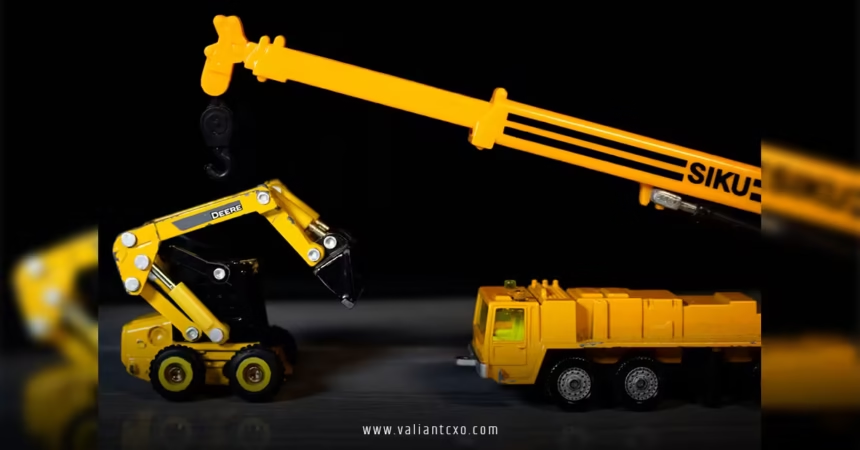
Construction toys. Just saying those two words conjures up images of tiny hands stacking blocks into towering skyscrapers, or a kid lost in a world where a cardboard box becomes a mighty fortress. If you’ve ever watched a child beam with pride after “building” their first bridge that actually holds a toy car, you know the magic I’m talking about. These aren’t just playthings; they’re gateways to imagination, problem-solving, and even early engineering lessons disguised as fun. In this ultimate guide, we’ll dive deep into the world of construction toys, exploring why they’re essential, what types to choose, and how they can transform playtime into a powerhouse of development. Whether you’re a parent hunting for the perfect gift or just curious about fostering creativity at home, stick around—because building with construction toys might just be the best investment in your kid’s future self.
Why Construction Toys Are More Than Just Child’s Play
Let’s get real: in a world dominated by screens and swipe-right distractions, construction toys stand out like a beacon of hands-on wonder. They’re not about passive entertainment; they’re active, messy, glorious chaos that gets kids thinking, creating, and yes, sometimes failing spectacularly—only to try again. Picture this: your little one, eyes wide with determination, balancing a wobbly tower of wooden blocks. Does it topple? Sure. But that “oops” moment? That’s where the real learning happens.
From a developmental standpoint, construction toys are gold. They boost fine motor skills as kids grip, stack, and connect pieces. They sharpen spatial awareness—think of it as a mini architecture class where the only homework is play. And don’t get me started on the social perks: when siblings or friends join in, suddenly you’ve got negotiation skills in action (“Your crane goes here, but my truck needs space!”). Studies from child psychologists, like those echoed by the American Academy of Pediatrics, highlight how such open-ended play reduces stress and builds resilience. It’s no wonder construction toys have been a staple since the days of simple wooden logs in the 1800s.
But here’s the kicker: they’re timeless. Unlike trendy gadgets that gather dust, a good set of construction toys evolves with your child. Toddlers might bash them together for the sound, while tweens engineer elaborate marble runs. As someone who’s seen my own nieces turn a basic LEGO set into a full-blown city (complete with traffic jams), I can attest: these toys grow with the giggles.
The Science Behind the Fun: How Construction Toys Boost Brainpower
Ever wonder why kids light up around a pile of interconnecting beams? It’s neuroscience, baby. When children engage with construction toys, their brains fire up in the prefrontal cortex—the hub for planning and decision-making. Research from the Journal of Experimental Child Psychology shows that manipulative play like this enhances executive function, helping kids delay gratification and strategize better. It’s like giving their noggin a workout without the sweat.
And let’s talk STEM—science, technology, engineering, math. Construction toys sneak these in effortlessly. Building a stable structure? That’s physics in disguise. Connecting circuits with magnetic tiles? Intro to electricity. No lectures needed; the joy of creation does the teaching. Parents often tell me, “I bought it for fun, but now my kid’s asking about gravity!” That’s the beauty—construction toys bridge play and learning so seamlessly, you’ll forget there’s a lesson involved.
Types of Construction Toys: Finding the Perfect Build for Every Age
Not all construction toys are created equal, and that’s a good thing. The market’s bursting with options, from classic bricks to high-tech kits. Overwhelmed? Don’t be. I’ll break it down by age and style, so you can pick the ones that fit your family’s vibe. Remember, the goal is open-ended play—avoid anything too prescriptive, or you’ll miss the magic.
Classic Block Sets: The Timeless Foundation of Construction Toys
Ah, blocks. The OG of construction toys. Whether wooden like Melissa & Doug’s sturdy arches or foam versions for soft landings, these bad boys encourage free-form building. For infants (6 months+), soft fabric blocks introduce textures without the tears. By age 2, unit blocks let toddlers experiment with balance and patterns.
Why love ’em? They’re eco-friendly, durable, and infinitely reusable. Stack ’em into houses one day, pyramids the next. Pro tip: mix sizes and shapes for variety—think cubes, cylinders, and ramps. A set like HABA’s Little Builders sparks hours of storytelling, turning a simple stack into “The Great Wall of Bedroom.”
Interlocking Bricks: LEGO and Beyond for Endless Possibilities
If construction toys had a rockstar, it’d be LEGO. Those colorful bricks snap together with satisfying clicks, letting kids from 4+ craft anything from spaceships to sushi restaurants. But don’t stop at the Danish icon—Mega Bloks offer bigger pieces for tinier hands, while K’NEX introduces rods and connectors for 3D wizardry.
The appeal? Scalability. Start with basic sets, graduate to themed ones like cityscapes or vehicles. I’ve watched a 5-year-old turn a Duplo farm into a zombie apocalypse defense system—talk about narrative flair! Safety note: always check for small parts, and supervise under 3s.
Magnetic and Modular Marvels: Snap, Stick, and Stack Without the Frustration
Frustrated by pieces that won’t connect? Enter magnetic construction toys like Magna-Tiles or PicassoTiles. These translucent wonders click via magnets, building 3D structures that glow in the light. Perfect for ages 3+, they foster collaboration—kids can build domes or castles that actually stand.
Modular sets like GIGI Bloks or Zolo take it further with foam bases and add-ons. Analogy time: it’s like LEGO’s chill cousin, forgiving for wobbly hands but sophisticated enough for light-bending art installations. Bonus: they’re sensory delights, with colors and shapes that double as pattern puzzles.
Advanced Kits: Electronics and Robotics for Budding Engineers
For school-age kids (7+), level up with construction toys that add tech. Snap Circuits let them wire lights and alarms, teaching electricity basics. Or try littleBits for modular inventions—no soldering required. Robotics fans? LEGO Mindstorms or VEX IQ kits introduce coding via drag-and-drop apps.
These aren’t just toys; they’re apprenticeships. Imagine your 8-year-old programming a robot arm to “sort” candy—STEM gold! Drawback? Pricey. But invest wisely; reusable components mean years of value.
Choosing the Best Construction Toys: Tips from a Playtime Pro
Picking construction toys feels like shopping for jeans—fit matters. Start with your child’s age and interests. Love vehicles? Go for truck-themed sets. Animal lover? Jungle builds await. Budget-wise, expect $20–$100 for quality starters; durability pays off.
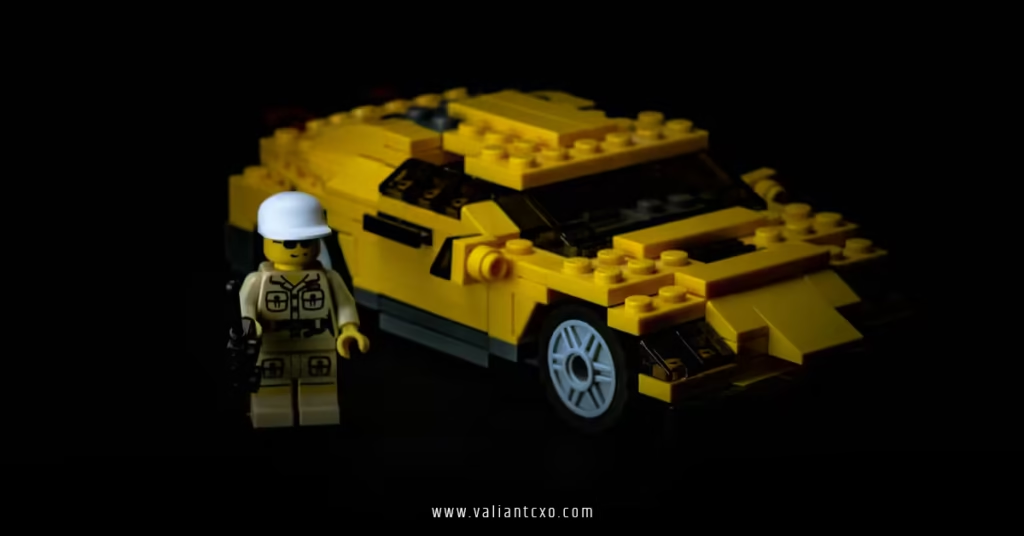
Safety first: Look for ASTM or CE certifications. Non-toxic materials, rounded edges—no splinters here. Storage? Modular bins keep chaos contained. And inclusivity? Brands like KRE-O offer diverse minifigs, reflecting real-world builders.
Rhetorical question: Ever bought a “hot” toy that bombed? Avoid hype; read reviews from sites like Common Sense Media. Test in-store if possible—feel the weight, check connections. My golden rule: If it sparks a “Wow, let’s build!” from your kid, it’s a winner.
Age-Appropriate Picks: Matching Construction Toys to Milestones
- 0–2 Years: Soft blocks for grasping. Try Fat Brain Toys’ Tobbles—stackable, squishy orbs that teach cause-effect.
- 3–5 Years: Interlocking basics. Lincoln Logs for pioneer vibes or Plus-Plus for 2D-to-3D magic.
- 6–8 Years: Themed builds. Playmobil construction crews or Meccano for metal-framed bridges.
- 9+ Years: Complex kits. Thames & Kosmos engineering sets for real physics challenges.
Mix it up—rotate sets to keep things fresh. And hey, adults? Sneak in for “quality control” builds; it’s bonding disguised as fun.
The Benefits of Construction Toys: Building More Than Just Structures
Beyond the giggles, construction toys are skill-builders extraordinaire. Fine motor? Check—pinching tiny connectors hones dexterity. Cognitive? Absolutely; predicting stability is mini-math. Socially, they teach sharing and compromise, turning “mine!” into “team tower!”
Emotionally, they’re therapy in toy form. That fallen bridge? A lesson in perseverance. As Dr. Stuart Brown, play expert, notes in his work on the National Institute for Play, unstructured building reduces anxiety by 20–30% in kids. Who knew stacking could be so soothing?
In education, they’re MVPs. Montessori classrooms swear by them for hands-on learning, aligning with curricula like Next Generation Science Standards. At home, weave in questions: “How can we make it stronger?” Boom—instant STEM chat.
Metaphor alert: Construction toys are like seeds in a garden. Plant ’em young, and watch confidence bloom into careers—architects, coders, inventors. I’ve chatted with parents whose kids, now teens, credit early builds for their maker mindset. Powerful stuff.
Incorporating Construction Toys into Daily Routines: Practical Play Hacks
Tired of “screen time guilt”? Swap an hour of TV for construction toy sessions. Morning ritual: Build a “breakfast bridge” with fruit-balanced blocks. Afternoon? Recreate the backyard with sticks and stones (nature’s construction toys!).
For busy families, quick wins: 15-minute challenges like “tallest tower under $5 materials.” Holidays? DIY forts from recyclables extend the fun. Schools? Integrate into STEM clubs—I’ve seen kids design sustainable cities from recycled bricks.
Challenge: Make it inclusive. Adaptive sets like those from EnableMart cater to special needs, ensuring every kid builds their dreams.
Common Mistakes to Avoid When Buying Construction Toys
We’ve all been there—impulse buy at the store, only for pieces to vanish under the couch. Pitfall one: Ignoring compatibility. Not all bricks play nice together. Two: Overlooking quality. Cheap plastics snap; invest in brands like Kapla for precision wood.
Three: Forgetting cleanup. Opt for sets with sorting trays. And four: Age inflation. Just because it’s labeled 4+ doesn’t mean a 2-year-old won’t mouth it—supervise!
Last, variety rut. Rotate themes to prevent boredom. Trust me, a stale set is a shelf-sitter.
Construction Toys for Holidays and Special Occasions: Gift Guide Galore
Birthdays rolling around? Construction toys scream “thoughtful.” Budget pick: Under $30, Melissa & Doug Wooden Building Blocks. Mid-range: $50–$80, Magna-Tiles Metropolis Set for urban dreamers.
Splurge: $100+, Arduino kits for tech-savvy tweens. Wrap with a “build challenge” card for extra oomph. Holidays? Stocking stuffers like mini K’NEX cars. Teacher gifts? Class sets foster group projects.
Personal fave: Gifting experiences, like a workshop at a local makerspace. Pairs perfectly with new construction toys.
Eco-Friendly Construction Toys: Building Green from the Ground Up
Sustainability matters, even in play. Bamboo blocks from PlanToys or recycled plastic from Green Toys keep Mother Earth smiling. Why go green? Teaches kids responsibility—build a “recycled robot” from bottle caps.
Brands like Oko Norm use FSC-certified wood; EcoBricks mimic LEGO from plant-based resin. Impact? Reduces plastic waste while sparking eco-conversations. Analogy: It’s like planting trees, one block at a time.
The Future of Construction Toys: Tech Meets Tradition
AR apps overlay digital blueprints on physical builds—mind-blowing! Think Merge Cube for holographic structures. But fear not; core stays analog. Hybrids like Osmo blend touchscreens with tangibles.
Prediction: More inclusive, accessible designs. Voice-activated kits for motor challenges? Coming soon. As play evolves, construction toys remain the heart—unplugged joy in a wired world.
Conclusion: Stack Up the Fun with Construction Toys Today
Whew, what a build! From classic blocks to robotic wonders, construction toys aren’t just play; they’re the foundation for curious, capable kids. They ignite creativity, sharpen skills, and create memories that last. So, grab a set, roll up your sleeves, and let the stacking begin. Your child’s inner architect is waiting—don’t keep ’em on hold. What’s your first project? A castle? A car? The world’s their workshop.
Frequently Asked Questions (FAQs)
What age is best to start with construction toys?
Construction toys shine from 6 months with soft blocks, scaling up as motor skills grow. For toddlers, focus on large, safe pieces to avoid choking hazards.
Are construction toys worth the investment for learning?
Absolutely—construction toys boost STEM skills and problem-solving. They’re durable, reusable, and far outpace screen time in developmental bang for your buck.
How do I store construction toys without losing pieces?
Use labeled bins or tackle boxes with dividers. Sort by type weekly, and involve kids for ownership—turns tidying into a mini construction project!
Can construction toys help with special needs?
Yes! Adaptive construction toys like magnetic sets aid fine motor therapy. Consult pros for tailored picks that build confidence and inclusion.
What’s the most popular type of construction toys right now?
Interlocking bricks like LEGO dominate, but magnetic construction toys are surging for their frustration-free 3D fun across ages.
Read Also:valiantcxo.com