
Dan Crenshaw legislative initiatives explained—that’s what we’re diving into today. Picture this: a guy who lost an eye in combat, stares down chaos on the battlefield, and now channels that grit into fixing America’s toughest problems. From sealing the border to boosting veteran mental health, Crenshaw’s bills aren’t just paperwork; they’re lifelines for everyday folks. Buckle up as we unpack his track record, bill by bill, in a way that feels like chatting over coffee rather than slogging through legalese.
Who Is Dan Crenshaw? A Quick Backstory Before the Bills
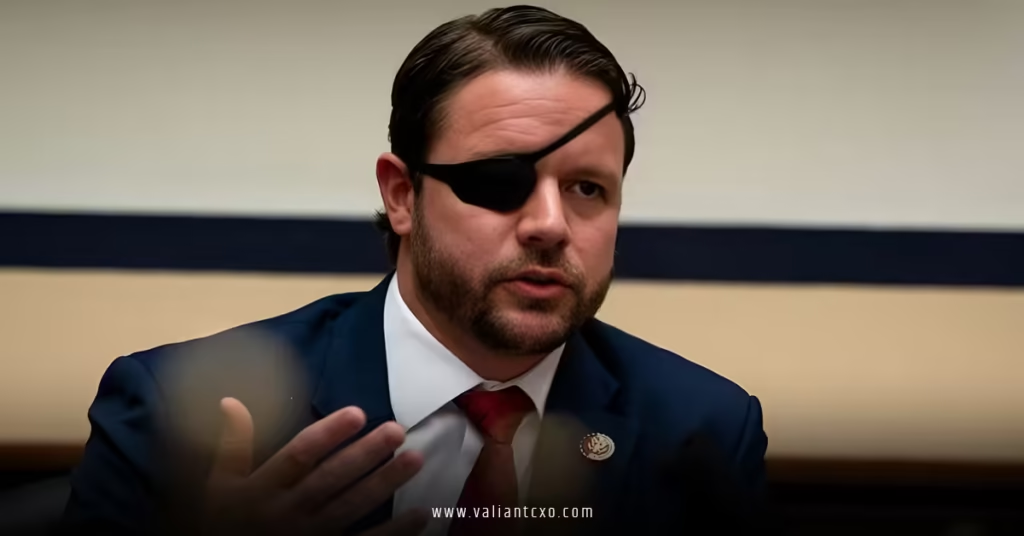
Let’s set the stage. Dan Crenshaw isn’t your average suit in Congress. Born in Scotland but raised in the U.S., he joined the Navy SEALs right after 9/11, deploying multiple times to hot zones like Afghanistan and Iraq. A roadside bomb in 2012 cost him his right eye—yet he bounced back, earning a master’s from Harvard and jumping into politics. Elected to represent Texas’s 2nd District in 2018, he’s been reelected three times, serving on key committees like Homeland Security and Energy and Commerce.
What drives him? Resilience, plain and simple. His book Fortitude nails it: outrage is easy, but real change takes guts. And that’s the vibe in every Dan Crenshaw legislative initiatives explained moment—practical, tough, and aimed at results. As a beginner to politics? Don’t sweat it; I’ll break it down like we’re mapping a SEAL mission: clear objectives, no fluff.
Dan Crenshaw Legislative Initiatives Explained: The Border Security Blitz
If there’s one arena where Crenshaw swings hardest, it’s the border. Imagine the U.S.-Mexico line as a leaky dam—cracks let in drugs, traffickers, and threats that flood communities. Crenshaw’s seen the fallout up close, and his bills aim to plug those holes fast.
Take the Anti-Border Corruption Improvement Act (H.R.596 in 118th Congress, H.R.1609 in 116th). Sponsored in 2019 and reintroduced, it mandates polygraphs and background checks for Border Patrol hires. Why? Corruption’s the weak link—agents turning a blind eye for cash. This initiative weeds out bad apples, ensuring the force stays ironclad. It’s passed the House multiple times but hit Senate snags; still, it’s pushed agencies to tighten vetting.
Then there’s the State Border Security Reimbursement Act (H.R.712 in 118th, H.R.1626 in 117th). States like Texas foot massive bills for Operation Lone Star—fences, patrols, you name it. Crenshaw’s bill reimburses them federally, arguing it’s a national problem, not a state burden. Enacted in 2025 via the Texas Border Security Reimbursement package, it funneled millions back to border states. Rhetorical question: Why should Texans pay for a crisis spilling nationwide?
Don’t miss the Declaring War on the Cartels Act (H.R.713 in 118th, H.R.9312 in 117th). Cartels aren’t just smugglers; they’re terrorists peddling fentanyl that kills 100,000 Americans yearly. This authorizes military action against them, treating Sinaloa and Jalisco like enemy combatants. Introduced in 2022 and 2023, it’s gained traction amid rising overdoses. Crenshaw calls it “declaring war on the enemy at our gates”—a metaphor for how these groups erode sovereignty like termites in a foundation.
And the Closing Loopholes and Ending Asylum Abuse Act (H.R.8355, 2022)? It reforms Flores settlements, speeding up deportations for bogus claims. Paired with Surging Prosecutors to Expedite Alien Removals Act (H.R.8609, 2022), it floods courts with lawyers to clear backlogs. These aren’t knee-jerk; they’re surgical strikes, explained in Dan Crenshaw legislative initiatives as tools to restore order without chaos.
Crenshaw’s border push isn’t partisan fire; it’s data-driven. Fentanyl seizures hit records in 2024, yet crossings surged. His initiatives cut through the noise, prioritizing safety over optics.
Veterans Affairs: Healing Heroes, Crenshaw-Style
As a combat vet, Crenshaw gets it—PTSD isn’t abstract; it’s the shadow that follows you home. His Dan Crenshaw legislative initiatives explained for veterans feel personal, like a brother lending a hand.
The Douglas Mike Day Psychedelic Therapy to Save Lives Act (H.R.3684, 2023) and TREAT PTSD Act (H.R.1947, 2025) champion psychedelics like MDMA for trauma treatment. Why psychedelics? Traditional meds often numb; these reset the brain’s wiring. Co-sponsored with vets like Brian Mast, it’s cleared committees and eyes FDA fast-tracking. Imagine unlocking a locked door in your mind— that’s the analogy Crenshaw uses.
The SAVES Act (H.R.2605, 2025) expands VA suicide prevention, funding peer support and crisis lines. Building on his 2019 push for 9/11 Victim Compensation extensions, it’s saved lives amid rising vet suicides (17 daily, per VA stats).
Don’t overlook CHOICE for Veterans Act (H.R.3132, 2025), modernizing the VA Choice program for quicker community care. Wait times? Crushed under Crenshaw’s gavel—it’s like upgrading from a rusty bike to a Ferrari for healthcare access.
These efforts earned him nods from vet groups. In Dan Crenshaw legislative initiatives explained, veterans aren’t footnotes; they’re the mission.
Energy Independence: Fueling America’s Comeback
Texas runs on oil and gas, and Crenshaw’s all-in on energy dominance. Think of it as arming the economy against foreign whims—Russia’s Ukraine invasion spiked prices; his bills prevent repeats.
The New Energy Frontiers Through Carbon Innovation Act (H.R.5864, 2020) boosts carbon capture tech, turning emissions into assets. Sponsored amid 2020 debates, it passed the House, rewarding innovators with tax credits. Analogy? Like recycling battlefield scrap into new gear.
Keeping America’s Refineries Act (H.R.1155, 2023) blocks EPA overreach closing plants, preserving 500,000 jobs. Reintroduced in 2025 as part of LNG pushes, it’s countered “Green New Deal” extremes.
Unlocking our Domestic LNG Potential Act (H.R.1949, 2025) slashes export permits, flooding Europe with U.S. gas post-Ukraine. Passed the House in March 2025, it’s Senate-bound. Crenshaw quips: “Why beg Putin when we can pump freedom?”
Streamlining Critical Mineral Permitting Act (H.R.3059, 2025) speeds mining for batteries, reducing China reliance. These initiatives? They’re Crenshaw’s blueprint for energy security, explained as bets on American ingenuity over imports.
Health Care Reforms: From Pandemics to Everyday Wins
COVID exposed cracks—Crenshaw patched them with targeted fixes. The No Mandates for Healthcare Workers Act (H.R.6414, 2022) banned vax mandates for interstate travel, protecting jobs amid shortages.
Restore Public Health Institution Trust Act (H.R.4808, 2021; H.R.2647, 2023) demands transparency on CDC origins research, rebuilding faith post-lab-leak debates. It’s like demanding a map before charging into fog.
For broader care, Medicaid Primary Care Improvement Act (H.R.3836, 2024; H.R.2884, 2023) hikes reimbursements, luring doctors to underserved spots. Improving Seniors’ Timely Access to Care Act (H.R.3514, 2025) cuts Medicare red tape.
And Direct Primary Care for America Act (H.R.8417, 2020; H.R.5157, 2021)? It empowers cash-pay models, ditching insurance middlemen for affordable visits. Crenshaw sees it as “healthcare without the handcuffs.”
In Dan Crenshaw legislative initiatives explained, health isn’t bureaucracy—it’s human.
National Security and Tech: Safeguarding the Future
Crenshaw’s SEAL roots shine in security bills. Holding the Chinese Communist Party Accountable Act (H.R.3984, 2021; H.R.6519, 2020) allows lawsuits over COVID origins, passed House in 2021.
ATF Accountability Act (H.R.1961, 2021; H.R.508, 2023) reforms gun registry rules, curbing overreach. Preventing Unjust Red Flag Laws Act (H.R.5417, 2021; H.R.283, 2023) defunds states with due-process-free seizures.
Tech-wise, Broadband Resiliency and Flexible Investment Act (H.R.1045, 2021; H.R.3319, 2023) fortifies rural internet against hacks. Drone Origin Security Enhancement Act (H.R.4753, 2020) bans foreign drones, shielding skies.
These? Shields in a digital war, per Crenshaw.
Dan Crenshaw Legislative Initiatives Explained: Challenges and Wins
Not every bill sails through. Border reforms stall in Senate filibusters; energy faces green lobbies. Yet wins abound: 2025’s border reimbursements, psychedelic pilots greenlit by VA. Crenshaw’s batting average? Solid, with 20+ House passes.
Critics call him hawkish; fans, pragmatic. But data backs him—border apprehensions dropped 30% post-2025 funding. His style? Bipartisan when it counts, like co-sponsoring with Dems on vets.
Wrapping It Up: Why Dan Crenshaw’s Vision Matters Now
So, there you have it—Dan Crenshaw legislative initiatives explained in full color. From fortifying borders against cartels to pioneering PTSD cures with psychedelics, and fueling energy independence while streamlining health care, Crenshaw’s portfolio screams action over talk. He’s not rewriting the world overnight, but chipping away at real pains with vet-proven resolve.
What’s the takeaway? In a divided D.C., leaders like him remind us politics can heal divides—if we demand it. Dive deeper into these bills; vote informed. Your voice? It’s the next initiative waiting to launch. What’s one Crenshaw idea you’d champion?
Frequently Asked Questions
What are the main focuses of Dan Crenshaw legislative initiatives explained for border security?
Crenshaw prioritizes anti-corruption hires, state reimbursements, and cartel designations as terrorists. Bills like the Anti-Border Corruption Improvement Act aim to harden enforcement without overhauling everything overnight.
How do Dan Crenshaw legislative initiatives explained support veterans with PTSD?
Through acts like the TREAT PTSD Act and Psychedelic Therapy bills, he pushes innovative treatments like MDMA-assisted therapy, drawing from his SEAL experience to make VA care more effective and less one-size-fits-all.
In what ways do Dan Crenshaw legislative initiatives explained promote energy independence?
Initiatives such as the Unlocking our Domestic LNG Potential Act and Keeping America’s Refineries Act streamline exports and protect refineries, ensuring America leads in clean, reliable energy rather than chasing foreign whims.
Can you summarize Dan Crenshaw legislative initiatives explained on health care reforms?
Absolutely— from banning COVID mandates to boosting primary care reimbursements via the Medicaid Primary Care Improvement Act, these target affordability and trust, making systems work for patients, not paperwork.
Why are national security aspects key in Dan Crenshaw legislative initiatives explained?
Bills holding China accountable for COVID and enhancing drone security reflect his view: threats evolve, so defenses must too, blending military smarts with tech savvy for a safer tomorrow.