

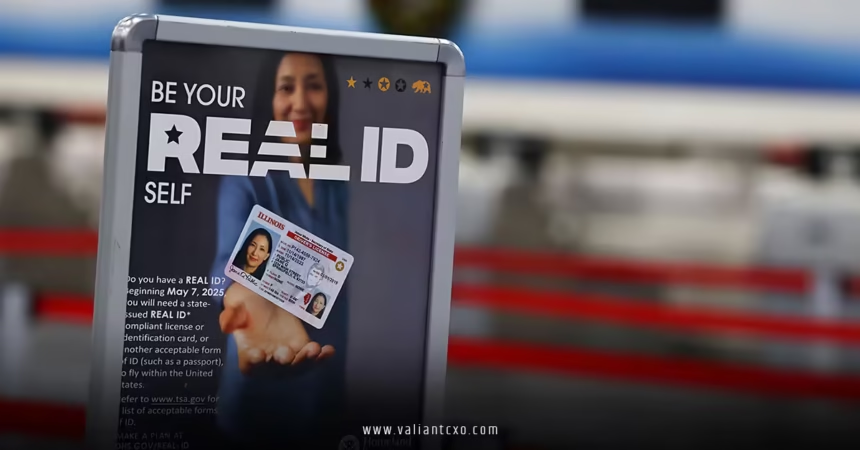
REAL ID requirements by state are a hot topic for anyone planning to fly domestically in the U.S. these days, especially since full enforcement kicked in back in May 2025. If you’re wondering whether your driver’s license has that all-important star or what documents you’ll need to upgrade, you’re not alone. Navigating REAL ID requirements by state can feel overwhelming at first, but it’s really about meeting federal standards for safer identification—think of it as a nationwide upgrade to prevent fraud while keeping things secure.
With the deadline long passed and a new TSA option on the horizon, getting compliant is smarter than ever. We’ll break down the basics, dive into how REAL ID requirements by state work in practice, and help you figure out exactly what your home state expects. Plus, if you’re curious about airport specifics, check out our detailed guide on how TSA $45 REAL ID fee works and accepted IDs list for the full scoop on flying smoothly.
Understanding REAL ID: The Federal Foundation
Before jumping into state specifics, let’s get the big picture straight. The REAL ID Act, passed in 2005 following 9/11 recommendations, sets minimum standards for state-issued driver’s licenses and IDs to be accepted for federal purposes—like boarding domestic flights or entering secure federal buildings.
As of May 7, 2025, non-compliant IDs just won’t cut it anymore. Your license needs that star (or sometimes a flag for enhanced versions) in the corner to signal it’s REAL ID ready. Why bother? It’s all about verifying identity more robustly. Analogy: It’s like adding a deadbolt to your front door—basic locks are fine for most things, but for high-security access, you need the upgrade.
The Department of Homeland Security (DHS) oversees this, but states handle the issuance. That’s why REAL ID requirements by state have some variations, even though everyone follows the same federal minimums.
Core Documents Needed for REAL ID Across All States
No matter where you live, REAL ID requirements by state start with these federal must-haves. You’ll typically need to provide originals (no photocopies) in person at your DMV:
- Proof of Identity and Date of Birth: Usually a birth certificate, U.S. passport, or permanent resident card.
- Proof of Social Security Number: SSN card, W-2 form, or pay stub with full SSN.
- Two Proofs of Principal Residence: Utility bills, bank statements, mortgage docs, or lease agreements—dated within recent months.
- Proof of Lawful Status: For U.S. citizens, birth certificate or passport suffices; non-citizens need immigration documents like green cards or visas.
- Name Change Documents (if applicable): Marriage certificate, divorce decree, or court orders.
Rhetorical question: Ever tried gathering old paperwork? It can be a scavenger hunt, so start early. Most states recommend making an appointment to avoid long waits.
Costs? Expect to pay your standard renewal fee—often $20 to $50, depending on the state and license duration. No extra federal charge, just the usual state fees.
How REAL ID Requirements by State Differ: Key Variations
While the basics are uniform, REAL ID requirements by state do tweak things based on local laws and systems. For instance:
- In-Person vs. Online: Almost all states require an in-person visit for your first REAL ID, even if renewals can sometimes be online later.
- Age and Expiration: Some states issue REAL IDs to minors, but they’re mainly for adults flying. Licenses typically align with your usual renewal cycle (4-8 years).
- Enhanced Driver’s Licenses (EDLs): A step above REAL ID, these are accepted for land/sea border crossings too. Only a handful of states offer them: Michigan, Minnesota, New York, Vermont, and Washington. They’re great if you travel to Canada or Mexico often.
- Digital/Mobile IDs: Forward-thinking states like California, Colorado, Louisiana, and others are rolling out mobile driver’s licenses in apps like Apple Wallet. These count as REAL ID if compliant.
Compliance rates are sky-high now—DHS reported over 94% in 2025, and it’s climbing. Every state, D.C., and territory issues compliant IDs, but a few might have phased approaches or specific quirks.
To check your exact REAL ID requirements by state, head to the interactive DHS map or your local DMV website. It’s the most reliable way to avoid surprises.

REAL ID Requirements by State: Regional Breakdown and Tips
Let’s group things regionally to make this digestible, highlighting common patterns in REAL ID requirements by state.
Northeast States
States like New York, Pennsylvania, and Massachusetts have robust systems. New York offers both standard REAL ID and Enhanced IDs—perfect for border hoppers. Expect strict proof of residency; two recent bills are non-negotiable. Pro tip: Book appointments months ahead in busy areas like NYC.
Southern States
From Texas to Florida, REAL ID requirements by state often include options for online pre-application to speed things up. Texas, for example, lets you start online but finish in person. Southern states generally have lower fees and more DMV locations, making it easier in rural spots.
Midwest States
Michigan and Minnesota shine with EDLs. Midwest REAL ID requirements by state emphasize Social Security verification—bring that card if possible. Illinois and Ohio have high adoption; many residents got compliant during regular renewals.
Western States
California leads with mobile IDs, but their DMVs are notoriously crowded—appointments are a must. Washington state’s EDL is popular for Pacific Northwest travelers. Western states often accept more document types for residency proof, like rental agreements.
Other Territories and Notes
D.C., Puerto Rico, and other territories follow similar rules, issuing compliant IDs with stars.
Across the board, if you’re undocumented or have specific immigration status, some states offer alternative IDs (like California’s AB 60 licenses), but these aren’t REAL ID compliant for federal use.
Upcoming Changes: The TSA $45 Option and Why Compliance Matters
Speaking of flying, with enforcement in full swing, showing up without a compliant ID means trouble. Starting February 1, 2026—just weeks away as of now—TSA’s ConfirmID program lets you pay a $45 fee for alternative verification if your ID doesn’t qualify. It’s a backup, but not foolproof: no refunds if it fails, and expect delays.
That’s why mastering REAL ID requirements by state and getting compliant upfront is the real win. For everything on that fee and the complete list of accepted alternatives (like passports), dive into our companion piece on [how TSA $45 REAL ID fee works and accepted IDs list].
Imagine breezing through security with a star-marked license versus scrambling at the gate— which sounds better to you?
Common Pitfalls and How to Avoid Them
People often trip up on REAL ID requirements by state with these:
- Assuming old licenses auto-upgrade—nope, renew with documents.
- Using expired proofs—everything must be current.
- Name mismatches—bring change docs.
- Forgetting appointments—many states require them.
Start now: Check your ID. No star? Gather docs and schedule that DMV visit.
Special Cases: Minors, Military, and Non-Drivers
Kids under 18? No ID needed for domestic flights with an adult. Military folks often use DoD IDs, which are always accepted. Non-drivers can get state ID cards meeting the same REAL ID requirements by state.
The Benefits of Getting REAL ID Compliant
Beyond flying, it’s handy for federal access like military bases or nuclear plants. Plus, it streamlines other verifications. Think long-term: One hassle now for years of ease.
Conclusion
In summary, REAL ID requirements by state boil down to federal minimums with local flavors—gather your proofs, visit the DMV, and get that star. With enforcement here and the $45 TSA option looming, there’s no better time to upgrade. Stay prepared, travel confidently, and enjoy the skies without stress. You’ve got the tools—go make it happen!
Frequently Asked Questions
What are the basic REAL ID requirements by state?
All states require proof of identity, date of birth, SSN, lawful status, and two residency proofs. Check your DMV for exact lists.
How do REAL ID requirements by state affect flying?
Post-May 2025, non-compliant IDs won’t work for domestic flights. Learn more in our guide on how TSA $45 REAL ID fee works and accepted IDs list.
Do all states have the same REAL ID requirements by state?
No, but federal minimums apply everywhere. Variations include fees, appointments, and enhanced options.
Can I get REAL ID online in my state?
Rarely for first-time; most REAL ID requirements by state mandate in-person with originals.
What if I don’t meet REAL ID requirements by state—any alternatives?
Use a passport or pay the upcoming $45 TSA fee. Details here: how TSA $45 REAL ID fee works and accepted IDs list.

