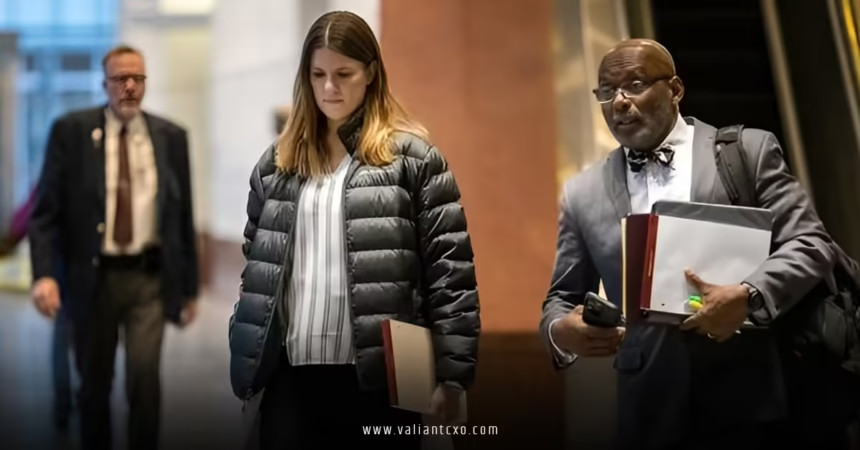
The Feeding Our Future scandal exploded onto the national stage as a jaw-dropping tale of greed amid crisis. Picture this: a program designed to feed hungry kids during the COVID-19 lockdown turns into a $250 million heist, with fake meal sites popping up overnight and luxury cars rolling in for the schemers. It’s the kind of story that makes you shake your head—how could something meant to help children go so wrong? The Feeding Our Future scandal isn’t just about stolen money; it’s a stark reminder of how relaxed rules during emergencies can open doors to massive abuse.
You might be asking yourself, what exactly went down? Let’s unpack it together, step by step, because understanding the Feeding Our Future scandal helps shine a light on broader issues in government oversight.
Origins of the Feeding Our Future Scandal: From Small Nonprofit to Massive Scheme
Back in 2016, Aimee Bock founded Feeding Our Future as a modest nonprofit in Minnesota. Its mission? Sponsor sites distributing meals through the Federal Child Nutrition Program, targeting low-income kids. Sounds noble, right? But things shifted dramatically when the pandemic hit.
In 2020, USDA rules loosened to allow more flexible meal distribution—no congregate settings required, reimbursements based on claims alone. Feeding Our Future seized the moment. What started as disbursing a few million annually skyrocketed to nearly $200 million in 2021. They sponsored over 250 sites across Minnesota, claiming to serve millions of meals daily.
But here’s the twist in the Feeding Our Future scandal: many sites were shells. Empty buildings, fake rosters with invented kids’ names, inflated numbers. Prosecutors say little to no food reached children. Instead, funds bought mansions, Lamborghinis, overseas properties. Analogy alert—it’s like claiming to host a banquet for thousands but serving crumbs while pocketing the catering budget.
How the Feeding Our Future Scandal Operated: Billing for Phantom Meals
Ever wonder how fraud this big flies under the radar? Simple mechanics, bold execution.
Sites enrolled quickly, often restaurants or new entities. They submitted rosters listing thousands of daily meals—sometimes more kids than lived in the town! Feeding Our Future approved, took admin fees, passed funds via Minnesota Department of Education (MDE).
Kickbacks flowed: cash or “consulting” to insiders. Fake invoices backed claims. One site claimed feeding 6,000 kids daily—double the local population. Rhetorical question: Who checks if those kids actually exist?
By 2022, FBI raids hit. Searches uncovered the scale, leading to charges.
Key Players and Convictions in the Feeding Our Future Scandal
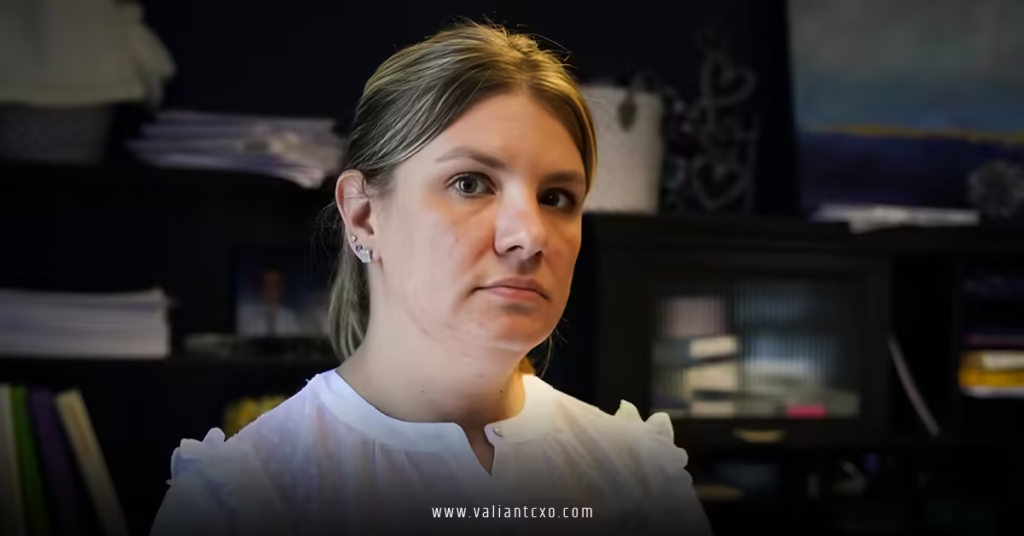
At the center: Aimee Bock, dubbed the “mastermind.” She and co-conspirator Salim Said faced trial in early 2025. On March 19, a jury convicted both on all counts—wire fraud, conspiracy, bribery, money laundering.
Bock oversaw recruitment; Said ran Safari Restaurant, a major “vendor.” They claimed millions in meals but delivered fractions.
As of late 2025, 78 indicted. Over 50 pled guilty, seven convicted at trial (including Bock and Said). Sentences hit hard—one defendant got 10 years. Recoveries? Around $60-70 million, but much spent or sent abroad.
Most defendants (except Bock) from Minnesota’s Somali-American community. This sparked debates—hold individuals accountable without stereotyping.
The Broader Fallout from the Feeding Our Future Scandal
The Feeding Our Future scandal didn’t stay isolated. It uncovered vulnerabilities, sparking probes into other programs: autism therapy, housing aid, Medicaid. Estimates? Fraud in Minnesota programs could top $9 billion since 2018.
Early warnings ignored—MDE spotted issues pre-pandemic but faced lawsuits alleging bias, chilling oversight. A legislative audit slammed missed red flags.
Politically? Explosive. Cited in immigration debates, oversight hearings. Critics question state leadership; defenders point to federal rule changes enabling it.
Think of it as dominoes: One big fall exposes wobbly neighbors.
Connections to Ongoing Fraud Issues, Including Somali Daycare Fraud Minnesota 2025
The Feeding Our Future scandal opened Pandora’s box. Overlaps emerged—some defendants linked to autism centers billing for ghost services.
This paved the way for 2025 revelations, like alleged Somali daycare fraud Minnesota 2025, where centers reportedly claimed millions for non-existent kids via Child Care Assistance Program. Viral videos showed empty facilities with misspelled signs, echoing fake meal sites. It’s the same playbook: inflate claims, pocket reimbursements.
Why link them? Both exploit child-focused aid with minimal verification. The Feeding Our Future scandal proved lax checks invite abuse, fueling demands for reforms in programs tied to [Somali daycare fraud Minnesota 2025].
Lessons Learned and Reforms After the Feeding Our Future Scandal
You’re probably thinking, how do we prevent repeats? Good question!
States tightened: unannounced audits, data cross-checks, quick suspensions. Minnesota created fraud prevention roles, paused risky payments.
Federal level: USDA reverted rules, emphasized verification.
Community impact? Painful. Honest providers suffer stigma; real kids miss aid. But whistleblowers from within communities helped crack cases.
Metaphor time: It’s like fortifying a leaky dam—plug holes before the flood worsens.
Political and Social Ripples of the Feeding Our Future Scandal
No surprise, it fueled national talks on welfare oversight, immigration, spending. Figures highlighted it in policy pushes.
Yet, focus remains: Punish fraudsters, protect programs. Many Somali-Americans contribute positively; a few bad actors shouldn’t define all.
Conclusion: Wrapping Up the Feeding Our Future Scandal
The Feeding Our Future scandal stands as America’s biggest pandemic fraud—a $250 million betrayal of trust, fake meals for phantom kids funding lavish lives. From Bock’s convictions to 78 charges, it’s a saga of greed exposed by persistent probes.
Key points? Relaxed rules invite exploitation; ignored warnings cost dearly; overlaps like [Somali daycare fraud Minnesota 2025] show patterns persist without fixes. But convictions and recoveries prove accountability works.
This mess motivates change—stronger safeguards ensure aid reaches needy kids. What’s your view? Demand transparency; it protects us all. Stay vigilant—real futures depend on it.
FAQs About the Feeding Our Future Scandal
What is the Feeding Our Future scandal?
The Feeding Our Future scandal involves a Minnesota nonprofit defrauding $250 million from federal child nutrition programs by claiming millions of phantom meals during COVID, with funds misused personally.
How much money was stolen in the Feeding Our Future scandal?
Prosecutors allege over $240-250 million stolen, the largest pandemic fraud; broader Minnesota issues, including ties to cases like Somali daycare fraud Minnesota 2025, may exceed billions.
Who was convicted in the Feeding Our Future scandal?
Aimee Bock and Salim Said convicted in 2025 on all counts; overall, over 50 guilty pleas, seven trial convictions from 78 indicted.
How does the Feeding Our Future scandal relate to other Minnesota fraud?
It uncovered overlaps in autism, housing programs; similar tactics seen in 2025 allegations, such as Somali daycare fraud Minnesota 2025 with ghost centers.
What reforms followed the Feeding Our Future scandal?
Enhanced audits, data sharing, fraud directors; inspired crackdowns on related schemes, including probes into Somali daycare fraud Minnesota 2025.