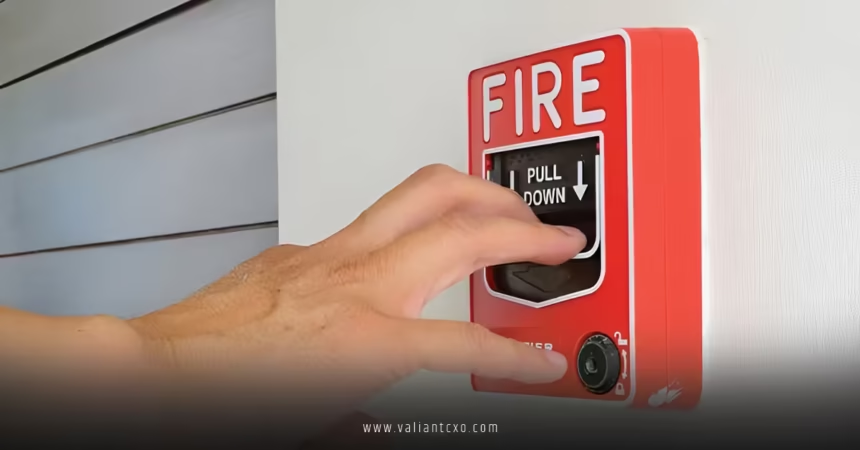
Fire Alarm Inspection Checklist Two minutes into a fire safety conversation and most people’s eyes glaze over. But this isn’t theory. This is about whether your system screams when you need it to—or stays quiet while smoke fills the corridor.
If you’re responsible for a building, you need a fire alarm inspection checklist that’s clear, repeatable, and easy for real people (not specialists) to follow.
And if you’re running anything more complex than a small office, you should be tying your routine checks into a professional Belfast fire alarm service Belfast plan so the system gets proper testing and maintenance, not just a quick button press.
Let’s break it down.
Why a Fire Alarm Inspection Checklist Matters
A good checklist saves you from three big problems:
- Systems that “look fine” but quietly fail when a real fire hits
- Constant false alarms that disrupt work and numb people to the sound of the siren
- Regulatory and insurance pain when you can’t prove you’ve checked anything consistently
In my experience, buildings with a simple, written fire alarm inspection checklist have fewer surprises, faster fixes, and an easier time when inspectors show up or insurers start asking questions.
Fire Alarm Inspection Checklist – Quick Overview
Here’s the fast version of what your checklist needs to cover:
- Weekly alarm test (different call point/zone each time)
- Visual check of the fire alarm control panel
- Check manual call points for damage or obstruction
- Confirm detectors and sounders aren’t blocked, painted, or covered
- Log everything: test result, date, time, and who did it
That’s your baseline. Now let’s flesh it out so you can actually implement it.
Who Should Use This Fire Alarm Inspection Checklist?
This checklist is perfect for:
- Office managers
- Facilities and maintenance teams
- Store, hotel, or restaurant managers
- Landlords and property managers
- Health & safety coordinators
You don’t need to be a technician.
But you do need a professional service partner for the deeper technical work—your Belfast fire alarm service Belfast provider should handle detailed testing, repairs, and configuration changes while you own the routine checks.
Weekly Fire Alarm Inspection Checklist (User Level)
This is the bread and butter. It’s the simple routine that keeps you close to your system and spots small issues early.
1. Choose the test point
- Pick a different manual call point each week
- Rotate zones so every area gets tested across a few months
The goal? System-wide coverage over time, not hitting the same call point forever because “it’s convenient.”
2. Inform occupants
Before you hit that call point:
- Tell staff there’ll be a brief test
- Let any monitoring station or remote response center know it’s a test if applicable
You don’t want emergency services rolling up because no one warned them.
3. Activate the alarm from the call point
- Use the test key for the manual call point if you have one
- Confirm the following:
- Alarm activates
- Sounders are loud and clear in occupied areas
- Visual alarms (beacons) flash where installed
If anything sounds weak, distorted, or dead, note it and call your service provider.
4. Check the fire alarm panel
Walk to the panel and confirm:
- Correct zone/device is displayed
- No unexpected fault, trouble, or supervisory messages
- Panel indicators and display are readable and not obscured
This is where many people slip: they hear the sounder, assume “all good,” and never look at the panel. Don’t skip this step.
5. Reset the system
- Follow your panel’s instructions to silence and reset
- Confirm:
- Alarm clears correctly
- System returns to “normal” condition
- Any faults remain clearly visible, not hidden
If the alarm doesn’t reset smoothly, don’t shrug it off. That’s a signal something’s off.
6. Log the test
In your fire logbook or digital system, record:
- Date and time
- Call point/location tested
- Name of the person performing the test
- Any issues or anomalies observed
- Whether a service call is needed
If it’s not written down, as far as regulators and insurers are concerned, it never happened.
Monthly Fire Alarm Inspection Checklist (User Level)
Monthly checks go a bit deeper, but still stay within “non-technical” territory.
Panel and indicator checks
- Confirm panel is in normal condition
- Check any remote indicator panels or repeaters
- Look for taped-over lights or DIY edits (yes, it happens)
Device visibility and access
Walk key routes and common areas:
- Manual call points not blocked by furniture, shelving, or signage
- Detectors not covered by decorations, plastic bags, or dust caps
- Sounders and beacons clearly visible and accessible
Any obstruction is a risk. Clear it or report it.
Power supplies (visual)
Without opening cabinets or doing electrical work:
- Confirm panel has mains power
- Check for any visible signs of damage, overheating, or water ingress around equipment
Anything that looks “off” goes straight into the log and to your service provider.
What Your Professional Fire Alarm Service Should Cover
Even the best fire alarm inspection checklist doesn’t replace professional servicing. Think of your internal checks as pre-flight checks, and your Belfast fire alarm service Belfast provider as the aircraft engineer.
A competent service company will:
- Test a planned percentage of detectors, call points, and sounders each visit
- Check and test backup batteries and charging circuits
- Inspect and test any interfaces (e.g., door releases, HVAC shutdown, elevator recall)
- Review and clear historical faults properly, not just silence them
- Verify correct zone labeling and documentation
- Provide a clear, written report and service certificate
If you don’t recognize half that list in your current service reports, it’s time to ask harder questions.
Sample Fire Alarm Inspection Checklist Template
You can adapt this structure to your site.
Daily (Quick glance)
- Panel in normal condition (no alarms or unexplained faults)
- No obvious damage to call points or detectors in main routes
Weekly (Functional test)
- Notify occupants and monitoring center (if applicable)
- Test one manual call point (rotate locations)
- Confirm sounders and beacons operate
- Check correct zone appears on panel
- Reset panel and confirm normal condition
- Record test in logbook
Monthly (Visual and housekeeping)
- Walk main circulation routes
- Check call points, detectors, and sounders are unobstructed
- Note any changes to layout that may affect coverage
- Report issues to service provider
Quarterly / Six-monthly (Professional)
- Technician service visit
- Partial system test per schedule
- Faults investigated and cleared
- Batteries and power reviewed
- Written report filed
Annually (Professional)
- Complete system test over 12 months
- Documentation updated
- Any recommended upgrades reviewed
Tie this into a formal Belfast fire alarm service Belfast agreement and you’re operating like a pro.
Fire Alarm Inspection Checklist vs Full Service: What’s the Difference?
A lot of people confuse “we test the alarm every week” with “we service the system.” Not the same thing.
- Inspection checklist
- Run by building staff
- Focused on routine testing and basic visual checks
- Goal: spot obvious issues early and keep people familiar with the system
- Full service / maintenance
- Run by competent technicians
- Involves detailed testing, measurements, and component replacement
- Goal: keep the system compliant, reliable, and ready for long-term use
Your job is both:
- Use the fire alarm inspection checklist consistently.
- Make sure a qualified company handles the deeper work under a structured Belfast fire alarm service Belfast contract.
Compliance and Best Practice: Where This Fits
Regulators and standards bodies don’t care about fancy jargon. They care that:
- Your alarm works
- Your people can get out
- You can prove you’ve managed the system responsibly
A clear fire alarm inspection checklist supports that by:
- Showing regular, documented checks
- Providing a trail of issues discovered and actions taken
- Helping your service provider quickly understand what’s been happening on-site
In audits and investigations, that logbook or digital record is often the difference between “responsible management” and “negligent operation.”
Common Mistakes with Fire Alarm Inspection Checklists
Let’s call out a few patterns that cause trouble.
Mistake 1: Same call point every week
People pick the closest call point to the panel and never move. That means whole zones might never be functionally tested from the trigger side.
Fix:
Rotate call points and zones deliberately. Keep a simple rotation plan in your logbook.
Mistake 2: No one actually checks the panel
They hear the alarm, maybe walk the corridor, and call it a day. If the panel is screaming “fault,” they miss it.
Fix:
Panel check is a non-negotiable part of your fire alarm inspection checklist. No panel check = incomplete test.
Mistake 3: Not logging tests
Verbal “yeah, we test it” won’t impress an inspector or insurer.
Fix:
Always record date, time, location tested, result, and any issues. It takes 30 seconds.
Mistake 4: Trying to be your own engineer
Facilities teams sometimes start fiddling with panel settings or disabling zones without really understanding the impact.
Fix:
If it’s beyond basic test, silence, and reset—hand it to your Belfast fire alarm service Belfast provider.
How to Align Your Checklist with Professional Servicing
To get real value, your internal checks and professional servicing should talk to each other.
- Share your logbook with your technician at each visit
- Highlight recurring issues (same zone, same area)
- Ask for plain-language explanations of their reports so you know what’s urgent
- Review recommendations annually – especially where your building layout or use has changed
You’re aiming for one joined-up system, not “what we do” vs “what the contractor does.”
Final Thoughts: Make the Checklist a Habit, Not a Binder Decoration
A fire alarm inspection checklist is only as good as the habit behind it. Used properly, it becomes:
- Your early warning for system problems
- Your evidence when regulators and insurers knock
- Your training tool for new staff
And when you hook that habit into a solid Belfast fire alarm service Belfast program, you’ve covered both day-to-day reliability and deeper technical compliance.
No drama. No guesswork. Just a system that works when you need it most.
FAQs About Fire Alarm Inspection Checklists
1. How often should I use a fire alarm inspection checklist?
Use your fire alarm inspection checklist weekly for functional tests and monthly for broader visual checks. More complex sites should also align this with scheduled visits from a Belfast fire alarm service Belfast provider for deeper inspections and maintenance.
2. Can I create my own fire alarm inspection checklist?
Yes, you can and should create a site-specific fire alarm inspection checklist, as long as it covers weekly alarm tests, panel checks, visual device checks, and proper logging. For anything beyond basic testing and housekeeping, involve your Belfast fire alarm service Belfast partner to ensure the checklist supports, not conflicts with, formal servicing requirements.
3. Do I still need professional servicing if my checklist is thorough?
Absolutely. A fire alarm inspection checklist handles basic user-level checks, but it doesn’t replace specialist testing, fault diagnosis, and component maintenance. You still need a qualified Belfast fire alarm service Belfast provider to keep the system compliant, safe, and reliable over the long term.