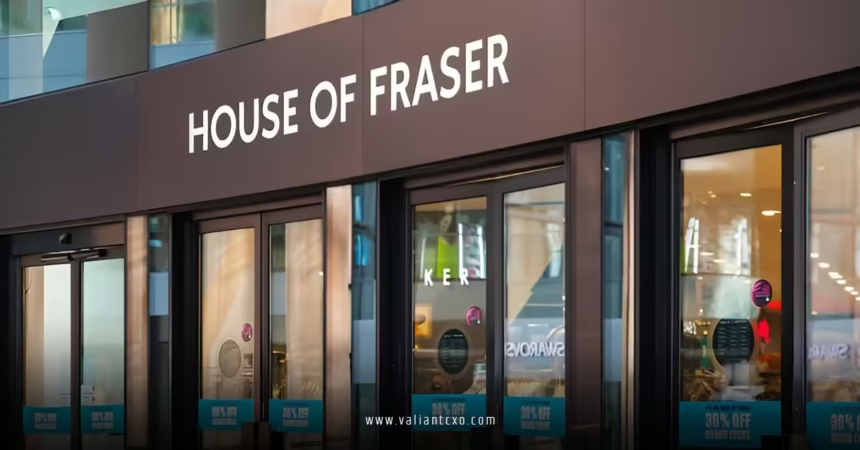
Frasers Group investments strategy powers one of the most aggressive retail empires in the UK and beyond. Under Mike Ashley’s control, the company mixes outright acquisitions, strategic minority stakes, and property plays to fuel its Elevation Strategy. The goal? Create a premium-yet-volume retail machine that dominates sports, lifestyle, and luxury.
This approach turned a single Sports Direct store into a FTSE 250 force with thousands of outlets, online platforms, and international reach.
- Core focus: Elevation Strategy lifts the brand mix while keeping high-volume sales.
- Investment style: Buy distressed assets cheap, take influential stakes in suppliers and peers.
- Recent highlight: The Mike Ashley Frasers Group Puma shareholder move in March 2026, grabbing 5.77% of the sportswear giant.
- Broader pattern: Stakes in Hugo Boss, ASOS, Boohoo, and property grabs like designer outlets.
- Why it works: Synergies across retail, distribution, and product placement deliver real leverage.
The strategy isn’t flashy theory. It’s boots-on-the-ground retail warfare.
What Drives Frasers Group Investments Strategy
Mike Ashley owns roughly 73% of Frasers Group. He built it on spotting undervalued opportunities others miss. The Elevation Strategy shifts from pure discount sports retail toward premium experiences without abandoning volume.
Frasers invests in three pillars: Sports, Premium, and Luxury. This means deeper brand partnerships, better store formats, and smarter supply chain control.
Frasers Group investments strategy often uses derivatives like put options. This gives economic exposure and potential influence without massive upfront capital. It’s classic Ashley—low risk entry with high upside control.
In practice, this means more Hugo Boss or Puma product in Sports Direct and Flannels stores. Better terms. Faster turnaround on inventory. The kicker is operational synergies that pure financial investors rarely achieve.
Key Elements of the Playbook
Frasers doesn’t just buy. It integrates.
Acquisitions like House of Fraser, Missguided, and international plays (Holdsport in South Africa, XXL in Nordics) get folded into the ecosystem. Strategic stakes in listed companies create pressure points for collaboration.
Property is another pillar. Owning over one fifth of the UK outlet market gives control over prime real estate and rental income.
Here’s a quick breakdown:
| Investment Type | Examples | Typical Goal | Outcome Example |
|---|---|---|---|
| Outright Acquisitions | House of Fraser, Flannels, THG luxury sites | Full control & integration | Expanded premium offering |
| Minority Stakes | Puma (5.77%), Hugo Boss (~26%+), ASOS | Influence & synergies | Better product placement |
| Property & Outlets | York & East Midlands Designer Outlets | Rental income & retail space | Stronger physical presence |
| Tech & Startups | AI funds, THG stake | Digital edge | Efficiency gains |
This table shows the balanced approach. No single bet sinks the ship.

The Mike Ashley Frasers Group Puma Shareholder Move in Context
Take the Mike Ashley Frasers Group Puma shareholder position. Frasers grabbed nearly 6% in early 2026 as Puma battled losses. It instantly made Frasers the second-largest holder after Anta Sports.
Why? Puma supplies Frasers heavily. A stake aligns interests, pushes for better wholesale deals, and signals confidence in turnaround potential. Shares popped on announcement. Exactly the kind of market reaction Ashley loves.
This mirrors past plays with Hugo Boss and ASOS. Influence without full ownership. Push for change from inside.
What would I do if advising a similar retailer? Map every supplier relationship first. Identify where a small stake unlocks big distribution wins. Then structure via options to keep flexibility.
Step-by-Step: Building Your Own Investment Approach (Beginner Friendly)
Copying Frasers blindly is dumb. But you can learn the discipline.
- Audit your core business – Know where your strengths and gaps sit.
- Identify synergies – Look for suppliers or peers that boost your margins.
- Start small – Use stakes or options before big acquisitions.
- Focus on integration – Don’t just own. Make assets work together fast.
- Monitor property – Physical locations still drive retail wins in 2026.
- Track metrics – Profits, same-store sales, brand mix elevation.
- Stay patient – Turnarounds take 12-24 months.
Start with public filings. Read Frasers’ results. See what actually moves the needle.
Common Mistakes & How to Fix Them
Mistake 1: Chasing every distressed deal. Fix: Only buy when clear synergies exist. Otherwise it’s just expensive distraction.
Mistake 2: Ignoring execution. A great stake means nothing without integration. Fix: Assign teams immediately to product placement and cross-promotion.
Mistake 3: Overpaying on emotion. Ashley buys low. Fix: Use derivatives and wait for dips.
Mistake 4: Neglecting the premium shift. Pure discount dies slowly. Fix: Gradually elevate while protecting volume—exactly Frasers’ path.
Another trap? Going passive. Ashley pushes boards when needed. Learn when to activate.
How Frasers Group Investments Strategy Delivers Results
Profits nearly doubled in the first half of FY26. Revenues climbed. International expansion accelerated. The Elevation Strategy is working.
Frasers Group investments strategy creates a flywheel: Better brands attract better customers. Stronger retail space supports higher margins. Data and AI investments tighten operations.
It’s like building a retail moat one smart brick at a time. Competitors watch. Consumers win with more choice and better experiences.
Key Takeaways
- Frasers Group investments strategy blends acquisitions, stakes, and property for maximum control.
- Elevation Strategy drives premium growth without killing volume.
- The Mike Ashley Frasers Group Puma shareholder deal shows how supplier stakes create leverage.
- Derivatives offer flexible entry with big influence potential.
- Property ownership provides stable income and strategic advantage.
- Integration speed separates winners from collectors.
- International moves and tech bets future-proof the business.
- Discipline and patience beat flashy bets every time.
Frasers Group investments strategy proves retail still rewards bold, connected thinkers. It’s not about owning everything. It’s about making what you own work harder together.
Next step: Review Frasers’ latest investor materials. Spot one synergy in your own world. Start there.
FAQs
What is the main goal of Frasers Group investments strategy?
It aims to build a powerful brand ecosystem through the Elevation Strategy, combining sports, premium, and luxury with strong synergies across retail channels.
How does the Mike Ashley Frasers Group Puma shareholder fit the overall strategy?
It exemplifies using minority stakes in key suppliers to drive better commercial terms, product visibility, and mutual growth—core to Frasers’ playbook.
Can smaller retailers adopt parts of Frasers Group investments strategy?
Yes. Start with targeted supplier partnerships or small stakes in complementary businesses, then focus relentlessly on integration and customer experience.