Few companies last over a century—fewer still continue to evolve with purpose. Fullerton Building Systems is one of those stories. What began in 1882 as a network of 115 lumber yards has transformed into a modern prefabrication powerhouse, proving that longevity isn’t about staying the same—it’s about knowing when to change.
More than 60 years ago, the company replanted its roots. Faced with slow construction timelines, the family made a bold move—leaving lumber behind and going all-in on prefabrication. It was a decision that didn’t just change the business; it defined its future.
Now, as the company approaches 65 years in commercial prefabrication construction, that same mindset continues to drive innovation. But today, the tools look very different. Instead of just saws and nails, Fullerton blends craftsmanship with technology. Automated cutting systems ensure every piece of lumber is precise, while QR codes track each panel throughout the process. It’s a simple idea with a powerful impact—less waste, better quality, and faster delivery.
Innovation That Actually Means Something
In construction, “innovation” can sometimes feel like a buzzword. But at Fullerton, it’s very practical. It’s not about flashy tech for the sake of it: it’s about solving real problems for customers.
One of the clearest examples? They guarantee no change orders and commit to meeting project schedules. That might not sound revolutionary at first, but in an industry where delays and unexpected costs are almost expected, it’s a big deal. It shows confidence in their process—and gives clients something they rarely get: certainty.
Staying Focused in a Noisy Industry
The construction world is full of trends right now—modular buildings, new materials, and sustainability mandates. Many companies try to chase all of them at once. Fullerton has taken a different approach: focus.
They’re not trying to be everything. They’re not a modular builder—they’re custom prefabrication experts. And they’ve doubled down on that identity. By staying in their lane, they’ve been able to refine what they do best instead of spreading themselves too thin.
Internally, they keep things simple: focus on culture, customers, speed, and quality. That clarity is their competitive advantage.
Where Craft Meets Technology
When you walk into Fullerton’s manufacturing plant, you’ll still find skilled craftsmen and craftswomen doing what they do best. But alongside them is a growing layer of digital intelligence.
From dashboards that track materials and labor in real time to systems that monitor quality at every stage, digitisation has become a quiet backbone of the business. It doesn’t replace people—it supports them. The result is a process that feels both traditional and modern at the same time.
That balance is part of what makes the company stand out. They haven’t abandoned the human side of construction—they’ve just made it smarter.
A Strategic Shift That Paid Off
About 10 years ago, Fullerton made another important decision: to stop serving residential customers and focus entirely on commercial markets.
It wasn’t about shrinking the business—it was about sharpening it. By concentrating on six specific commercial sectors, the company could go deeper, understand client needs better, and operate more efficiently.
Culture That Embraces Change
Spend enough time around successful companies, and one thing becomes clear: culture matters. At Fullerton, two values stand out—passion and humility.
Humility, in particular, plays a big role. It’s defined not as modesty, but as a willingness to keep learning. That mindset makes it easier for teams to accept change, try new ideas, and improve continuously.
Passion drives the other side of the equation—people care about what they’re building and how they’re building it. Together, those values create a workplace where innovation doesn’t feel forced—it just happens.
Sustainability Without the Buzzwords
Sustainability is a big topic in construction, but Fullerton approaches it in a grounded, practical way. Their focus is on doing things better, not just talking about it.
They’ve built a four-part strategy around lumber, energy, logistics, and waste. By pre-engineering every cut of wood, they reduce unnecessary use of materials. Their buildings are designed to be highly insulated, helping reduce energy consumption over time. On the logistics side, they maximize shipping efficiency by flat-stacking panels, which reduces the number of trucks needed.
And when it comes to waste, they’ve managed to bring material overage down to about 3%, compared to the industry norm of 5–10%. That’s less waste in landfills—and better cost efficiency for clients.
Looking Ahead: Speed and Smarter Systems
If there’s one trend shaping the future of construction, it’s speed. Projects that finish faster don’t just save money—they start generating revenue sooner. That’s becoming a major focus for developers and contractors alike.
Fullerton is already leaning into that trend. Their entire model is built around compressing timelines without sacrificing quality.
At the same time, they’re exploring how artificial intelligence can enhance their processes. Not by replacing people, but by giving teams better insights—whether in design, manufacturing, or planning.
Real Results, Not Just Promises
All of this innovation would mean little without results—and that’s where Fullerton really stands out. In one recent project, they helped cut a construction timeline from 150 days down to just 72. That’s not a small improvement—it’s a complete shift in how a project gets delivered.
What’s interesting is how it happened. It wasn’t one big breakthrough, but a series of smaller improvements across design, engineering, manufacturing, and logistics. Even something as simple as how panels were stacked on trucks played a role in reducing time and costs.
It’s a reminder that innovation doesn’t always have to be dramatic. Sometimes, it’s about getting a lot of small things right.
Built to Keep Evolving
The story of Fullerton Building Systems isn’t just about the past—it’s about momentum. From lumber yards in the 1800s to digitally enabled prefabrication today, the company has shown a consistent ability to adapt.
And that’s really the takeaway. In an industry that’s often slow to change, Fullerton proves that evolution is possible—and profitable—when it’s driven by clear thinking, strong culture, and a willingness to do things differently.
After more than 140 years, they’re not slowing down. If anything, they’re just getting better at building the future—one panel at a time.
Leadership Rooted in Service, Humility, and Growth
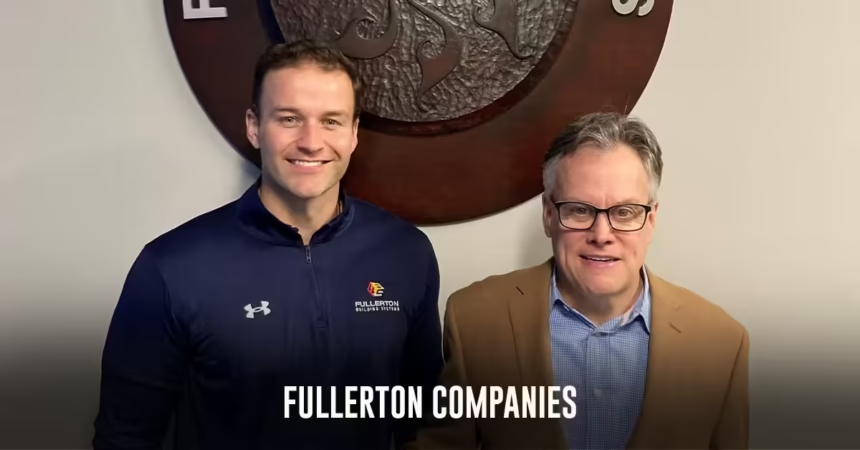
Mike Cousineau (CEO) and Scott Pairolero (President) are aligned in their approach to leadership, grounded in shared values and a clear philosophy. At the core is a strong commitment to servant leadership—where the role of the executive team is to support and empower employees, rather than the other way around.
They emphasize leading by example, fostering a culture of continuous learning that drives both innovation and excellence. Humility plays a key role in their mindset, encouraging openness to feedback and a willingness to listen, while passion is directed toward consistently exceeding customer expectations.
They also draw motivation from the growth and career progression of their people, recognizing that a strong, healthy workplace culture is essential—not just for employee success, but for delivering meaningful results to customers.