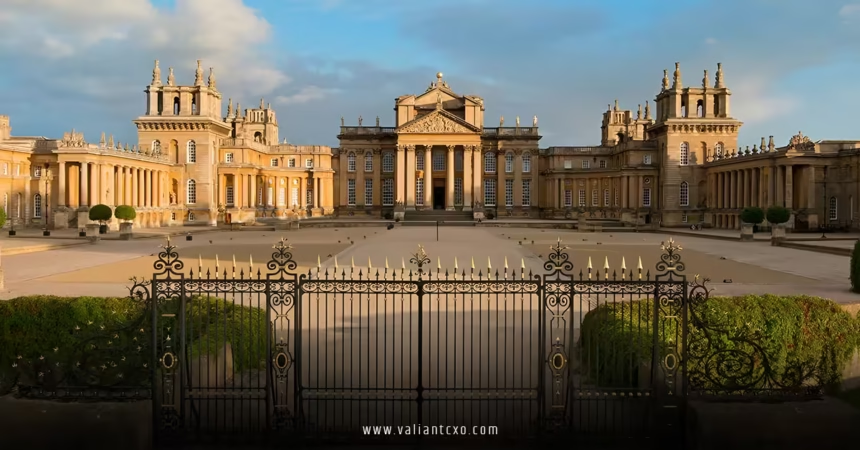
History of Blenheim Palace – have you ever wandered through a place that feels like stepping into a living fairy tale, where every corner whispers stories of battles, brilliance, and breathtaking beauty? Nestled in the rolling Oxfordshire countryside, Blenheim Palace stands as one of England’s grandest treasures. This UNESCO World Heritage Site isn’t just a stunning Baroque marvel; it’s a symbol of national triumph, family legacy, and enduring elegance. Let’s uncover the fascinating history of Blenheim Palace, from its heroic origins to its role in shaping modern Britain.
The Origins: A Gift Born from Victory in Battle
Picture this: It’s 1704, and amid the chaos of the War of the Spanish Succession, John Churchill, the brilliant military commander, leads Allied forces to a decisive win at the Battle of Blenheim in Bavaria. This wasn’t just any skirmish – it halted French domination in Europe and cemented Britain’s rising power. Queen Anne, grateful beyond words, rewarded Churchill with the royal manor of Woodstock and funds to build a monumental home. Thus began the history of Blenheim Palace, named after that pivotal battle.
Construction kicked off in 1705, transforming a former royal hunting ground into a national monument. But drama ensued – political squabbles halted funding in 1712, forcing the Churchills to finish it themselves after returning from exile. By 1722, the palace was largely complete, though tweaks continued. Rhetorically, what better way to honor a hero than with a home that screams triumph?
John Churchill: The 1st Duke and Architectural Visionary Behind the History of Blenheim Palace
John Churchill, elevated to the 1st Duke of Marlborough in 1702, wasn’t just a soldier; he was a strategist whose victories reshaped Europe. His wife, Sarah Jennings, the fiery Duchess, played a huge role too – her influence with Queen Anne secured the gift. Together, they envisioned a palace blending grandeur with practicality.
They chose Sir John Vanbrugh, a playwright-turned-architect, assisted by Nicholas Hawksmoor. Vanbrugh’s dramatic style drew from English and French influences, creating something uniquely bold. Analogous to a symphony swelling to a crescendo, the palace’s design builds drama from every angle.
Architectural Splendor: Why Blenheim Palace Defines English Baroque
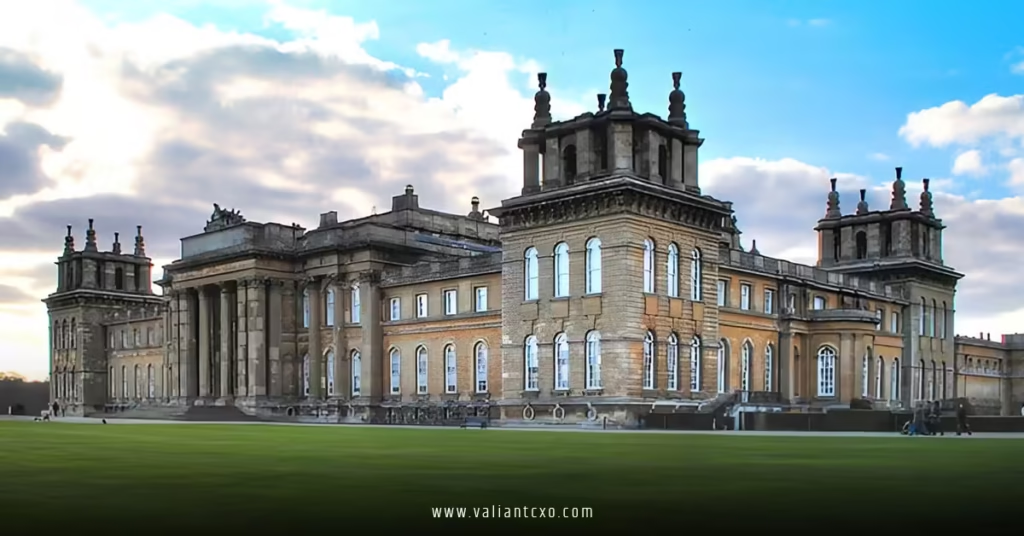
Dive into the history of Blenheim Palace, and you’ll see it’s the pinnacle of English Baroque architecture – extravagant, theatrical, and unapologetically grand. Spanning seven acres, the principal block features pierced courtyards for light, with no overwhelming grand staircase since it was meant for elite living on one level.
The exterior? Massive porticos, towering columns, and intricate stonework that demands attention from afar. Inside, marvel at the Great Hall’s soaring ceilings painted by James Thornhill, depicting Marlborough’s triumphs. Marble doorframes, carvings by Grinling Gibbons – it’s like walking through a sculpted dream.
The Evolution of Gardens and Parkland in Blenheim Palace History
Early gardens by Henry Wise mimicked Versailles’ formality, but in the 1760s, Lancelot “Capability” Brown revolutionized them into a “naturalistic Versailles.” He dammed the River Glyme for lakes, planted thousands of trees, and crafted rolling lawns that seem effortlessly wild – yet perfectly contrived.
This shift mirrored changing tastes toward Romanticism, emphasizing nature’s beauty. Today, over 2,000 acres of parkland, formal gardens, and cascades make Blenheim a landscape masterpiece.
Winston Churchill’s Connection: A Pivotal Chapter in Blenheim Palace History
Fast-forward to 1874: Sir Winston Churchill, future Prime Minister and WWII icon, was born here prematurely during a family visit. Though he didn’t grow up at Blenheim, it remained his spiritual home – a place of inspiration, painting, and even proposal to Clementine in the Temple of Diana.
Churchill called Blenheim the site of his two biggest decisions: being born and marrying. His exhibits, including personal artifacts and speech excerpts, bring this era alive. It’s no exaggeration: Blenheim shaped the man who shaped history.
The Dukes of Marlborough: Guardians Through the Centuries
The title passed through generations, with notable figures like the 9th Duke marrying American heiress Consuelo Vanderbilt, injecting funds for restorations. During wars, Blenheim served as a hospital and MI5 base. Today, managed by a trust but home to the family, it balances preservation with public access.
Interestingly, while the palace often grabs headlines for its ties to nobility, recent events remind us that personal lives can intersect with public scrutiny – for more on modern developments, see the story of the duke of marlborough charged with intentional strangulation.
Blenheim Palace in the Modern Era: From Heritage Site to Cultural Hub
Designated a UNESCO site in 1987, Blenheim influences global architecture and landscaping. It hosts events, exhibitions (like Ai Weiwei installations), and draws millions. Financial ups and downs – from Vanderbilt fortunes to WWII evacuations – highlight its resilience.
What makes its history so captivating? It’s a blend of military glory, artistic innovation, and personal drama, all wrapped in stunning beauty.
Conclusion
The history of Blenheim Palace is more than dates and stones – it’s a narrative of ambition, artistry, and adaptation. From John Churchill’s battlefield triumph sparking its creation, through Baroque brilliance and Capability Brown’s landscapes, to Winston Churchill’s birthplace legacy, Blenheim endures as Britain’s greatest non-royal palace. It reminds us how one gift of gratitude evolved into a cultural icon. Whether you’re a history buff or just love beautiful places, Blenheim captivates. Plan a visit – who knows what stories you’ll uncover next?
FAQs
1. When was Blenheim Palace built and why?
Blenheim Palace was constructed between 1705 and 1722 as a national gift to John Churchill, 1st Duke of Marlborough, for his victory at the Battle of Blenheim in 1704.
2. Who designed Blenheim Palace?
Sir John Vanbrugh, with assistance from Nicholas Hawksmoor, designed the palace in English Baroque style, while Lancelot “Capability” Brown later landscaped the gardens.
3. What is Winston Churchill’s connection to Blenheim Palace?
Winston Churchill was born at Blenheim Palace in 1874 and maintained a lifelong bond, proposing there and drawing inspiration from its history.
4. Is Blenheim Palace open to the public?
Yes, as a UNESCO World Heritage Site, Blenheim Palace welcomes visitors year-round for tours, events, and exhibitions.
5. How has Blenheim Palace been preserved through history?
Through family efforts, trusts, and public funding, including American marriages boosting finances, Blenheim has adapted while retaining its historic essence.