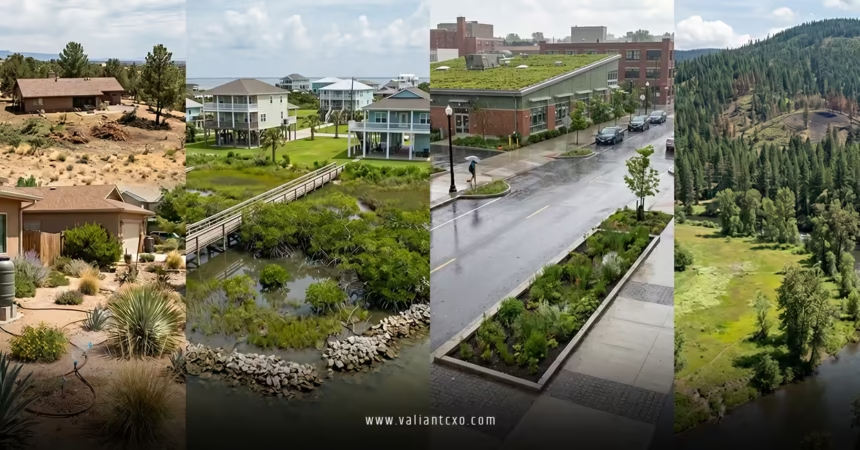
How climate change affects Earth ecosystems 2026 hits harder than most realize. Rising temperatures, shifting weather patterns, and acidifying oceans are reshaping forests, reefs, wetlands, and tundra right now. These changes ripple through food webs, push species toward extinction, and weaken the natural systems we depend on for clean air, water, and food. In 2026, the effects aren’t distant warnings—they’re visible, measurable, and accelerating.
- Warming drives habitat shifts: Species migrate poleward or uphill, but many can’t keep pace, leading to local extinctions.
- Extreme events intensify: More wildfires, droughts, floods, and marine heatwaves disrupt balances that took millennia to form.
- Biodiversity loss accelerates: Coral reefs, forests, and polar ecosystems face tipping points, with cascading impacts on services like carbon storage and coastal protection.
- Human stakes rise: Ecosystems underpin U.S. agriculture, fisheries, and tourism—disruptions mean higher costs and security risks.
- Why it matters now: Every fraction of a degree worsens outcomes, but targeted actions can still build resilience.
The kicker? These aren’t abstract models. NASA’s data shows glaciers shrinking, sea ice vanishing, and plant blooming times advancing. Ecosystems transition faster than expected.
Rising Temperatures and Terrestrial Shifts
How climate change affects Earth ecosystems 2026 starts with heat. Global averages have climbed about 1.1–1.2°C since pre-industrial times, with U.S. regions seeing amplified effects. Forests in the Northwest suffer widespread die-off from drought, insects, and fires.
Trees bloom earlier. Animals shift ranges. But mismatches break synchrony—pollinators miss flower peaks, predators lose prey. In my experience tracking these patterns, what usually happens is a slow unraveling: one key species declines, and the whole web frays.
The Southwest faces longer droughts and bigger wildfires. Human-caused climate change has already doubled burned forest area in recent decades. Projections point to two-to-six times more land scorched by mid-century in the West.
What I’d do if starting fresh: Map local vulnerabilities using tools from USGS or state agencies, then prioritize drought-resistant plantings and prescribed burns. Small actions compound.
Ocean and Coastal Transformations
Marine systems absorb over 90% of excess heat and about 30% of CO2 emissions. The result? Warmer, more acidic waters and rising seas.
Coral reefs bleach repeatedly. The 2023–2025 global event hammered 84% of reefs. Even at 1.5°C warming, up to 90% could vanish by 2050. Reefs protect coasts, support fisheries, and house thousands of species. Their loss isn’t just underwater—it’s economic and ecological collapse.
Sea levels have risen 8 inches since 1880, with more to come—possibly 1 to 6.6 feet by 2100. Coastal marshes drown. Mangroves retreat. Erosion accelerates.
Here’s the thing: acidification weakens shells and skeletons. Plankton bases shift. Fish stocks move or crash. Northeast fisheries already feel the squeeze.
Polar and Cryospheric Impacts
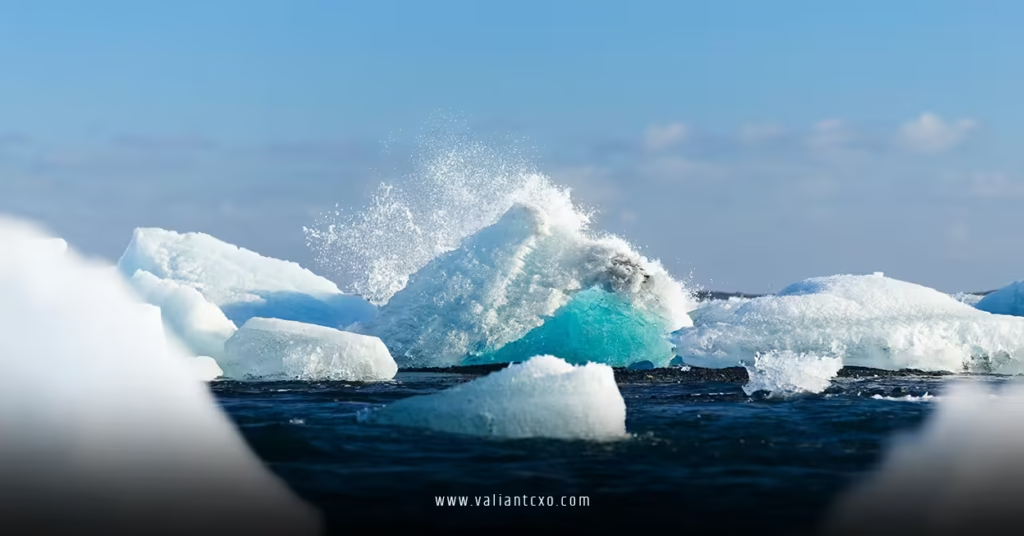
Arctic ecosystems warm fastest—twice the global rate. Sea ice retreats. Permafrost thaws, releasing stored carbon and methane. This feedback loop speeds warming further.
Species like polar bears and seals lose hunting grounds. Tundra greens up unevenly, altering caribou migrations. In Alaska and northern Canada, infrastructure buckles as ground destabilizes.
These changes affect global weather and ocean currents. What starts at the poles doesn’t stay there.
Freshwater and Wetland Disruptions
Rivers run earlier in spring from faster snowmelt, then dry up later. Lakes warm, promoting harmful algal blooms. Wetlands shrink or salinize with sea intrusion.
In the Midwest and Southeast, heavy downpours flood systems, while droughts hit elsewhere. These swings stress amphibians, fish, and riparian zones that filter water and store carbon.
A Comparison of Ecosystem Impacts in 2026
| Ecosystem Type | Key Climate Stressors | Observed/Projected Effects | U.S. Regional Hotspots | Resilience Factors |
|---|---|---|---|---|
| Coral Reefs | Warming, acidification, storms | Mass bleaching, 70-90% loss risk at 1.5°C | Florida, Hawaii, territories | Local pollution reduction, marine protected areas |
| Forests | Drought, heat, fires, pests | Die-off, increased burn area (2-6x) | Northwest, Southwest | Diverse planting, controlled burns |
| Arctic/Tundra | Rapid warming, permafrost thaw | Species loss, carbon release | Alaska | Limited; focus on emission cuts |
| Coastal Wetlands | Sea level rise, erosion | Drowning, habitat conversion | East/Gulf Coasts | Restoration, sediment management |
| Freshwater Systems | Altered flows, extremes | Blooms, invasive species spread | Midwest, Southwest | Watershed planning, riparian buffers |
Data draws from NASA, NOAA, and IPCC summaries. Effects compound— one stressor rarely acts alone.
How Climate Change Affects Earth Ecosystems 2026: Step-by-Step Action Plan for Beginners
Start simple. Build habits that scale.
- Learn your backyard: Use EPA or NOAA climate tools to check local projections. Understand dominant ecosystems near you.
- Reduce your footprint: Cut energy waste, eat less meat, support clean power. Every ton of CO2 avoided matters.
- Restore locally: Plant native species. Join or start community cleanups for wetlands or trails. Small plots add up.
- Advocate smart: Push for protected areas and emission policies. Contact reps with specific asks tied to your region.
- Track and adapt: Monitor changes via citizen science apps (e.g., phenology networks). Adjust gardens or plans accordingly.
- Stay informed: Follow NASA Earth observations or IPCC updates without doom-scrolling. Focus on solvable pieces.
What usually happens is people freeze at the big picture. Break it into weekly actions instead.
Common Mistakes & How to Fix Them
- Mistake: Thinking individual actions don’t count. Fix: They do—collectively they shift markets and policy. Track your household emissions quarterly.
- Mistake: Over-focusing on one ecosystem. Fix: See connections. Saving reefs helps fisheries that feed inland communities.
- Mistake: Waiting for perfect data. Fix: Act on best available science now. Adaptation windows close fast.
- Mistake: Ignoring equity. Fix: Support solutions that lift vulnerable U.S. communities first—coastal, rural, Indigenous groups often on front lines.
- Mistake: Greenwashing purchases. Fix: Prioritize verified reductions over offsets alone.
In practice, the biggest fix is consistency over perfection.
Read the latest from NASA on climate effects: NASA Climate Change Effects.
Explore NOAA’s coral insights: NOAA Coral Reefs and Climate.
Dive into IPCC impacts: IPCC AR6 Working Group II.
Key Takeaways
- How climate change affects Earth ecosystems 2026 manifests through faster warming, biodiversity shifts, and extreme events already reshaping U.S. landscapes.
- Coral reefs and Arctic systems approach tipping points with massive ripple effects.
- Terrestrial forests face amplified fire and drought risks, cutting carbon sinks.
- Freshwater and coastal zones swing between flood and scarcity, hitting agriculture hard.
- Individual and community steps build resilience even as global emissions need slashing.
- Science from NASA, NOAA, and IPCC gives clear signals—action now limits worst outcomes.
- Adaptation plus mitigation beats either alone.
- The window remains open, but narrows yearly.
Earth’s ecosystems have absorbed punches before. This time, the speed and human fingerprint change everything. Yet nature shows surprising bounce-back when stressors ease. Protect, restore, and cut emissions aggressively. Your next step? Pick one local project—whether volunteering for a reef survey, planting natives, or emailing your representative about coastal funding—and commit this month. Small moves today compound into defensible ecosystems tomorrow.
FAQs
How does climate change affect Earth ecosystems 2026 in the U.S. specifically?
It amplifies regional differences: wildfires ravage Western forests, sea level rise threatens East Coast wetlands, and ocean warming disrupts Northeast fisheries. Projections show continued shifts in species ranges and growing seasons.
Can ecosystems recover from how climate change affects Earth ecosystems 2026?
Some can with reduced pressures. Healthy reefs rebound after bleaching if waters cool and pollution drops, but repeated events push limits. Restoration paired with emission cuts offers the best shot.
What role do individuals play in addressing how climate change affects Earth ecosystems 2026?
Huge. Lifestyle shifts lower demand for fossil fuels, while local advocacy and restoration directly bolster resilience. Collective pressure drives policy too.